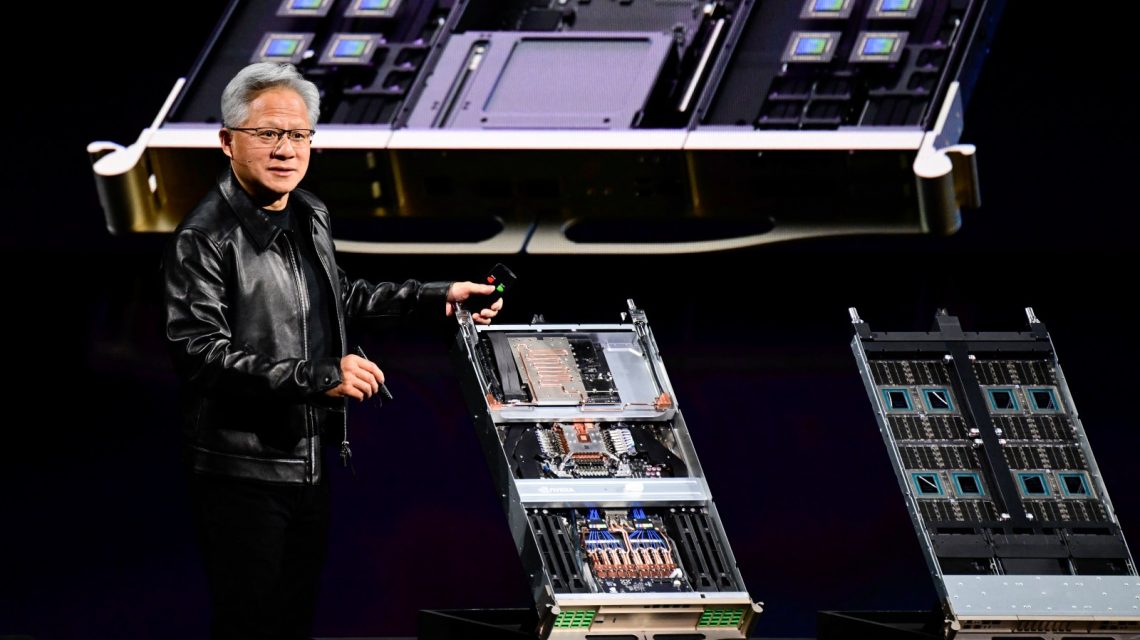
The narrative around Nvidia and its former CEO, Jensen Huang, presents an intricate intersection of personal and political drama, as well as debates surrounding technological dependencies. Recent developments have sparked widespread interest in Huang’s potential return to Nvidia and the broader implications for U.S.-China technology relations.
Jensen Huang’s Resignation and Potential Return
Jensen Huang, known for his influential role in the semiconductor industry, recently resigned from Nvidia following allegations of extramarital affairs. One of the alleged affairs involved a woman suspected, unproven though it remains, of ties to Chinese intelligence. This resignation has precipitated discussions about Huang’s professional resurgence, with allies supposedly seeking support from the Nvidia board and potentially the White House.
Huang’s departure is concurrent with ongoing investigations, involving both Nvidia’s board and the U.S. Justice Department, into an Nvidia customer, Megaspeed. Allegations include possible redirection of sensitive technology to China, which Megaspeed denies.
The U.S. Government’s Internal Struggle
An underlying issue in this saga is the debate within the Trump administration over maintaining American technology leadership. This involves two conflicting strategies on handling U.S.-China tech relations. Treasury Secretary Scott Bessent believes that cutting off China’s access to advanced U.S. technology is crucial for national security. Contrarily, Commerce Secretary Howard Lutnick advocates leveraging U.S. tech to create dependency, thus ensuring economic benefits.
Bessent supports placing Megaspeed on an export blacklist, citing concerns over technological leakage. Lutnick, however, proposes fostering reliance on U.S. technology to strengthen America’s market position.
Nvidia’s Market Strategy and U.S. Policy
Huang has previously criticized export controls, claiming they have reduced Nvidia’s market share in China from 95% to 50%. He argues for lifting these restrictions, citing the necessity for Nvidia to remain competitive and maintain strategic industry positioning.
Huang points out that China already possesses ample resources and the capability to produce less advanced chips, which can fulfill its compute needs effectively.
The Challenge of Technology Dependence
Bessent’s argument is based on the belief that advanced chips contribute to AI competition and should not aid China’s rapid development. His view emphasizes the importance of slowing down Chinese advancements to maintain U.S. leadership.
On the other hand, Lutnick views technological dependence as a strategic advantage, provided the U.S. controls the supply. However, if chips are filtered to China via intermediaries, this control weakens, as shown in the Megaspeed controversy.
The debate touches on varying perspectives of national power, questioning if revenue alone counts, or if strategic dominance rests on constraining rivals’ technological capabilities.
The Path Forward: Balancing Technology Sales and Control
The complex intersection of technological sales and national security leads to multiple questions. For those in favor of selling to China, the challenge lies in ensuring sustainable and enforceable dependence. For advocates of stringent controls, the emphasis is on using the buying time effectively to bolster the U.S. tech landscape.
The U.S. is considering a balanced approach of regulated exports, which includes case-by-case H200 exports, ensuring thorough screening of buyers to maintain U.S. advantages.
Looking forward, this duality of selling and safeguarding could offer a middle ground, though stringent enforcement is vital. President Trump, as he prepares to meet Chinese leadership, faces pressure to adjudicate this nuanced debate, prioritizing long-term U.S. technology dominance.
 Amazon Enlists NYC Customers Against City Council Bill
 The Controversy Surrounding Jensen Huang and Nvidia
 GAO Finds Federal Agencies Lacking in Cybersecurity Planning
 Grand Theft Auto VI Sparks Relationship Challenges
 AI and Robotics Redefining Workforce Skills
 Cybersecurity Breach Exposes Bank Customer Data