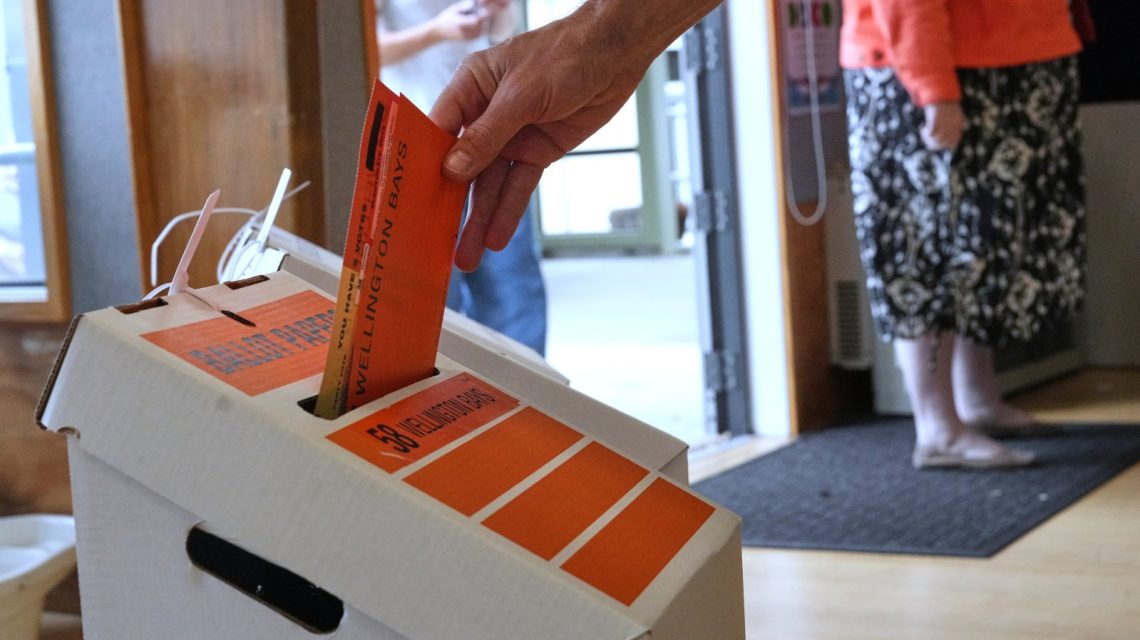
New Zealand’s election has produced an uncertain result after preliminary outcomes showed Prime Minister Christopher Luxon’s center-right coalition gaining a narrow, one-seat parliamentary majority. Meanwhile, the opposition Labour Party held a slight lead in the nationwide party vote. This tight outcome leaves Luxon’s aim for a second term unresolved, potentially keeping the country waiting several weeks for the final government composition.
With results collected from all voting locations, Labour secured 29.36 percent of the party vote, narrowly edging out Luxon’s National Party at 29.21 percent. Votes totaled 710,330 for Labour compared to 706,680 for National, with a difference of 3,650 votes, representing 0.15 percentage points.
Projected seats showed National holding 42 compared to Labour’s 36, as National succeeded in more electorate contests. National’s coalition partners, ACT New Zealand and New Zealand First, were projected to gain 13 and 12 seats respectively, enabling the center-right bloc to secure 67 seats, surpassing the 66-seat majority threshold.
Luxon refrained from declaring victory. Addressing supporters, he mentioned that National had a potential path to form the next government but stated, “I have to tell you right now it is too close to call.” Efforts were made to reach out to New Zealand’s Electoral Commission and both Labour and National party leaders for comments.
Special Votes Yet to Decide Final Outcome
The results remain preliminary, as special votes await inclusion in the official count. The Electoral Commission estimated around 399,000 special votes still need processing, which could alter the final parliamentary composition. These special votes encompass ballots from New Zealanders overseas and those unable to vote ordinarily in their electorate. Since these are not included in election night totals, party percentages and seat distributions may shift.
Until a conclusive result is determined and a government formed, the incumbent administration will function under New Zealand’s caretaker convention. Official results are expected to be declared by the Electoral Commission on November 27.
Labour leader Chris Hipkins acknowledged the situation’s uncertainty, stating, “Tonight, New Zealand has spoken. It may take us a little bit longer to figure out exactly what it is that you’ve said.”
Fragmentation and Minor Party Influence
Neither major party achieved 30 percent of the preliminary party vote, indicating limited enthusiasm for dominant parties, as reflected in pre-election polls. Smaller parties have gained significant representation:
- The Greens: Projected 16 seats
- ACT New Zealand: Projected 13 seats
- New Zealand First: Projected 12 seats
- The Opportunity Party: Projected 7 seats (5.96 percent of the party vote)
- Te Pāti Māori: Projected 5 seats (winning five electorate contests)
New Zealand employs a mixed-member proportional election system, where voters choose a local electorate representative and a political party. Normally, Parliament consists of 120 seats, but the preliminary result showed 11 additional overhang seats, expanding it to 131 seats and raising the majority threshold to 66.
Polling Had Predicted a Tight Contest
Polls in the campaign’s final days indicated a close election, though surveys presented conflicting images regarding whether National or Labour would prevail. A final 1News-Verian poll reported by Reuters placed National at 30 percent and Labour at 29 percent. The Greens had 16 percent while ACT had 10 percent, New Zealand First 8 percent, and Opportunity 6 percent. This placed National’s slight advantage over Labour within the margin of error.
A different Post-Freshwater Strategy poll showed Labour with a clearer lead, at 30.7 percent compared to National’s 26.4 percent. The Greens were at 13 percent, New Zealand First at 12 percent, ACT at 9.8 percent, and Opportunity at 5.1 percent. This survey involved 1,044 eligible voters, with a reported margin of error of roughly 3 percentage points.
Context of Global Political Trends
This election in New Zealand occurs amid a period where conservative, populist, and far-right parties gain strength in parts of Europe, although the political scene in New Zealand does not align directly with that pattern. Across Europe, far-right and populist parties have achieved notable successes, including Austria’s Freedom Party’s victory in its 2024 parliamentary election and right-wing advances in Germany. A 2026 analysis by the European Policy Centre highlighted that the momentum building for far-right and anti-establishment parties post-2024 European Parliament elections largely persisted.
In contrast, New Zealand’s government coalition differs. Luxon’s National Party is seen as center-right, ACT as libertarian, and New Zealand First as populist. Preliminary results do not signify a straightforward conservative surge. National lost seats compared to the previous election, while ACT and New Zealand First increased their presence.
 G7 Foreign Ministers Discuss Global Crises Amid U.S. Political Changes
 Mississippi State Auditor Shad White Announces Gubernatorial Bid
 Trump Dismisses Third Impeachment Prospects
 Custody Dispute Involving Rep. Max Miller Delayed
 Attorney General Addresses Post-Midterm Democratic Threats
 Senator Elizabeth Warren and the Future of Crypto Regulation