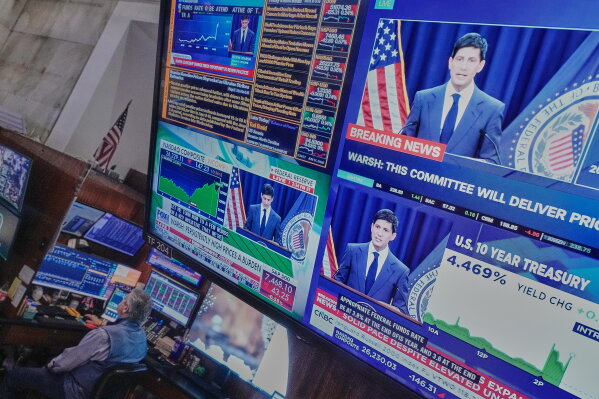
The Federal Reserve has traditionally evolved from a secretive government entity to a more open and communicative institution. This shift allowed the public insight into decision-making and economic perspectives. However, Kevin Warsh, the new chair, is reversing some transparency advances.
Warsh argues that financial markets overly rely on Fed guidance. He believes such guidance proves more effective during financial crises or downturns. Upon assuming leadership, Warsh decreased the length of the Fed’s interest-rate statement from 341 to 132 words. Importantly, he excluded any forward guidance on future Fed moves, fulfilling his commitment to reduce Fed communications, especially regarding interest-rate guidance.
This strategy could lead to increased volatility in stocks and bonds, potentially resulting in higher consumer and business interest rates. George Pearkes, a global macro strategist at Bespoke Investment Group, noted that forward guidance traditionally suppresses volatility and aligns market expectations, which contributes to lower borrowing rates. Despite these concerns, Pearkes predicts only a modest impact on consumers, such as slightly higher mortgage rates.
Following the Fed’s announcement, financial markets fluctuated, then declined. The 10-year Treasury yield, influencing mortgage rates, rose from 4.43% to 4.49%, before dropping slightly. The 2-year Treasury yield, reflecting expectations for Fed action, increased significantly. The S&P 500 index fell 1.2%.
Warsh draws inspiration from Alan Greenspan, whose measured statements often left investors guessing. Unlike his predecessors who clearly communicated Fed moves, Warsh’s approach signals a return to a more opaque era.
Warsh announced potential Fed reforms, including forming task forces to review Fed communications, balance sheet analysis, economic data use, AI impacts on productivity, and inflation analysis frameworks. He will also evaluate the format of press conferences and quarterly economic projections. These steps mark a departure from previous practices where transparency increased significantly post-2008 financial crisis.
Former Fed chairs valued increased communication for guiding markets towards desired directions. By signaling future moves, they aimed for preemptive adjustments in longer-term rates. Warsh, though, is urging investors to examine economic data independently and form their judgments, thus informing the Fed’s assessments.
“Financial market prices are probably the most important source of information to guide central bankers,” Warsh stated.
While David Andolfatto, a University of Miami economist, agrees forward guidance has weaknesses, such as unexpected global events disrupting plans, he emphasizes the need for a contingency strategy. Andolfatto supports Warsh’s move away from forward guidance but stresses the necessity of articulating how the Fed would handle unexpected challenges.
Interestingly, the shift may enhance the influence of the other 18 members of the Fed’s rate-setting committee. These members frequently speak publicly, and their comments may receive more focus as markets seek clues about the Fed’s next actions.
However, challenges might arise if a significant financial downturn or crisis occurs. Forward guidance can help stabilize markets during such events, as seen during the COVID pandemic. The approach’s long-term viability remains uncertain, contingent on future economic developments.
 Consider a 2-Year CD for Secure Savings in an Uncertain Economy
  Impact of Federal Reserve Rate Decisions on Gold and Silver
  Maximizing Your Earnings with a 3-Year CD
 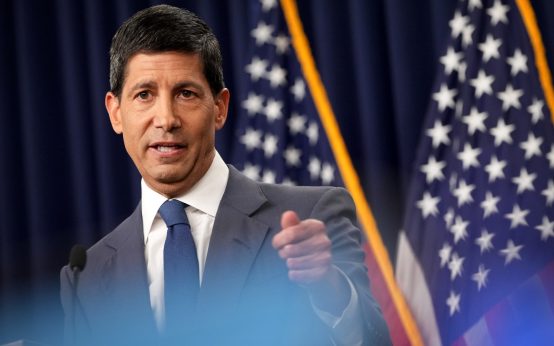 Fed’s Decision on Interest Rates Amid Inflation Warnings
  Maximizing Savings: Exploring 6-Month CD Options
  U.S. Job Growth Surpasses Expectations Amid Challenges