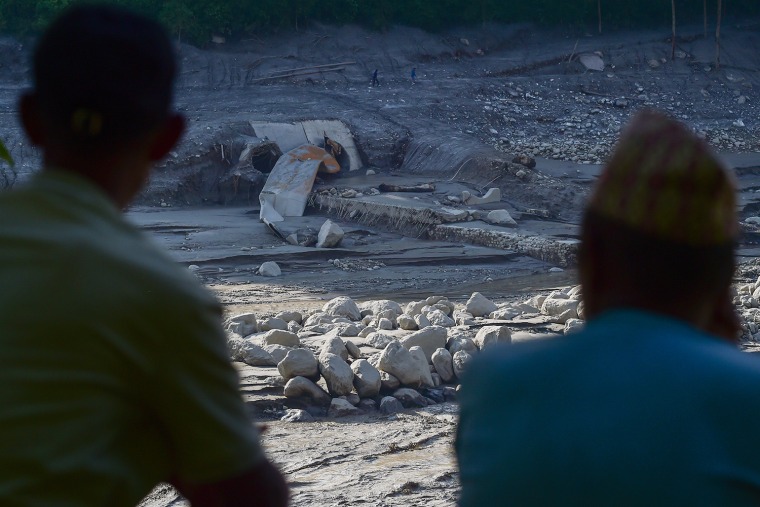
As of Wednesday, efforts to find survivors from the devastating floods in Nepal continued, although hopes were diminishing. Thousands remain missing a week after a glacier collapse in the Himalayas caused flash floods, resulting in over 1,114 deaths. The focus of rescue operations is on hydropower plant tunnels where workers might have survived.
Rescue Efforts at Hydropower Plants
Authorities are concentrating their efforts on the tunnels of hydropower projects, believing there could still be survivors among the 639 missing workers. These tunnels potentially provide shelter, food, and water, as noted by Amhsu Kiran Shahi from the Nepal Electricity Authority.
Despite the challenge in finding other survivors, rescue teams persevere. They search across mountainous regions and along the China-Nepal border where the floods hit hardest. “The hope of finding survivors is decreasing,” said Phanindra Paudel of Nepal’s National Emergency Operation Center.
Potential Survivors in Tunnels
Large rescue efforts target the tunnels of four projects. Of particular interest are two projects housing nearly 100 people due to potential airflow inside. Efforts at Trishuli-3A focus on reaching an area where officials expect a dry space and accessible air.
Specialized teams from India, China, and the US contribute to rescue attempts, addressing the devastating impact on infrastructure and communities.
China’s Response and Current Toll
China’s current toll stands at 16 dead and 546 missing in Tibet, numbers expected to update as access improves. Heavy machinery access, previously hindered by road closures, began as China reopened the Gyirong border crossing.
Rescue operations in Tibet utilize equipment such as life-detection devices and search dogs, overcoming challenges from terrain and weather, as reported by CCTV.
International Support and Recovery Efforts
Responses include international support with China deploying DNA experts and supplies, including Bailey bridges and communication tools.
Residents in affected Nepali areas attempt to recover belongings from destroyed towns. As seen by Shanta Sunar, a survivor, many have lost their possessions despite escaping with their lives.
Save the Children reports psychological distress among children in affected regions, highlighting the traumatic impact of the floods, including witnessing devastating scenes.
Rebuilding Initiatives
Prime Minister Balendra Shah affirmed the government’s efforts, alongside foreign aid, to restore essential services. Most telecom services were reportedly restored by Tuesday with attempts to rebuild the disrupted power generation infrastructure.
Shah noted, “This was one of the major disasters experienced by human civilization.” He emphasized the swift deployment of security personnel yet acknowledged some went missing during their duty.
 The Cost of Challenging Beijing
  Tensions Escalate in Iran Conflict as Global Leaders Weigh Options
  White House Approves F-35 Sales to Saudi Arabia Amidst Regional Tensions
  Inside the Secret Deals Powering the President’s Push to Deport Migrants to Countries Not Their Own
  Navigating the Challenges of Third-Country Deportations
  Midair Altercation on Bangladesh to London Flight