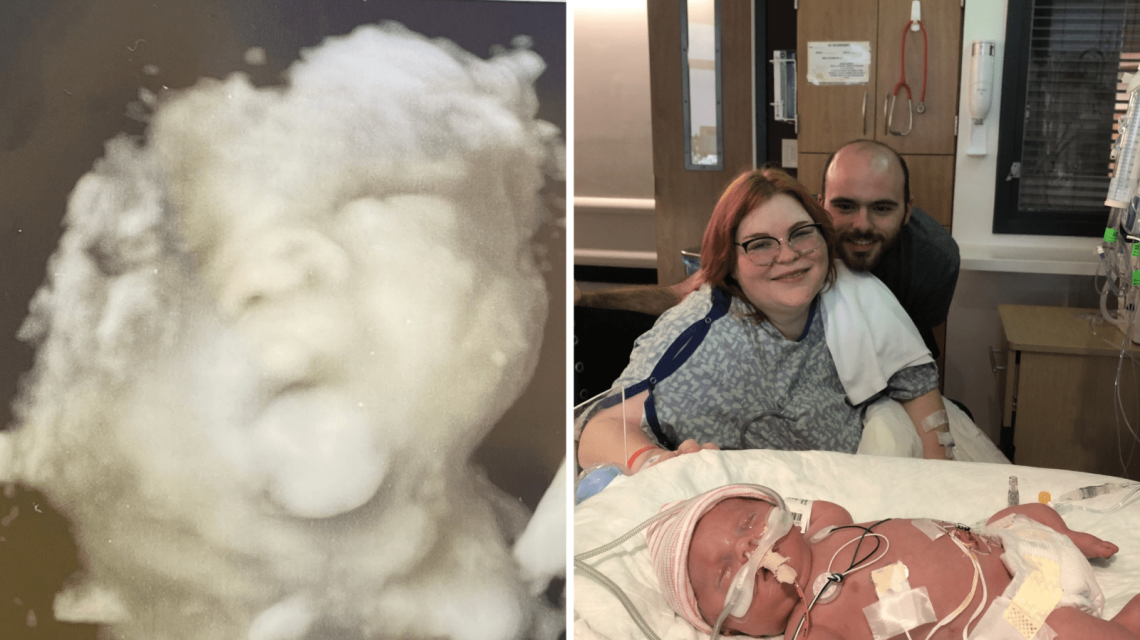
In late 2024, I discovered I was expecting my third child. Despite the joy of pregnancy, I carried the painful memory of losing my first baby at 18 weeks. With this history, my third pregnancy filled me with concern. During the 20-week anatomy scan, my fears materialized as the results revealed skeletal issues in the baby. Her limbs were significantly smaller than expected and her skull resembled a lemon shape.
I questioned my OBGYN about the possibility of osteogenesis imperfecta (OI), a condition I suspected took my first child. While my doctor initially suggested a different form of skeletal dysplasia, further consultation with a maternal fetal specialist confirmed my fears. The specialist found fractures, concluding that it was likely OI, commonly known as brittle bone disease. This condition makes bones extremely fragile and was potentially life-threatening for my baby, leading to a recommendation of termination. I fell into deep despair, overwhelmed by the situation.
“I refused to accept that hope was gone when others were living full lives with OI.”
I turned to the internet, seeking stories from parents and individuals with OI. Their experiences gave me hope. Inspired by their resilience, I decided to fight for my daughter’s chance at life. With determination, I found a specialist willing to attempt a complex cesarean operation designed to minimize the risk of fractures during birth. This approach involved a precise incision through my previous C-section scar and careful handling of the uterus.
On July 7, 2025, my daughter Dani was born with a rare mutation affecting her bones. The fight didn’t end with her birth. It intensified in the NICU as I strongly advocated for her right to pain relief and necessary treatments, opposing the wait-and-see approach.
Dani received oxygen, a feeding tube, and medications like morphine and oxycodone for multiple fractures. Despite the geneticists’ struggle to pinpoint the mutation, they identified her condition first as type 2 and then as type 3 OI. Personally, I suspect type 4, which presents less severe implications.
Our family has a history of OI, suggesting a genetic link. Despite mild personal symptoms, including hyper-mobility, my family lineage revealed clues. My elder daughter, Carolyn, also displays some symptoms synonymous with OI.
Caring for Dani involves meticulous attention. Every aspect, from holding to bathing, requires precision due to her fragility. Since birth, Dani has experienced 12 fractures, some occurring through minor actions like startling or coughing.
Beyond bone fragility, Dani’s condition has led to additional complications. Her skull, affected by Wormian bones, leaves parts of her brain vulnerable. Early fractures in her legs cause multiple joint-like structures impeding potential mobility. Still, Dani defies expectations, demonstrating an innate joy. Although she faces developmental delays, she adapts with therapy and specialized equipment to aid her progress.
“Doctors underestimated her spirit, predicting she wouldn’t surpass 28 days. Dani proved them wrong.”
For parents in similar situations, accurate information is crucial. Many misunderstand OI, considering it an unbearable condition, but my daughter exemplifies the possibility of a joyful life. Though challenging, raising a child with OI is a journey worth taking.
During this journey, faith became a source of strength. My transition to Christianity emerged from a plea for divine support for my daughter. Now, I dedicate my efforts to spreading awareness about OI. Sharing our experiences, I aim to educate others on this condition, offering comfort and understanding through Dani’s journey.
 Florida Man Claims ‘Lion Diet’ Transformed Health and Life
  Revival of Organized Labor in 2026
  Concerns Over Food Safety and Its Impact on Families
  A Mother’s Tragic Journey Under Abortion Ban
  Medical Diagnosis Errors: Understanding the Crisis
  Community Relief Efforts at New Orleans Free Store