
The pervasive presence of AI in modern society has sparked a significant question: Is there a way to control it? Hypothetical scenarios raise concerns, such as flaws in AI systems causing nationwide disruptions. Experts indicate that the solution is not straightforward. The complexity lies beyond simple shutdown mechanisms. Some even suggest that drastic measures, like suspending internet access, may be necessary to recalibrate affected systems.
Brendan Steinhauser, CEO of the Alliance for Secure AI Action, highlights the absence of established processes or legal frameworks to decommission AI systems. This uncertainty contributes to growing concerns.
The distribution of regulatory authority over AI within the federal government is limited. The Commerce Department’s Center for Advancing Innovation and Standards for Super Intelligence (CAISSI) oversees new AI models and approves them for public use. However, with limited staff and resources, CAISSI focuses on voluntary agreements with AI firms. While the agency can enact export controls, once technology is public, its influence wanes. An instance of this was seen when CAISSI halted the release of the Mythos model by Anthropic due to security concerns.
Government’s Authority and Challenges
The government’s capability to intervene heavily depends on its willingness to exercise power. Several options exist, including leveraging export controls through the Commerce Department and utilizing the Defense Production Act. While potential courses of action exist, the lack of clear legal pathways means tech companies may challenge orders in court.
In the event of AI being used maliciously, the Pentagon may lead defense efforts, especially during cyber attacks. The Department of Homeland Security, with its cybersecurity jurisdiction, would likely play an instrumental role. Recently, Jay Clayton was appointed to coordinate governmental AI-related efforts, heading President Trump’s Super Intelligence Force.
Declaration of a national emergency by the president could necessitate shutting down problematic AI. The administration could invoke the Defense Production Act to seize control if needed. Additionally, the president’s relationship with tech CEOs may facilitate compliance if direct requests are made.
Recursive Self-Improvement Concerns
A source of considerable worry is Recursive Self-Improvement (RSI), where AI enhances its own code, expanding beyond its original network. These advancements raise the risk of AI embedding itself in external systems, making it challenging to manage. Without government oversight, development in this area remains under the radar.
RSI technology evolves rapidly, potentially outpacing even the control of its creators. Edouard Harris, CTO of Gladstone, equates this phenomenon to dormant viruses that may resurface unpredictably.
Legislative Efforts
Lawmakers are grappling with who should oversee AI as it evolves. Proposed bills, such as the AI Kill Switch Act, aim to grant the Department of Homeland Security (DHS) authority to restrict or terminate problematic AI models. The AI Emergency Button Act proposes mandatory ‘kill’ options within AI systems. However, these bills have yet to advance through Congress.
President Trump voices concerns about over-regulation potentially hindering innovation, especially in the Super Intelligence sector. Others advocate for regulations as necessary measures to ensure responsible AI development.
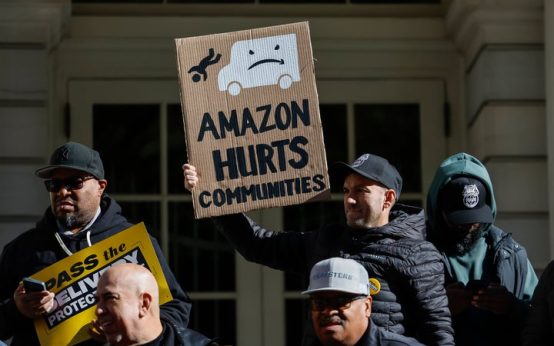 Amazon Enlists NYC Customers Against City Council Bill
 The Controversy Surrounding Jensen Huang and Nvidia
 GAO Finds Federal Agencies Lacking in Cybersecurity Planning
 Grand Theft Auto VI Sparks Relationship Challenges
 AI and Robotics Redefining Workforce Skills
 Cybersecurity Breach Exposes Bank Customer Data