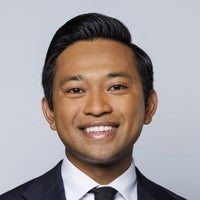
On Tuesday, a group of Jewish leaders in Michigan started a petition campaign urging Democratic Senate nominee Abdul El-Sayed and other candidates to commit to certain principles regarding Jewish safety and their stance on Israel. The leaders warned that lacking these commitments might cost the candidates their support.
Rabbi Josh Whinston, who is part of the coalition of more than a dozen rabbis spearheading the campaign, stated in an interview, “This concerns not only Dr. El-Sayed but also a larger issue in our political landscape. Many in the American Jewish community feel pressure from both political sides.”
Abdul El-Sayed, a former Michigan health authority, gained the Democratic nomination recently amid a primary rife with debate over his vocal critique of Israel and the American Israel Public Affairs Committee (AIPAC). El-Sayed has clarified that his criticism targets institutions, not Jewish people, declaring, “I hold Judaism and Jewish people in high regard.”
In the ongoing electoral contest, El-Sayed faces former GOP Rep. Mike Rogers for a Senate seat. Rogers, who ran unchallenged, concentrated early on the general election, while El-Sayed continues to rally Democratic support. El-Sayed received endorsements from prominent figures like Sen. Bernie Sanders and Rep. Alexandria Ocasio-Cortez, while Rep. Haley Stevens received support from more moderate Democrat figures, including Chuck Schumer.
The petition emphasizes several nonnegotiables, without naming El-Sayed directly. These include Jewish safety, the right to self-identify, Jewish sovereignty in Israel, full political inclusion, and a positive vision for the Middle East. It affirms, “Support must be earned.” The petitioners invite candidates to engage meaningfully with the Jewish community in Michigan.
Whinston expressed a need to address the Jewish community’s political concerns, stating, “When marginalized groups feel politically homeless, it is a matter of urgency.” He encouraged El-Sayed to foster alignment with Jewish constituents.
The El-Sayed campaign cited meetings with Jewish leaders and attendance at Jewish community events as evidence of their engagement. Despite criticism from figures like Hasan Piker, a left-wing podcaster, El-Sayed emphasized, “My commitment to Jewish safety is deeply personal, comparable to my commitment to my daughters’ safety.” He disavowed harmful rhetoric and condemned antisemitism outright.
Whinston criticized El-Sayed for using language echoing antisemitic tropes, particularly concerning comments about Israeli leadership. Rabbi Aaron Starr of the Michigan Board of Rabbis acknowledged El-Sayed’s efforts to bridge differences and hoped either candidate would denounce harmful rhetoric if elected.
The Michigan Senate race holds significance as it could influence the balance of power in the Senate. With control of the upper chamber in balance, both Democrats and Republicans view the race as critical. El-Sayed’s potential success or failure may have broader implications.
Voter indecision remains prevalent, with many congregants expressing uncertainty. Whinston noted a shared sentiment of feeling “politically homeless” while believing in the importance of being part of the political process.
 Court Rules Against Third-Country Deportation Policy
  Trump Administration Bars News Networks from White House
  Lawsuit Filed Over Preeclampsia Death in Texas Amid Abortion Ban Controversy
  Cook County’s Loan Program Assists Suburban Agencies Amid Property Tax Delays
  Freddy Cazares: Navigating the Limbo of Immigration Detainment and Uncertain Release
  Concerns Over Political Influence in Academia