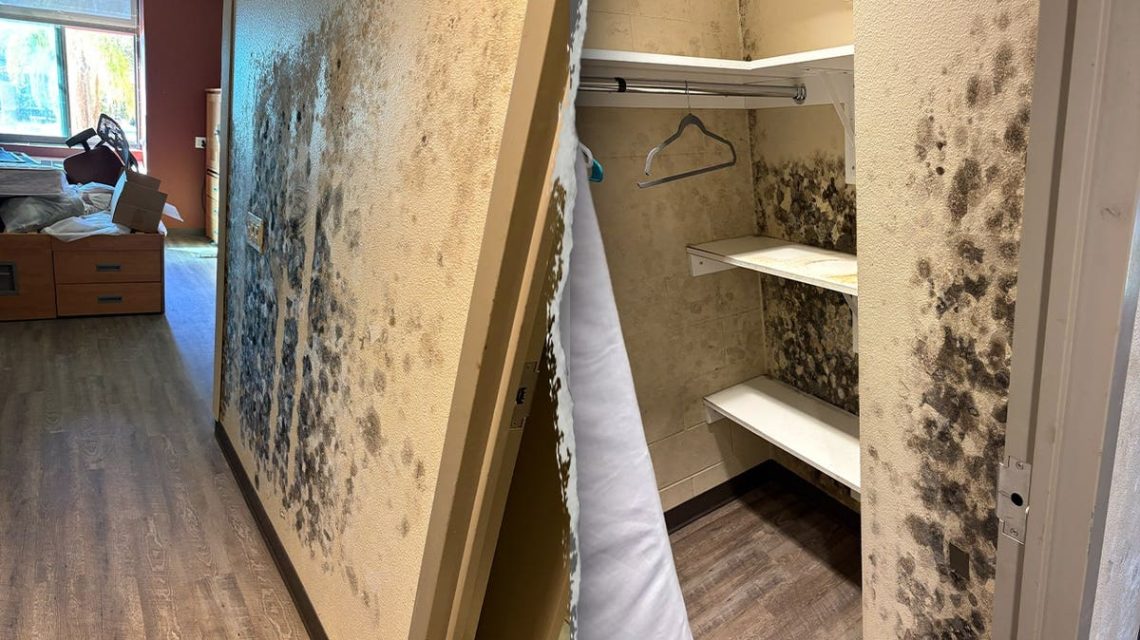
Some troops have gone without hot water for a year. Others sleep in their cars due to barracks without air conditioning. Many ask for basic repairs such as drywall and paint. These conditions are what Medal of Honor recipient Dakota Meyer encountered while touring military installations on a mission from War Secretary Pete Hegseth to fix a neglected barracks system.
“There’s only a couple that I’ve seen that are good,” Meyer said in an interview with Fox News Digital. Meyer, as a senior adviser to the Pentagon’s Barracks Task Force, visited over eight installations across the Army, Navy, Air Force, and Marine Corps and plans to visit 30 by year-end. “What I thought was gonna be a professional job very quickly turned into personal,” Meyer added.
What she would change about her living conditions?
Meyer recalled asking a 19-year-old service member during his visits. Her response was simple: A hot shower. Meyer described the situation as “heartbreaking.” These barracks problems have persisted long before Hegseth’s tenure, surviving multiple reform attempts. A 2023 Government Accountability Office investigation reported severe health and safety hazards in the barracks, citing inadequate information and oversight on facility conditions and spending.
Despite commitments of billions from Congress and military services toward improvements, significant issues remain. Programs like the Marine Corps’ “Barracks 2030” and the Navy’s housing overhaul continue alongside these challenges. This year, 12 of 31 GAO recommendations are still unresolved.
Hegseth has sought a unified effort under a department task force, aiming to expedite improvements. Meyer noted that simply identifying problems isn’t enough. “The secretary has made it clear to me he doesn’t expect me to observe this or study it, he expects me to fix it,” Meyer said.
Meyer aims to grant the task force an “authoritative role,” allowing them to make impactful decisions and directives. He emphasized funding issues aren’t solely to blame for the poor conditions. Bureaucratic layers, excessive contracting regulations, and an extensive maintenance backlog also contribute. The Pentagon faces a $285 billion backlog in maintenance across military facilities, highlighting the department’s infrastructure challenges.
Continuing resolutions also complicate funding, as seen with Congress’ delay in passing the fiscal 2027 defense appropriations. The Pentagon operates under a temporary funding measure until a broader spending package is finalized. “When you can’t get a budget, it’s a huge issue,” Meyer stated.
He criticized how progress often measures based on budget spending rather than actual improvements in living conditions. Our service members don’t live in our budget lines,
Meyer said, “they live in the rooms that those budget lines are there to impact.” For Meyer, understanding these realities involves leaving Washington to talk directly with service members.
Meyer heard in person what troops need. “They’re asking for a hot shower, a place to wash clothes, a door that locks, mold-free living spaces, and light bulbs,” he said, stressing how willing they are to contribute to solutions.
Though Meyer refrains from exclusively blaming commanders for the poor conditions, he acknowledged the system’s long normalization of inadequate barracks. “I think it’s a multidimensional problem, and it’s complex,” he noted. He pointed out the dedication of commanders to care for their service members, though they need the ability to enact changes.
Meyer was critical of past Pentagon leadership, indicating that prior investments and reforms didn’t improve living standards. He pointed to Hegseth’s prioritization of troop welfare. “We have the Secretary of War putting people first,” Meyer stated.
Meyer has tied his success to resolving these issues, indicating his accountability for the outcome. When asked what “fixed” means, Meyer replied simply, “People are living in places I would be okay for my daughters living in.”
 The Mysteries of Missing 411 and Eerie Encounters
 Tragic Car Crash in Southern California Claims Teen Life
 Custody Dispute Involving Rep. Max Miller Delayed
 Historical Events in the Chicago Area on November 9
 University of Mississippi Investigates Racist Incident Caught on Ring Camera
 Hidden Camera Discovery in Tokyo Hotel Raises Privacy Concerns