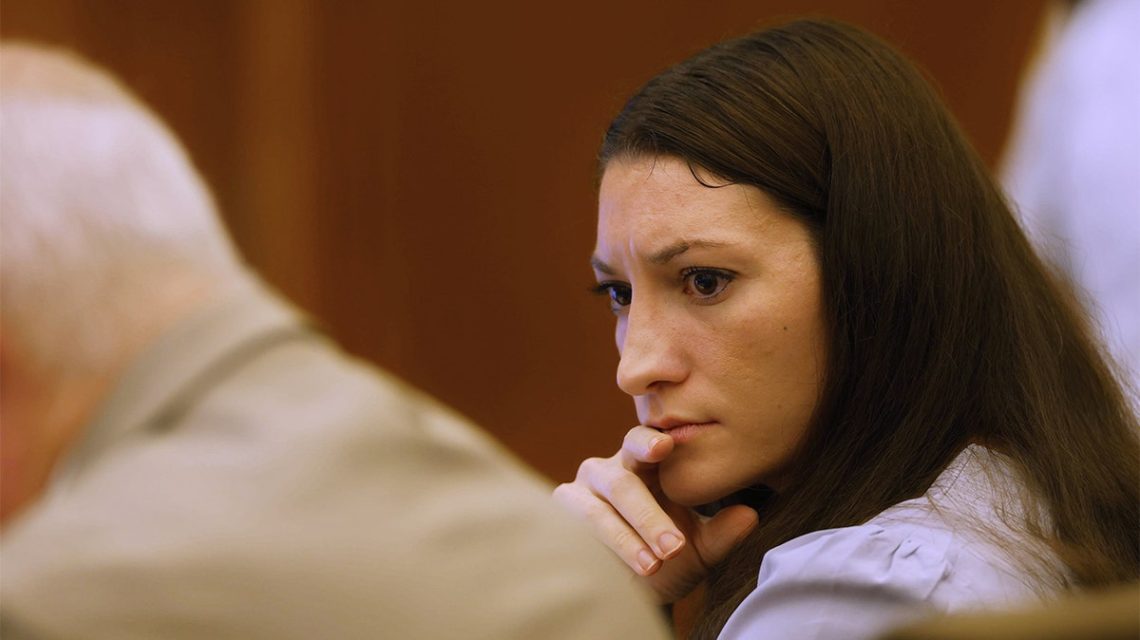
Lindsay Clancy actively participated in a significant court session. She responded repeatedly with “Yes, Your Honor” as she consented to allow prosecutors to treat certain forensic facts as established. This development occurred hours before a state trooper testified that investigators found no usable fingerprints on a knife or three exercise bands. The central issue in the Massachusetts mother’s case remains whether Clancy was legally responsible for her children’s deaths at their Duxbury home.
Before the jury arrived, Judge William Sullivan clarified the stipulation involving evidence with Clancy. The stipulation allows certain facts to be treated as agreed upon, relieving the Commonwealth from proving each one. Sullivan asked Clancy if she understood this agreement. Clancy confirmed, “Yes, Your Honor.” The judge also confirmed that Clancy was entering the stipulation knowingly and willingly. No one had forced or threatened her into this agreement.
Defense attorney Kevin Reddington emphasized that the agreement helps avoid the need for prosecutors to present numerous witnesses. These would have been used to establish the chain of custody for blood, bodily fluids, exercise bands, and DNA evidence. Reddington explained that the defense was not contesting the main points of the government’s case.
Margaret McLean, a former prosecutor and trial attorney, explained that the stipulation is not an admission of guilt. It allows the defense to focus on Clancy’s mental state by avoiding repetitive forensic testimonies. McLean emphasized that Clancy’s calm demeanor does not necessarily reflect her state of mind on January 24, 2023. The prosecution must prove beyond a reasonable doubt that Clancy was sane when the crimes occurred.
Later, State Police Trooper Jonathan O’Loughlin detailed evidence collection at the crime scene. He explained that a knife and three exercise bands yielded no usable fingerprints. O’Loughlin noted that the knife had a friction-ridge impression, but it was not sufficient for identification. None of the exercise bands provided fingerprints suitable for comparison.
O’Loughlin described fingerprints as fragile, influenced by various factors, such as an object’s texture, environmental conditions, and whether the surface was wiped. McLean suggested that the absence of fingerprints could imply premeditation or wiping. However, she warned against conjecture unsupported by evidence.
McLean stressed that jurors should rely on evidence rather than speculation. Jurors can apply common sense in deliberations but must avoid assumptions not grounded in presented facts.