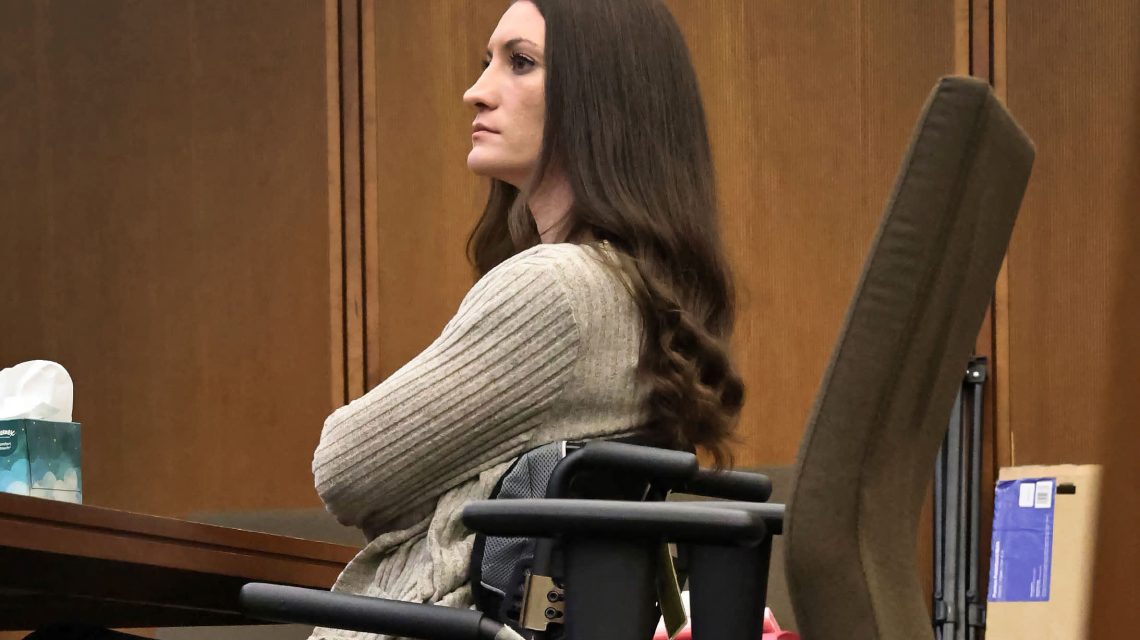
The murder trial of Lindsay Clancy, accused of killing her three young children, is nearing its conclusion with the presentation of evidence expected to wrap up today. Clancy’s mental health is central to this case, with the defense arguing she suffered from postpartum psychosis, impacting her ability to understand her actions. Prosecutors assert she intentionally killed her children.
Prosecution and Defense Clash Over Mental Health Claims
Prosecutors presented final witnesses to challenge the postpartum psychosis defense, suggesting Clancy’s mental state did not impact her decision-making as claimed. The defense emphasized testimonials from Clancy’s friends and family, portraying her as a devoted mother.
The trial has sparked significant attention through podcasts and social media, highlighting gaps in maternal healthcare. Closing arguments are anticipated to begin tomorrow.
Defense Cross-Examination and Claims
Defense attorney Kevin Reddington finished questioning forensic psychiatrist Gregory Saathoff, challenging the assertion that Clancy manipulated her treatment plans. Reddington disputed claims that Clancy crushed pills for a suicide attempt, questioning the investigation’s thoroughness.
In defending Clancy, Reddington questioned whether Clancy’s choice to avoid medication due to adverse reactions was reasonable, leveraging her background as a nurse for context.
Inside the Courtroom
The courtroom experienced lighter attendance this morning. Jurors appeared engaged, taking notes during crucial testimonies. An unexpected moment occurred when a woman entered the courtroom with a dog, drawing attention from the public gallery. Clancy’s parents were also present, remaining composed throughout the proceedings.
Psychiatrist’s Testimony and Courtroom Dynamics
Saathoff testified regarding Clancy’s capacity to appreciate right from wrong during the killings, citing her actions before and after the incident as evidence. The psychiatrist referenced Clancy’s ability to function in everyday scenarios, undermining the defense’s portrayal of impaired judgment.
Attention was drawn to the low dosage of amitriptyline Clancy was prescribed, which Saathoff insists was safe for even a child, challenging the defense’s argument of exacerbated mental instability due to medication.
Forensic Analysis and Final Witness Review
The prosecution’s forensic psychologist, Kirk Heilbrun, testified that Clancy understood the wrongfulness of her actions. This aligns with the prosecution’s narrative that she retains moral awareness, opposing the defense’s mental illness claim.
Reddington pressed Saathoff on his experience with postpartum psychosis, questioning the psychiatrist’s expertise. Saathoff argued that people with psychosis can still choose legal compliance, asserting that Clancy, despite her claims of auditory hallucinations, had control over her actions.
The court is anticipated to conclude testimonies today, with closing arguments scheduled for tomorrow, following which the jury will deliberate Clancy’s criminal responsibility.