
A federal judge in Boston, Indira Talwani, has ruled against the Trump administration’s attempt to apply an obscure clause related to agency priorities for making funding cuts. Her decision prevents the use of this clause to make cuts totaling billions of dollars.
Last year, 23 states filed a lawsuit against the administration, accusing it of attempting to use the clause to cut funding for programs ranging from crime prevention and food security to scientific research. These states expressed concerns about the potential cancellation of current and future grants.
Judge Talwani granted a summary judgment, which stops the administration from using the clause to make such funding cuts. She also denied the government’s motion to dismiss the case. In her judgment, she stated that the interpretation of the Termination Clause by the defendants was not clearly backed by the text, was inconsistent with the regulatory scheme, lacked support in rulemaking history, and violated the Spending Clause’s requirement for conditions to be imposed clearly.
The lawsuit claimed that the Office of Management and Budget introduced and later revised the clause in 2020 and 2024, respectively, enabling federal agents to terminate a grant when it no longer aligns with program goals or agency priorities.
The states argued that this language, meant to be used by the Biden administration, was being applied for terminating grants for the first time. Jennifer Davenport, New Jersey Attorney General, criticized the Trump administration for recklessly reducing federal funding crucial for public safety, disaster preparedness, scientific research, and clean water. She described this court decision as a significant win for the residents of New Jersey.
Lawyers for the federal government labeled the case as an ‘extraordinarily unusual lawsuit,’ suggesting its dismissal because some grants had already ended. They claimed the plaintiff’s concerns over future grants were speculative and that the objections lacked specificity.
They argued the lawsuit faced jurisdiction and justiciability problems, preventing it from successfully addressing any single grant.
A spokesperson for the Office of Management and Budget declined to provide a comment on the ruling.
 A Mother’s Tragic Journey Under Abortion Ban
  U.S. Strategic Goals Remain Unmet Amid Prolonged Conflict
  The Impact of Arts and Closure on Democracy
 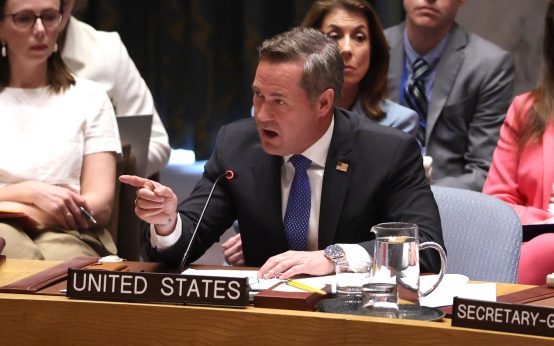 U.S. Ambassador Comments on Iran War Duration Amid Political Concerns
 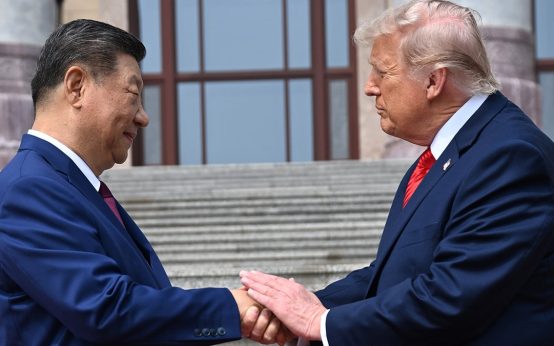 US-China Relations Under Scrutiny: Expert Warns of Escalating Tensions
  No Timeline for End of Iran Conflict