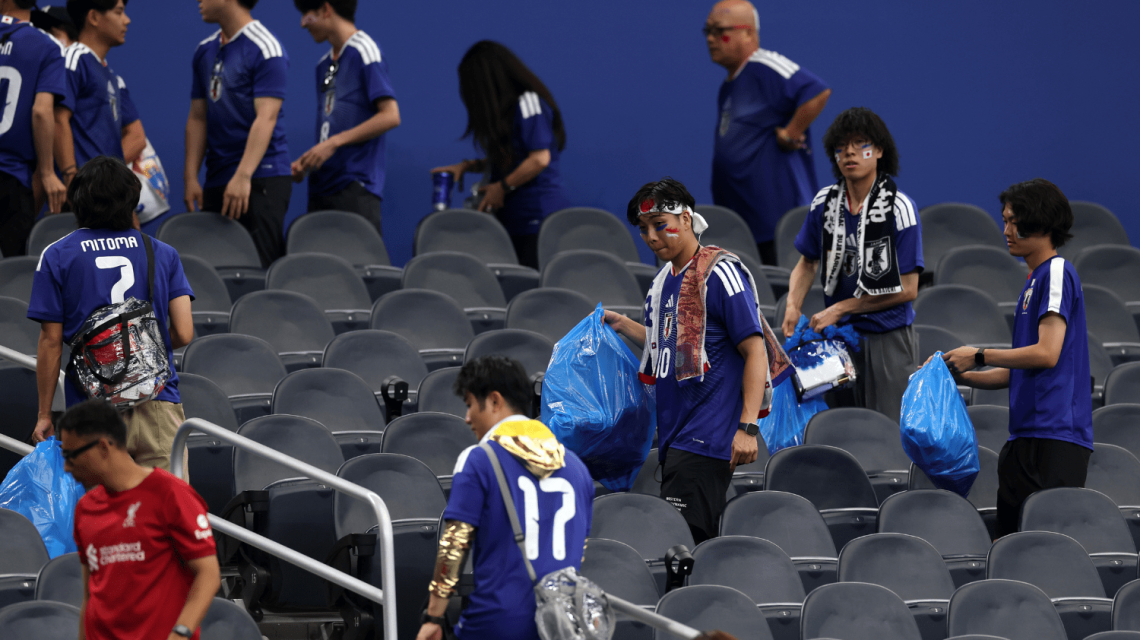
Following the final whistle during a World Cup match between the Netherlands and Japan, Japanese fans immediately got to work—not finding a place to keep the party going, but by cleaning up trash in the Dallas Stadium. In footage shared by FIFA and viewed over 6.3 million times, fans were seen collecting trash from the stands and placing it into bags long after Japan’s 2–2 draw with the Netherlands.
One supporter explained the motivation for the gesture. It’s the culture, but it’s like a respect for everything—respect for the players, supporters, and also for the stadium
, she said. We are kind of honored to be here, so we don’t want to make the mess and then leave it
.
A Familiar Tradition on the Global Stage
Japanese fans have gained international recognition for similar acts at recent tournaments, often staying behind after matches to clean their section of the stadium. The behavior seen in Dallas echoes scenes at previous events, including a friendly in England’s Wembley Stadium earlier this year, where supporters were praised for leaving venues spotless.
A Tournament Built on Massive Scale—with Trash to Match
The moment highlights the sheer scale of waste generated during the World Cup, one of the largest sporting events globally. The 2026 tournament, spanning the U.S., Canada, and Mexico, is expected to draw 6 to 8 million fans across 104 matches. With each fan estimated to produce around 0.6 to 0.8 pounds of waste, including items like cups (due to FIFA banning refillable water bottles), food containers, programs, and merchandise packaging, the overall World Cup waste could reach 4 to 5 million pounds.
Individual host cities are preparing for the impact. In Miami, officials have stated that World Cup matches and related events could produce over half a million pounds of trash across seven games.
How Organizers Plan to Handle It
FIFA and local organizers emphasize waste reduction and sustainability as central to planning for the 2026 tournament. In Dallas, where the stadium can hold more than 70,000 fans and will host nine matches, officials say a comprehensive waste management program is being implemented. This includes expanded recycling and composting efforts, reduction of single-use plastics, and public awareness campaigns encouraging fans to sort waste.
At previous tournaments, similar efforts have been tested. During the 2022 World Cup in Qatar, approximately 80 percent of stadium waste was recycled or composted, with thousands of tons processed through sorting systems.
 Impact of the Chicago Marathon on Local Businesses
  Life in Gaza: One Year After the Ceasefire
  Coordinated Global Protests Against Israel
  Student Protests in France Expose Deep Political and Economic Challenges
  Guardians Triumph Over White Sox in ALDS
  Pope Leo XIV Condemns Death Penalty in Light of Pentagon’s Execution Plans