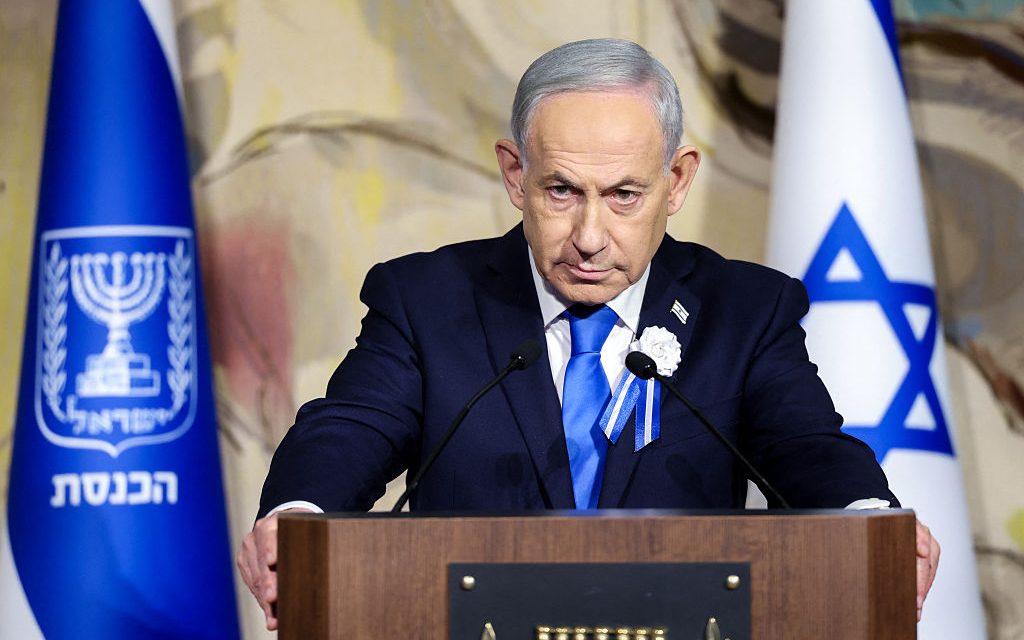
Israeli President Isaac Herzog has tasked Gadi Eisenkot, a former military chief and leader of the center-right Yashar party, with forming the country’s next government. This step is part of a potentially lengthy process to determine the next Prime Minister, which might leave Benjamin Netanyahu in power for an extended period.
Eisenkot has 28 days, until December 6, with a possible 14-day extension, to form a government that can secure the confidence of the Knesset, Israel’s parliament. Once successfully formed, the Knesset must convene within seven days to hold a confidence vote. Upon winning the vote, the new government assumes office.
Election Results and Coalition Challenges
In the recent election, no party bloc achieved the 61 seats required for a majority in the 120-seat Knesset. Netanyahu’s Likud party, with its allies, won 53 seats, while Eisenkot’s coalition secured 48. Two Arab-led parties hold the remaining 19 seats.
To form a government, Eisenkot needs to forge alliances with diverse parties, overcoming differences in policy and priorities to create a voting majority. Joining his coalition would imply endorsing Eisenkot as Prime Minister. Challenges include negotiating alliances, particularly with Arab-led parties, and balancing the demands of nationalist party leaders within his coalition.
The Role of Coalition Building
Parties must negotiate alliances to secure support for a Knesset confidence vote. Potential scenarios include collaboration with Arab-led parties, which would provide Eisenkot’s bloc with needed seats. However, nationalist leaders within his coalition oppose relying on such parties. Eisenkot might also explore including ultra-Orthodox parties, but differences on issues like military service complicate this option.
If Eisenkot fails to form a government, Herzog may assign another candidate the task. Failure to reach a consensus could lead to new elections, prolonging uncertainty and potentially leaving Netanyahu in power.
Can Netanyahu Retain Power?
Netanyahu remains at the helm of the outgoing government while Eisenkot works to form a coalition. He might attempt to form his own coalition, possibly enticing Eisenkot’s supporters. If Eisenkot cannot establish a government, the process may reset, giving Netanyahu another opportunity.
Past setbacks illustrate the difficulty of reaching consensus, as evidenced by Israel’s repeated elections between 2019 and 2022. Prolonged electoral cycles could prove unpopular with voters and lawmakers alike. As Eisenkot and Netanyahu navigate the political landscape, support from leaders like Naftali Bennett and Avigdor Lieberman may prove decisive.
 John Thune Re-elected as Senate Minority Leader
 Massachusetts State Police Settlement with Karen Read and Other Major Political News
 Jim Jordan’s Journey from Wrestling Mat to Political Arena
 Alaska Senate Race Unresolved as Close Contest Continues
 Defense Secretary Pete Hegseth Faces Possible Impeachment
 Jim Jordan Wins House Minority Leader Position