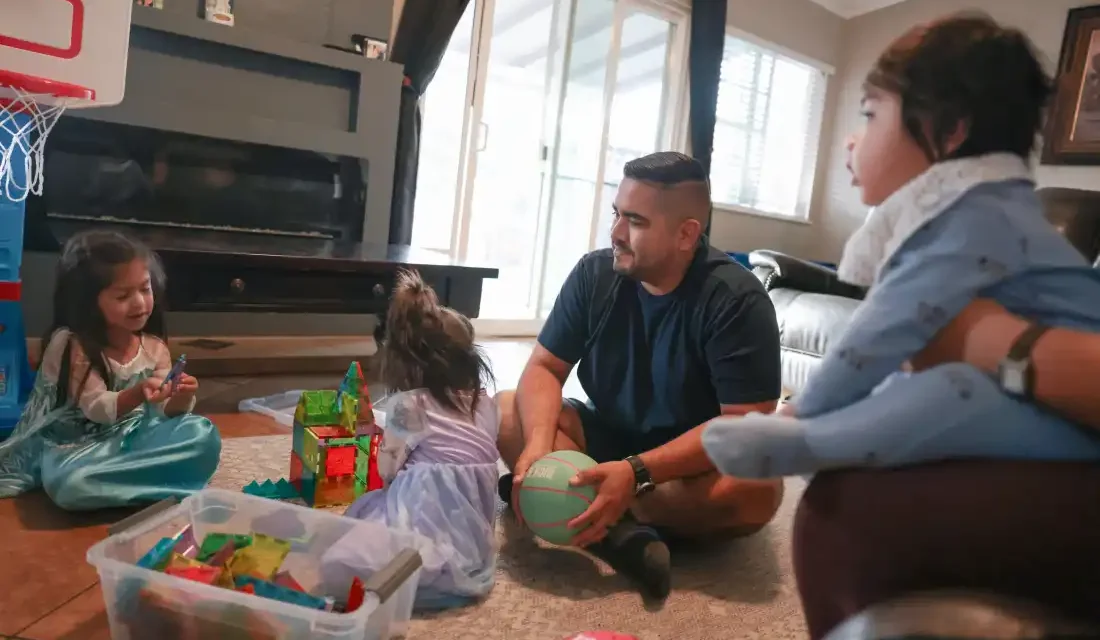
Karlo Campana, a father from California, plays with his daughters Gianna and Giselle while his 5-month-old son Gianluca watches. Campana is part of a growing trend of California men using the state’s paid bonding leave program.
Dania Maxwell for NPR
These days, Campana often finds himself surrounded by his energetic children. With three kids under 4 years old, a recent Saturday was spent playing a mini-game of basketball with his older children in their Southern California home. His newborn watched from a bouncy chair.
Campana took paid leave in May following his son’s birth, as he did after his daughters’ births. Such leave, called ‘bonding’ or ‘family’ leave, differs from ‘maternity’ or ‘disability’ leave that mothers take for physical recovery. He emphasized the importance of having time to adjust without work distractions or income loss.
“My wife isn’t doing it on her own,” Campana noted, highlighting the support he provides during their parenting journey. He humorously added that by the third child, he assumed he mastered diaper changes but realized he still faced challenges.
Dania Maxwell for NPR
Campana is among many fathers opting for paid leave to bond with new children in states with such programs. In California, dads represent about half of bonding claim applications. In 2025, men even surpassed women in these applications. This shift aligns with cultural changes in caregiving responsibilities for fathers.
The federal government encourages higher birth rates. Families face challenges like affordability in raising children. Although no federal mandate for paid parental leave exists, California is one of 14 states, plus Washington, D.C., with paid family leave programs. Many fathers are participating.
Molly Weston Williamson, policy director at Paid Leave for All, states that societal perceptions of gender roles and paternity leave have evolved significantly over the past two decades. California offers parents up to eight weeks of paid bonding leave after a birth, adoption, or foster placement, in addition to six to eight weeks of maternity leave for post-birth recovery.
Dania Maxwell for NPR
Campana initially hesitated to take paternity leave due to gender stereotypes. “I felt guilty, for sure,” he said. Growing up, his father worked multiple jobs. Campana now prioritizes being present for his children.
Research indicates broader benefits of paternity leave, including better family health outcomes and reduced postpartum depression or infant mortality rates. California data shows 51% of bonding claims came from men in 2025. A significant shift from 2004, when men represented 18% of applications.
States fund family and medical leave through employer and employee contributions. California’s program is funded entirely by employee payroll deductions.
Dania Maxwell for NPR
Williamson outlines factors contributing to increased claims from men: heightened program awareness, benefit enhancements, and income replacement improvements, reaching up to 90% of a salary. Families, including dads and moms, benefit from these changes. Despite insights from recent data, Williamson acknowledges gaps in understanding the full picture. She suggests analyzing different factors like employment eligibility and leave decisions.
Private employers may offer paid leave, but the data focuses on California’s official paid family leave program. A California Employment Development Department spokesperson shared no specific reasons for rising male bonding claims.
Dania Maxwell for NPR
Economic strains impact parenting decisions. President Trump has advocated for policy changes to support family growth, like expanding fertility treatment access. Jeremy Pope from Brigham Young University notes that affordability concerns trouble many parents, advocating for cost reduction support.
In the 2025 American Family Survey, 7 out of 10 participants considered child-raising unaffordable—a significant rise from previous years. Although parents desire autonomy in family planning, financial help remains crucial.
A Pew Research Center survey revealed 84% of full-time working parents saw paid leave as beneficial, but only half had access to it.
This information is from NPR’s health reporting collaboration with LAist and KFF Health News.
 Addressing Menopause: A Long Overdue Congressional Hearing
 GSK and Cognizant’s Approach to Automating Drug Safety
 The Health Impacts of Vaping Highlighted by Selena Gomez’s Experience
 Brain Games and Their Effectiveness
 U.S. Faces Severe Measles Outbreak, Focuses on Vaccination
 Understanding Prostate Health and Misconceptions