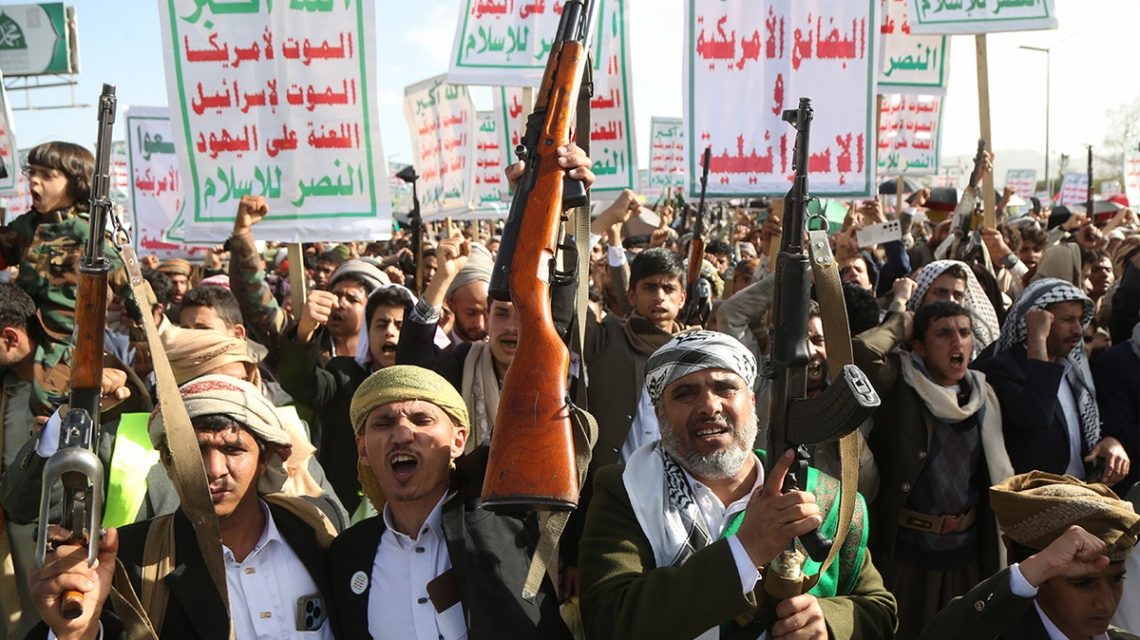
The Houthis are making rapid advances towards key maritime points, drawing attention to their financial network. This network has enabled the Iran-backed group to evolve from a local insurgency in Yemen into a formidable regional player.
They have secured strategic areas along the Red Sea coast, including the important port city of Mocha. Their reach now extends towards the Bab el-Mandeb Strait, a crucial passageway connecting the Red Sea with the Gulf of Aden, which facilitates a significant portion of global trade and energy shipments.
For the Trump administration, addressing the Houthi advance requires tackling financial and military challenges. The U.S. is intensifying actions to hinder the financial flow to Iran and its proxies. However, the Houthis exploit a sanctions-evasion network, managing ports and trade routes while controlling the lives of millions in Yemen, posing a complex issue for the Treasury.
Saudi Arabia has urged President Trump to take military action as the Houthis threaten to close the Bab Al-Mandeb Strait using missile drones if Gulf countries support the ongoing U.S.-Israel conflict with Iran.
According to Adam Rousselle of Between the Lines Research, the Houthis maintain a well-developed financial network. His research highlights a financing system encompassing Houthi-controlled ports, tariffs, Iranian oil, informal hawala networks, and foreign facilitators across Russia, Turkey, and Southeast Asia.
Port control is crucial for Houthi revenue, as Yemen relies heavily on imports. The group levies heavy fees at ports under their control and tariffs on goods entering from rival ports.
Their recent territorial gains could fortify their economic position. Nadwa Al-Dawsari from the Middle East Institute explained to the House Foreign Affairs Committee that territorial control is central to Houthi resilience.
She emphasized that control of territory allows the Houthis to recruit, generate revenue, manufacture and store weapons, and manage smuggling routes, buffering them against airstrikes and sanctions.
Rousselle clarified that the Houthis’ finances are complex, not merely reliant on Tehran’s financial support. The group operates within a broader Iranian commercial system, making most of their funds internally in Yemen through customs and taxes.
The Treasury estimates the Houthis generate over $2 billion annually from oil sales, enhanced by Iran’s monthly oil shipments through affiliates in Dubai. The Houthis also gain revenue from taxes on petroleum imports.
The Houthis’ financial structure navigates sanctions effectively by engaging with international systems. Sa’id al-Jamal, a key financial official, orchestrates an international network selling Iranian goods and channeling profits to the group.
Treasury reports in 2025 documented that al-Jamal’s network sourced millions for weapons and materials from Russia and identified digital-asset wallets used by Houthis.
Rousselle noted that Russia plays a significant role in the financial network, with reports of Russian petroleum being transferred to Houthi-controlled areas. Additionally, targeting data from U.S. officials suggests Russian involvement in Houthi military actions.
Al-Dawsari highlighted expanding Houthi ties with Russia and China, with satellite imagery from a Chinese military-linked company aiding Houthi attacks on shipping routes.
Although Chinese private actors are involved, Rousselle distinguished their involvement from direct government investment in Houthi financing.
The situation challenges the Treasury’s broader goal to curb Iranian proxies financially. Decentralized illicit networks prove difficult to shut down, as closure of one financial conduit often prompts another to emerge.
Washington’s focus should be on intersections between Houthi finances and the formal financial systems, targeting Yemeni banks and exchange houses linked to missile component purchases.
Oman might present a strategic pressure point due to its connection to Houthi financing, serving as a bridge supporting financial operations.
However, attempts to constrain Houthi finances confront a humanitarian dilemma. Yemen is severely distressed, with Houthis controlling vital infrastructure that aids civilian survival. Balancing the prevention of Houthi taxation on humanitarian goods remains a critical issue.
Rousselle warned about the broader implications of Houthi actions, emphasizing the need to address global challenges posed by sanction-evading networks.
 U.S. Military Expansion in Greenland
  The Autocratic Age: A Closer Look
  Venezuelan Migrant Arrest in Texas Sparks Outrage
  Senator Calls for Halt in Diesel Exports Amid Rising Fuel Costs
  Investigation into Far-Left Groups Organizing Protests
  Deadly Dispute Over Beach Chairs in Greece