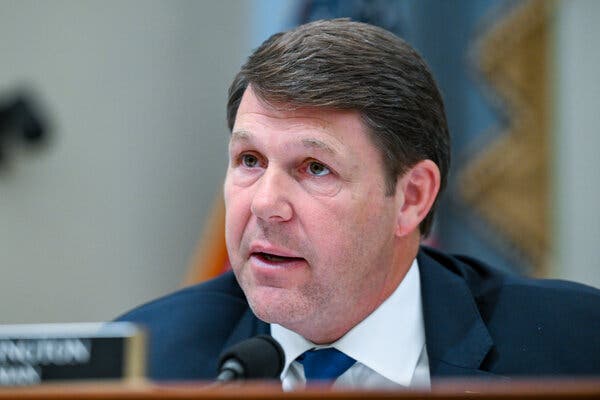
House Republican leaders introduced a budget plan aimed at bypassing Democratic opposition to secure $73 billion in additional military funding for the ongoing war in Iran and $12 billion for farmers. The plan also includes stringent voting restrictions as advocated by President Trump.
The budget proposal represents the first effort to advance a Pentagon spending request, which the White House sent to Congress last month to support the Middle East conflict. Democrats have been critical of President Trump’s decision to initiate the war without congressional authorization, rejecting his approach.
Republicans are also attempting to revive the stalled election bill, known as the SAVE Act. Democrats view the bill as a form of voter suppression, and Republicans have been unsuccessful in pushing it through the Senate. Traditionally, spending requests are managed through a bipartisan appropriations process. However, due to strong Democratic resistance, Republicans are utilizing a budget mechanism called reconciliation. This allows certain fiscal bills to pass without the threat of a filibuster.
Representative Jodey C. Arrington, a Republican from Texas and the chair of the Budget Committee, stated, “House Republicans will unlock a third budget reconciliation to stop Democrat obstruction, support our troops, and safeguard the integrity of our elections.” The committee was set to vote on the plan.
The proposal faces challenges due to divisions within the GOP and poses political risks, as it involves substantial funding for a war deemed unpopular according to recent polls. The viability of the measure remains uncertain due to the reconciliation process’s strict rules.
President Trump has repeatedly urged Republicans to pass the SAVE Act, which demands that individuals prove U.S. citizenship when registering to vote, implements identification requirements during voting, and restricts voting by mail. However, reconciliation bills typically cannot include expansive policy changes since they are required to focus solely on fiscal matters affecting deficits.
 The Impact of Arts and Closure on Democracy
 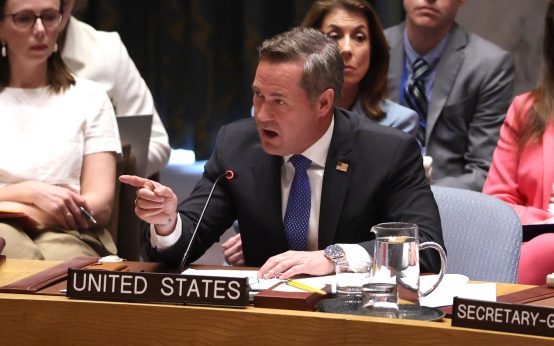 U.S. Ambassador Comments on Iran War Duration Amid Political Concerns
 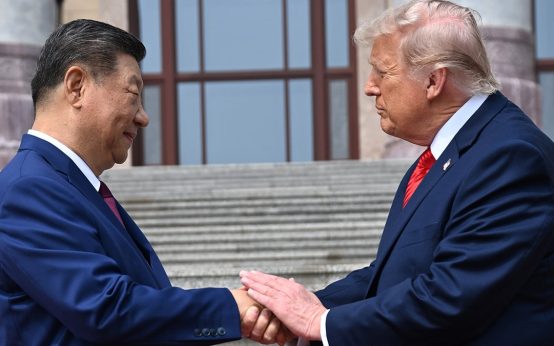 US-China Relations Under Scrutiny: Expert Warns of Escalating Tensions
  No Timeline for End of Iran Conflict
  German Chancellor Merz Vows to Pursue Reforms Despite Election Setbacks
 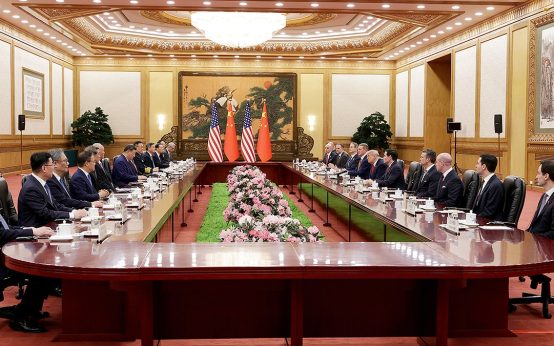 The Technology Rivalry: Trump’s Meeting with Xi and the AI Ecosystem Clash