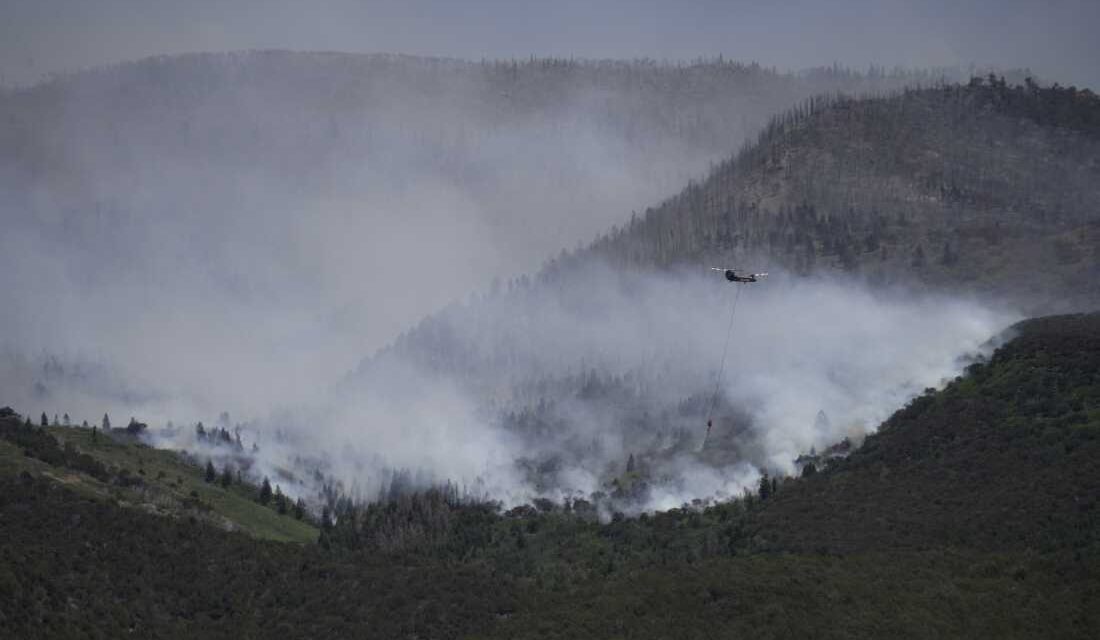
A helicopter was deployed to tackle the Cottonwood Fire in Beaver, Utah, on June 27, 2026. Three firefighters tragically lost their lives, and two others sustained injuries while battling fires at the Colorado-Utah border, the U.S. Wildland Fire Service reported. These firefighters were part of an interagency effort addressing the Knowles and Gore fires. A statement from the service highlighted the unity and support for families affected by the loss.
According to the Department of the Interior, the firefighters faced a ‘burnover incident’ where they were unable to find a safe escape path and had to endure as the fire passed directly over them. The survivors are receiving treatment for burn injuries.
Fire incidents in Utah, Colorado, and Arizona have seen a sharp increase due to low humidity, high temperatures, and strong winds. These conditions have escalated fire behaviors to extreme levels, leading both Utah and Colorado governors to declare emergencies as resources become strained.
Cottonwood Fire at Risk
The Cottonwood Fire remains uncontained and has spread over 144 square miles in southern Utah’s Beaver County, making it the largest wildfire currently active in the U.S. This fire has inflicted significant damage on the Eagle Point ski resort and demolished numerous summer cabins. Damage assessments are ongoing, but final reports on destroyed structures are pending.
Towns such as Marysvale, Junction, and Circleville have issued evacuation notices to residents as the threat grows. The Snyder Fire, covering over 28,000 acres, is also active. This fire originated as the Snyder Mesa Fire in Grand County, Utah, and later merged with the Jones and Knowles Fires in Colorado.
Alyssa Mason, spokesperson for the Cottonwood Fire, explained that firefighting teams faced adverse conditions with humidity below 10%, gusts up to 45 miles per hour, and fuel moisture readings between 2% and 8%. These elements grounded aerial firefighting operations briefly on Friday and Saturday. The terrain, characterized by steep cliffs and canyon walls, has further complicated efforts to deploy heavy machinery and fire engines.
Utah Governor Spencer Cox described the situation as dire, acknowledging the courageous and improbable rescues conducted by firefighting teams amid the challenging conditions. He urged prayers for the crew and for much-needed rainfall.
Red Flag Warning Issued
The National Weather Service in Salt Lake City has issued a historic ‘particularly dangerous situation’ red flag warning due to the volatile combination of wind, heat, and low humidity, projecting critical conditions to continue through Sunday.
Contributing Factors
The extreme fire conditions stem from months of worsening environmental issues. Utah experienced its warmest winter and lowest snowpack, with a peak occurring three weeks earlier than average. Drought conditions are affecting the entire region, including Nevada and Colorado, following an abnormally dry winter. Utah’s state forester, Jamie Barnes, noted that fires are occurring closer to populated areas, straining firefighting capacity.
Governor Cox declared a state of emergency, limiting fireworks ahead of the Fourth of July celebrations. Meanwhile, Colorado Governor Jared Polis invoked emergency measures, permitting the National Guard to assist in firefighting efforts.
The National Interagency Fire Center reports that nearly three million acres have burned nationwide this year, surpassing the ten-year average pace. Teams are active from Alaska to Florida, working to manage several large and uncontained fires. The National Weather Service has issued red flag warnings across the western region from California through Arizona to New Mexico, in response to ongoing fire threats.
 Shooting of DoorDash Delivery Driver by ICE Agent Raises Questions
  Growing Concerns Over Food Safety and National Security
  Teen Arrested in Penn State Student’s Murder; Second Suspect at Large
  EPA Dismantles Greenhouse Gas Rules, Causing Concern
  Carnival Panorama Passenger Jumped Overboard During Final Leg of Cruise
  How Battery Innovations Transform Renewable Energy