
In recent years, more than half of new green cards have gone to immigrants already residing in the United States. This trend is facing potential changes under new policies introduced by the Trump administration. According to an analysis by the Pew Research Center, the Department of Homeland Security (DHS) data shows significant impacts from the policy granting U.S. Citizenship and Immigration Services (USCIS) more authority to require applicants to apply from their home countries. This change could affect hundreds of thousands of people.
Data from the fiscal year 2024 reveals about 1.36 million green cards were issued, with around 58 percent allocated to those already present in the U.S. These individuals are often relatives of American citizens or on work visas. Sahana Mukherjee, the associate director of race and ethnicity research at Pew, informed Newsweek that most green card recipients are already living in the U.S. The new USCIS memo emphasizes how the adjustment of status (AOS) has been discretionary for some time. More applicants might face consular processing in their home countries instead of adjusting status in the U.S., impacting a substantial number of cases.
Confusion Surrounding Green Card Changes
The new DHS policy initially appeared broad, but reports suggest some retreat. However, questions and uncertainty linger among attorneys, applicants, and experts about who might be required to leave the U.S. for their permanent residency process. Sharvari Dalal-Dheini from the American Immigration Lawyers Association (AILA) criticized the fragmented manner of sharing policy implementations, citing the lack of openness and transparency from the government.
Legal professionals report inconsistent experiences with USCIS, where different officers may handle cases variably. Some applicants receive inquiries about not returning home to apply, while others notice no change. As Elissa Taub from the Siskind and Susser law firm mentioned, an applicant’s experience might hinge on their application’s nature (employment or family-based), where it is processed, and the officer involved.
Understanding Adjustment of Status Usage
The recent Pew analysis indicates that USCIS issued 1,356,760 green cards between October 2023 and September 2024. AOS accounted for 782,770 of these green cards, being more common for those already in the U.S. Asylum-seekers and refugees typically receive their green cards domestically, contrasting with family-sponsored and diversity applicants, who often receive theirs abroad.
The policy shift under the Trump administration has caused confusion for applicants linked to work visas, such as H-1B, and immediate relatives of U.S. citizens, including spouses and unmarried children. More than 60 percent of these applications go through AOS. In 2024, Cubans were the largest beneficiaries of AOS, with 155,630 green cards (87 percent) issued this way. Mexicans, Venezuelans, Chinese, and Brazilians also showed high percentages of AOS green cards.
A concern is how long longstanding U.S. residents might need to wait in their home countries, should consulate-based approvals become more frequent.
Changes in Green Card Processing
The Trump administration states their policy enforces existing immigration law, requiring applicants to apply from their home countries. Critics argue this disrupts lives, as many who have lived and worked in the U.S. for decades have used AOS. Since 2000, more than half of green card applicants annually have opted for AOS. In FY 2024, the split was 58 percent to AOS and 42 percent to new arrivals. Pew and others suggest USCIS’s new policy could restrict AOS usage.
Addressing how this discretion will be monitored, a DHS spokesperson emphasized the updated policy does not prevent legitimate and properly qualified immigrants from obtaining green cards. This effort ensures compliance with immigration laws. Adriel Orozco from the American Immigration Council remarked that although the law remains unchanged, the administration creates uncertainty even for legal permanent residence paths. Despite attempts to mitigate concerns, formal guidance is lacking, leaving many uncertain about future application processes and impact.
 U.S. Strategic Goals Remain Unmet Amid Prolonged Conflict
  The Impact of Arts and Closure on Democracy
 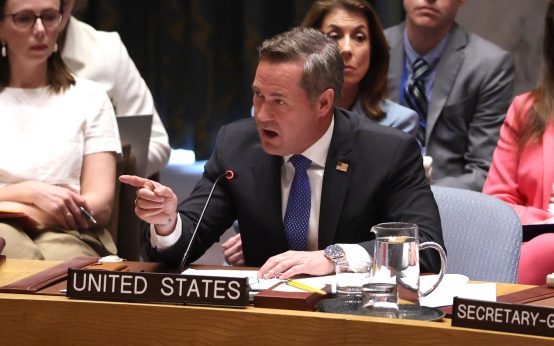 U.S. Ambassador Comments on Iran War Duration Amid Political Concerns
  US-China Relations Under Scrutiny: Expert Warns of Escalating Tensions
  No Timeline for End of Iran Conflict
  German Chancellor Merz Vows to Pursue Reforms Despite Election Setbacks