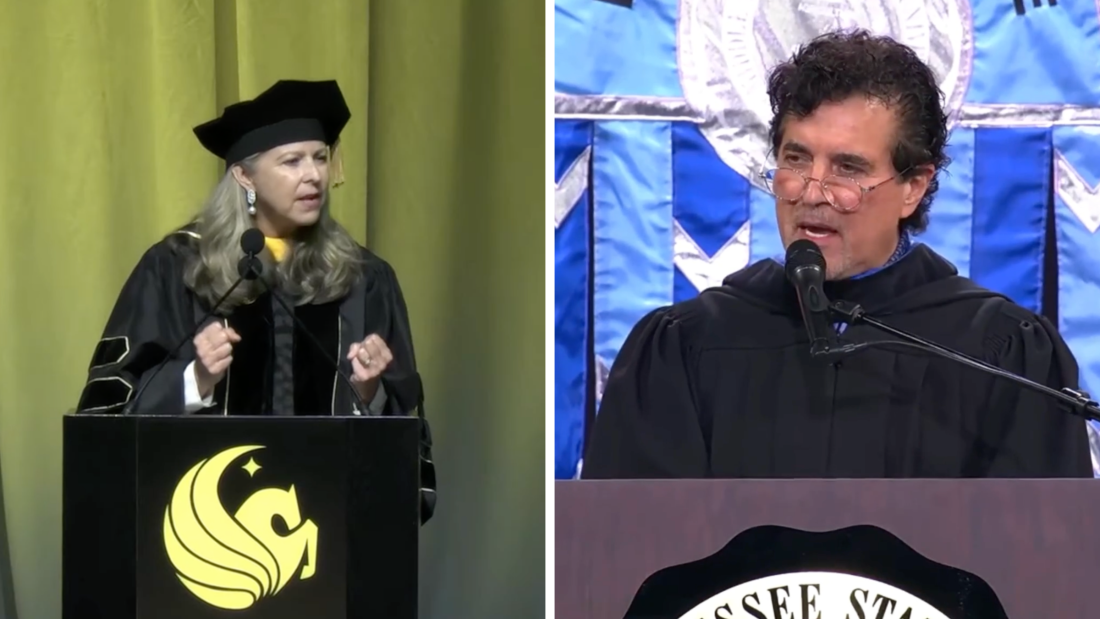
At the recent graduation ceremonies of two universities, discussions on artificial intelligence provoked strong reactions from students. Gloria Caulfield, a real estate executive, spoke at the University of Central Florida, while Scott Borchetta, CEO of Big Machine Records, addressed attendees at Middle Tennessee State University. When they mentioned the impact of AI, both were met with boos from the audience.
During the University of Central Florida’s graduation on May 8, Caulfield called AI the “next industrial revolution,” sparking immediate dissent from students. She responded by acknowledging the sentiment, “OK, I struck a chord.” Similarly, at Middle Tennessee State University on May 9, Borchetta described AI as a tool rewriting production, urging graduates to “deal with it” and “make it work for you,” despite ongoing boos.
The reaction against AI is not isolated to these instances. Former Google CEO Eric Schmidt faced similar disapproval at the University of Arizona on May 15. He emphasized AI’s inevitable role in shaping the world, challenging graduates to participate in this transformation.
The skepticism toward AI among graduates stems from various concerns. Maggie Simmons, about to graduate and pursue a career in pediatrics, expressed that AI’s impact on jobs and minority communities is troubling. AI systems are criticized for reinforcing systemic biases, while data centers disproportionately affect minority neighborhoods. Simmons advocates for the recognition of graduates’ capabilities over AI advancement.
Kareen Gill, a recent American University graduate in political science, echoed these concerns. Initially interested in AI’s potential, she now fears its implications on job prospects and the devaluing of her education. Gill noted a decrease in entry-level positions, as AI replaces tasks traditionally performed by new graduates.
Indeed, generational differences in perceptions of AI’s impact on employment are evident. According to a March poll by Quinnipiac University, 81% of Gen Z respondents predict a reduction in job opportunities due to AI development. Chetan Jaiswal, a poll contributor, acknowledged growing skepticism as AI’s effects become clearer.
While there’s no outright rejection of AI, people are becoming wary of its broader impacts. Gill believes AI’s role in enriching billionaires and harming the environment demands urgent attention. The Quinnipiac poll further highlights that only 5% of Americans feel those leading AI development represent their interests.
 Secure Your Internet Connection with Consistent VPN Usage While Traveling
  The Impact of Extended Job Searches on Mental Health
  Concerns Over AI’s Impact on Higher Education Learning
  Google Fined for Breaching EU Privacy Rules
  Remote Work Benefits Students and Societies Alike
  AI-Powered Malware Raises Concerns Over Security