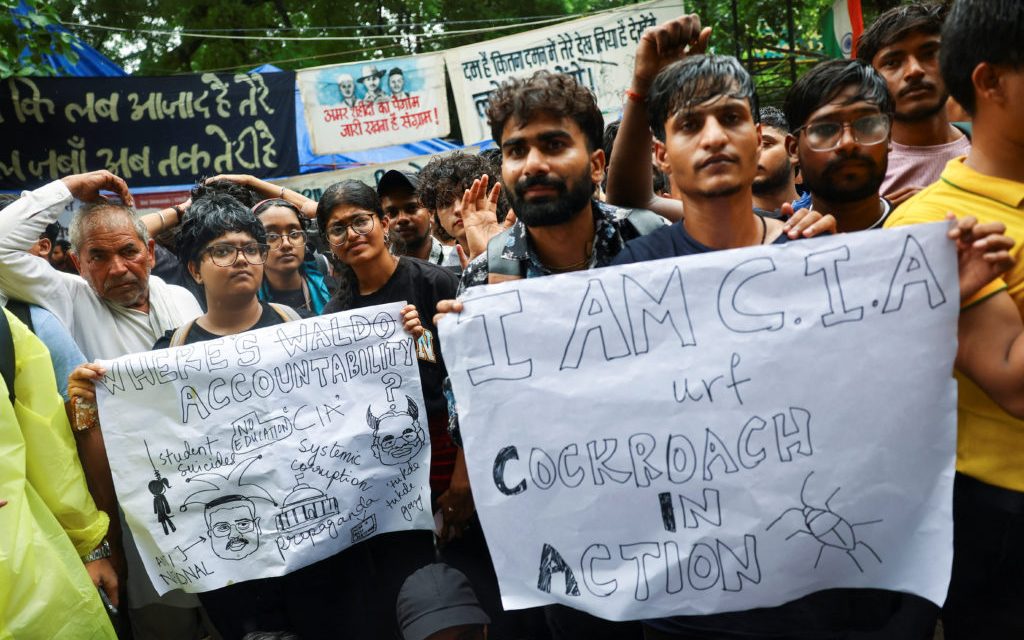
Young Indians have united under a unique banner, calling themselves ‘cockroaches’. This movement emerged from outrage over leaked national entrance exams and has grown into a significant youth-led protest against Prime Minister Narendra Modi. The movement spans cities across India, despite a government crackdown.
Origins of the ‘Cockroach’ Movement
The movement began with an insult. India’s chief justice labeled unemployed youth as ‘cockroaches’ during a court hearing. Students embraced the term. Abhijeet Dipke, a Boston University graduate student, ignited the movement by posting on X about unifying ‘Cockroaches’. He then created a website and social media presence for the ‘Cockroach Janata Party’ (CJP), a satirical spin on Modi’s Bharatiya Janata Party (BJP). The CJP’s Instagram page now boasts over 25 million followers, surpassing the BJP’s account.
Protesters’ Demands
The insult followed a scandal where India’s Ministry of Education nullified an entrance exam for medical programs due to leaked questions. Out of two million students who took the costly exam, the cancellation incited anger. India’s competitive exams are pivotal for students’ futures and social mobility. Allegations of corruption and leaks have fueled frustration. Activists link the scandal to at least 20 student suicides, as reported by the Times of India. Protesters demand the removal of India’s education minister, stricter penalties for test leaks, and compensation when exams are voided. Additionally, they seek greater female representation in parliament, a more independent media, and accountability for the chief election commissioner in case of vote tampering.
Response from Authorities
Clashes erupted as CJP protesters advanced toward India’s Parliament. Reports emerged of law enforcement using excessive force, targeting unarmed students with tear gas, batons, and pellet guns. Despite these tactics, the movement’s resolve strengthened. Student Sona Bisht asserted, “If the government thinks that doing this with Gen Z can stop us, then that won’t happen.” People across India support the protesters by sending food and supplies through delivery apps. Leaders like Opposition Leader Rahul Gandhi have expressed support, criticizing the government’s treatment of youth. State media and government backers depict protesters as anarchists influenced by foreign forces.
Rohit Chopra, a communication professor at Santa Clara University and visiting fellow at Stanford’s Center for South Asia, noted that there’s an exhaustion with the narrative that criticism equates to anti-national sentiment. Prime Minister Modi recently broke his silence, pledging fast-track measures to address the exam scandal but has not dismissed the education minister.
Defining Features of the Protests
India has witnessed major protests before, but this time analysts observe a new dimension. The movement challenges the authority of Prime Minister Modi himself, as conveyed by Chopra. The accountability demanded from Modi, and not solely a single policy, marks the protests. Chopra stated, “I’ve seen lots of posters and songs… mocking Mr. Modi. What’s different now is the direct linkage of this brutality to the Prime Minister himself and the unequivocal demand for accountability.”
Regardless of the outcome, either through resignation or reform, analysts believe Modi’s once untarnished image has suffered indelible damage.
Support free press and civil dialogue as they are pivotal to a healthy democracy.
 Gorillaz and Macklemore Respond to Controversy Over Israel-Palestine Statements
 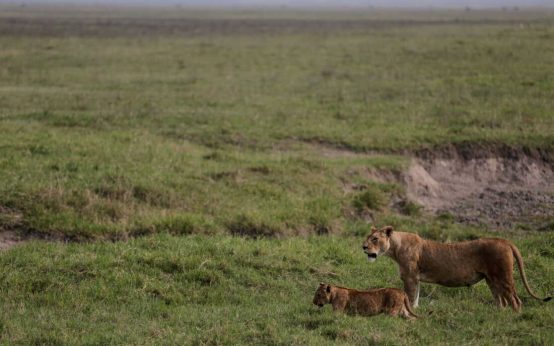 Investigation into Lion Deaths in Tanzania
 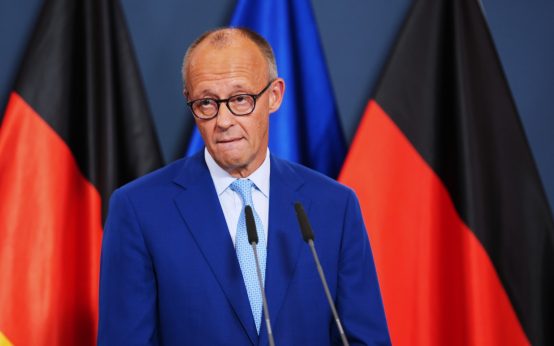 Merz Stays Resolute Amid Electoral Shifts in Germany
  The Impact of Arts and Closure on Democracy
 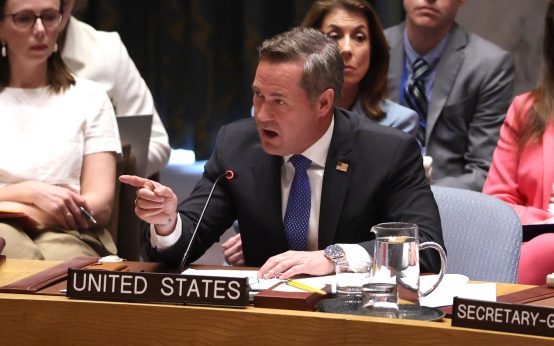 U.S. Ambassador Comments on Iran War Duration Amid Political Concerns
  U.S.-Iran Relations and Diplomacy at Upcoming U.N. Assembly