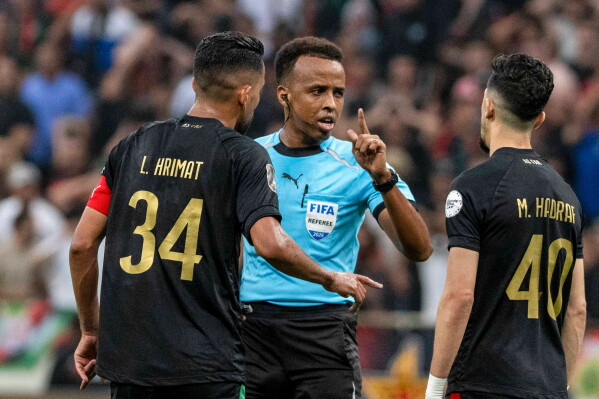
Adding complexity to an already turbulent World Cup preparation for Iran, the national soccer federation revealed on Tuesday that FIFA has revoked the ticket allocation for its fans. These are designated for the team’s three group-stage matches in the United States.
Each participating federation has the right to receive and distribute 8% of the stadium’s capacity for its matches at the World Cup. This allocation results in several thousand tickets per game, typically sold to each team’s most loyal supporters shortly after the tournament draw.
The draw occurred in December, a time when Iranians had already been suffering from a U.S. government-imposed travel ban for five months. Currently, with Iran’s World Cup opening on June 15 at the 70,000-seat Los Angeles Rams’ stadium in Inglewood against New Zealand, the federation announced its incapability of providing tickets to its fans. This situation intensifies the tensions involving Iranian soccer, FIFA, and co-host U.S., which initiated military activities against Iran on February 28.
FIFA maintains total control over World Cup ticketing operations. However, the Iranian soccer body suggested that “the United States has now taken steps to hinder the presence of Iranian supporters at the stadiums.” This incident raises questions about the impact of non-sporting and political considerations on organizing the event.
FIFA stated on Tuesday that they are “working closely with the IR Iran Football Federation to find compliant solutions maximizing the opportunities for Iranian supporters to attend matches.” FIFA President Gianni Infantino and Secretary-General Mattias Grafström offered logistical support during meetings with Iranian soccer officials in Turkey recently.
Iran’s World Cup Challenges
Iran’s squad, comprising 26 players, has not engaged in competitive games since February. They belong to clubs in a domestic league disrupted by the conflict. Initially planning to train in Tucson, Arizona, they are now stationed in Tijuana, Mexico. This marks Iran’s seventh appearance in a men’s World Cup.
Some federation officials also faced visa denials for U.S. entry, where Iran will compete against Belgium in Inglewood on June 21 and Egypt in Seattle on June 26.
Andrew Giuliani, executive director of the White House FIFA task force, reassured that the Iranian team could enter the U.S. a day before their match. He accentuated Tijuana’s proximity to Los Angeles and acknowledged visa challenges for some Iranian officials. He emphasized the U.S. stance aligned with ensuring that individuals affiliated with the Islamic Revolutionary Guard Corps cannot access the U.S.
Fans hoping to travel to the U.S. face obstacles in obtaining visas and executing payments amid financial sanctions. The situation worsened as Iran’s football federation’s ticket allocation was withdrawn, hindering the provision of any tickets to its supporters.
The exact number of tickets sold from Iran’s allocation, whether they belong to residents in Iran or its diaspora in the U.S., remains unclear. If revocations persist, FIFA would need to sell 5,600 tickets for the Iran-New Zealand match in a few days, with Los Angeles hosting the largest Iranian community in the U.S.
Tickets available for $450 on Tuesday reflect the challenge. Infantino emphasized in 2017 that any team and its supporters qualifying for a World Cup must have access to the host country.
Entry Issues for FIFA Visitors
U.S. policy toward World Cup visitors continues to be a focal point before the games commence. Recently, a FIFA match referee from Somalia was denied entry in Miami and subsequently removed from the tournament. An Iraq player experienced detainment in Chicago, and a photographer from the delegation was also barred entry.
Piara Powar, head of FIFA’s anti-discrimination monitoring partner, expressed concern over the control of the World Cup: “Is it FIFA or the U.S. with its racially charged immigration policies?” Before the kickoff, such disruptions challenge the World Cup’s global unity essence.
Contributed by Associated Press writer Seung Min Kim from Washington.
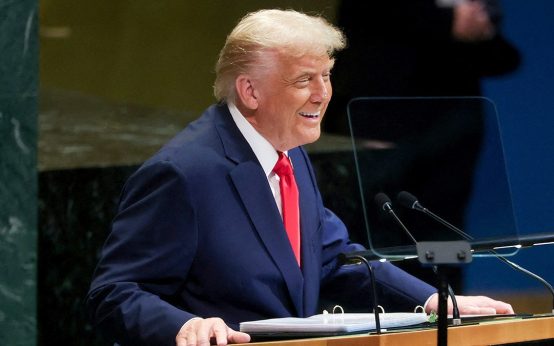 Trump’s Vision for Global Security: Iran, AI, and the Role of the U.S.
  Concerns Raised Over Canadian Assisted-Dying Program
 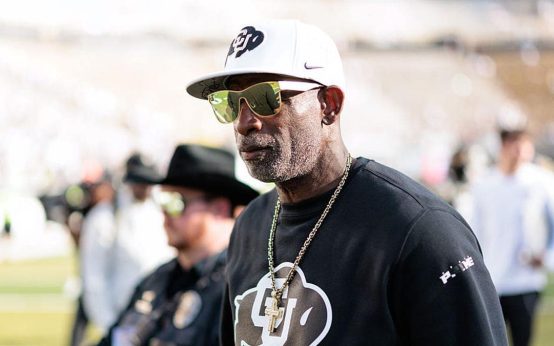 Deion Sanders Addresses Colorado Loss and Team Conduct
 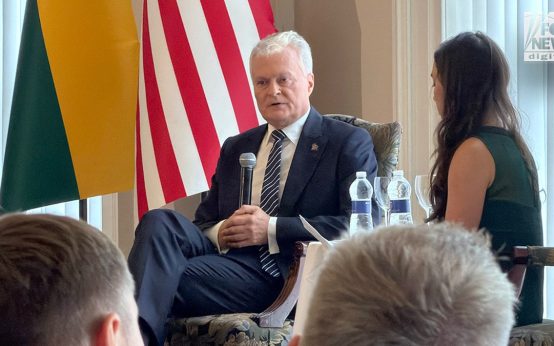 Lithuanian President Urges U.S. to Maintain Military Presence Amid NATO Challenges
  Italian PM Giorgia Meloni Skips UN General Assembly Amid U.S. Tensions
  Steve Lotysz: From Gates to Galleries