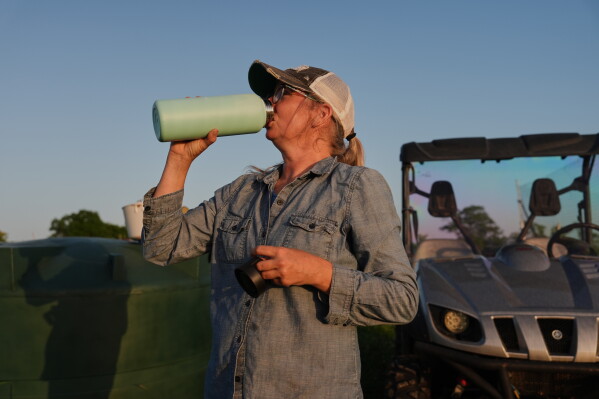
As the sun set, heat lingered in the air while Annie Woods tended her 50-acre farm in Brooksville, Ky. Increasingly intense heat is a part of weather extremes driven by climate change, affecting farmers with shorter planting windows and potential crop losses due to early heat followed by cold spells.
Woods observes that these heat waves are becoming more common. A recent heat dome, a high-pressure system trapping heat, has affected farmers of fruits and vegetables. Climate change has also brought more extreme weather, necessitating adaptations. Some farmers now adjust harvest schedules to avoid working during the hottest parts of the day. Unlike those who grow traditional crops like corn, specialty farmers often lack the same financial safety nets during extreme weather.
Annie Woods keeps hydrated and works at cooler times, from morning to evening, taking frequent water breaks. She harvests by hand, unlike larger farms using machinery. If the heat is too intense, she uses a market tent for shade.
Extreme heat and wet conditions can bring diseases and pests, threatening crops. Woods prioritizes harvesting the most vulnerable vegetables, such as salad greens, which she grows for regional restaurants and community agriculture programs. Hot weather affects crop quality, and she’s concerned about her seedlings’ health. Currently, her seedlings stay cool inside a barn cabinet, later moving to a fan-cooled greenhouse. Regular monitoring and watering are crucial to keep them alive.
Similar challenges face other farmers. Paul Rasch of central Iowa, who grows fruit, has a shortened window for cropping raspberries, leading his team to harvest early to finish before the heat becomes stifling. Rasch installed air conditioning and shaded areas to protect workers and customers. He also experiments with high tunnels for stable growing conditions. He finds these heat events more frequent and prolonged, a concern for crop yields throughout the year.
Diversity in crops can buffer against losses. Woods and Rasch plant various crops for business reasons and risk management. Different crops may flourish while others struggle. Crop insurance for specialty farmers differs from that for commodity crops, making them more exposed to weather risks. Woods, connected with the Organic Association of Kentucky, shares how insurance access remains difficult for diverse, small farms.
Federal insurance programs target single-season crops like corn and soy. Duncan Orlander, policy specialist with the National Sustainable Agriculture Coalition, highlights how bureaucracy can burden specialty crop farmers, with limited program availability for diverse crops. Policies covering farm revenue rather than specific crops exist but are underutilized due to complexity.
Woods’ community-supported agriculture program offers resilience by allowing support regardless of specific vegetable yields. This approach, along with diverse crops, hedges against climate-driven challenges such as heat, floods, and drought.
Understanding and planning for these events are crucial for resilience, Woods notes.
 EPA Dismantles Greenhouse Gas Rules, Causing Concern
  How Battery Innovations Transform Renewable Energy
  Data Centers Stir Controversy in Texas Amid Growth Boom
  Urgent Archaeological Efforts in Quinhagak Stay Ahead of Erosion
  Concerns Rise Over NIPSCO Permit In Jasper County
  Reader Reactions on Grizzlies and Data Centers