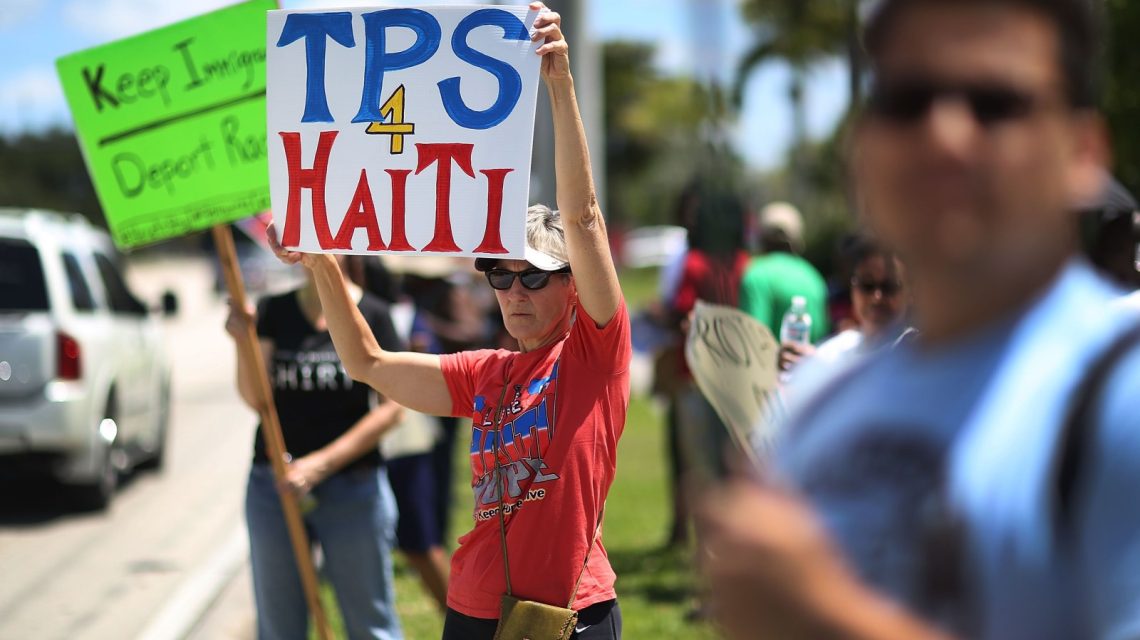
Temporary Protected Status (TPS) protections for Haitians are set to expire on Monday. Florida, home to the largest population of Haitian TPS holders, is facing significant impacts as communities across the U.S. prepare for the potential loss of work permits and deportation protections.
Haitian TPS Holders in the U.S.
Florida hosts around 158,000 Haitian TPS holders, according to data from the immigrant advocacy group FWD.us. New York follows with about 40,000, Massachusetts with around 19,000, New Jersey with 16,000, Pennsylvania with 15,000, and Ohio with 14,000.
The Supreme Court’s decision supporting the Trump administration’s efforts to end these deportation protections could affect over 300,000 Haitians. Those who lose their TPS status and fail to qualify for other immigration statuses may lose work permits and face deportation proceedings.
The Department of Homeland Security states TPS was designed to be temporary. U.S. Citizenship and Immigration Services reported that Haiti no longer meets the criteria needed for TPS designation after reviewing its conditions and consulting other agencies.
Economic Contributions
The expiration of TPS might heavily impact states with significant Haitian populations. Haitian TPS holders contribute approximately $5.9 billion annually to the U.S. economy, paying about $805 million in federal and payroll taxes and $755 million in state and local taxes, according to analysis by FWD.us.
In Florida, around 93,000 Haitian TPS workers are employed in various sectors such as food service, agriculture, security, and healthcare. They contribute roughly $2.6 billion annually to Florida’s economy. New York sees around $863 million in yearly economic contributions from 25,000 Haitian TPS workers, while Massachusetts with 10,000 workers contributes an estimated $481 million annually.
Advocates warn that ending TPS could harm regions reliant on Haitian workers. Haitian TPS holders contribute about $1.5 billion to the Miami economy and $1.1 billion to New York, with substantial impacts on other cities like Boston, Orlando, and Atlanta.
Increased deportations have raised concerns due to Haiti’s instability. Large areas remain under gang control leading the U.S. State Department to advise against travel to Haiti. The longer-term effects may vary, with sectors facing ongoing labor shortages potentially feeling the most impact. This includes healthcare, as Florida has a growing demand for nurses and long-term care workers.
Impact on Key Sectors
Job losses in healthcare, agriculture, hospitality, and logistics could create disruptions. Employers losing experienced staff might encounter higher labor costs and staffing shortages, possibly leading to increased costs and longer patient wait times.
Agriculture and hospitality industries might struggle to replace seasonal workers, prompting investments in automation or reliance on temporary visa programs. This could lead to higher recruitment costs, impacting consumers.
The changes would likely hit South Florida hardest, where significant Haitian communities reside. Reduced consumer spending could affect local businesses and tax revenues, amplifying broader economic effects.
Political and Social Reactions
The Trump administration stands by ending TPS, emphasizing the temporary nature of the program. DHS General Counsel James Percival noted on social media that Haitians should consider voluntary departure options, offering $2,600 and a flight home.
Some Congress members advocate for a permanent pathway to legal status. The American Dream and Promise Act aims to allow eligible TPS holders and certain Dreamers to apply for lawful permanent residency. Though stalled in committee, efforts persist in Congress to secure a vote.
Haitian communities express concerns about potential detentions and deportations amid Haiti’s instability. CBS News reports that ICE plans to increase enforcement targeting Haitians upon TPS expiration. Critics label targeting policies as discriminatory, highlighting that TPS recipients undergo regular background checks.
During Trump’s 2024 campaign, he and VP JD Vance accused Haitian migrants in Ohio of crimes like pet theft, claims widely disputed by local officials.
A DHS press release detailed deportations of Haitians with serious criminal records, citing recent removal flights. The House voted in April on extending TPS for Haitians for three years, but it did not advance in the Senate.
 Trump’s Approach to China: Trade Dynamics and Challenges
  Media Outlets Sue After White House Ban
  American Public Opinion on Press Freedom
  Media Lawsuit Against Trump Administration for White House Ban
  The Cost of Challenging Beijing
  Analyzing Midterm Elections and Party Dynamics