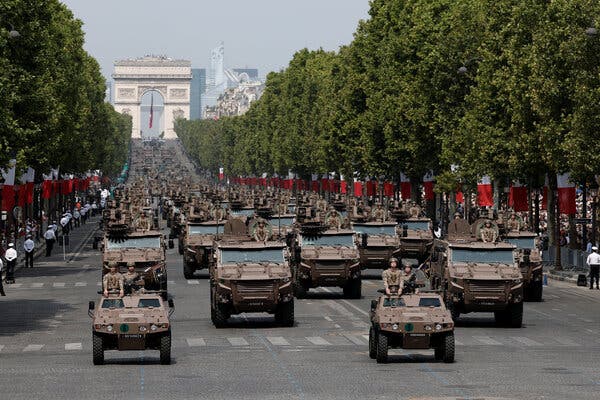
President Emmanuel Macron of France recently hosted European allies at the Bastille Day parade in Paris, showcasing a display of collective strength. Despite this show, Europe remains influenced by America’s foreign policy.
Nine years ago, Macron invited President Trump to the parade, seeking to solidify Europe’s security assurance. This year, Macron gathered two dozen leaders to demonstrate Europe’s determination to distance itself from American influence.
The parade was not only a demonstration of French military capabilities. It also included nearly 500 troops from 35 nations, part of a multinational force led by France and Britain, aimed at securing Ukraine following any potential cease-fire with Russia.
While Macron’s outreach to Trump in 2017 saw partial success, his efforts to detach from the U.S. remain unfinished. Europe’s strong backing for Ukraine, displayed during the parade, contrasts with its inability to counter the renewed tensions between the U.S. and Iran.
Europe intended to deploy a maritime security force to the Strait of Hormuz, facilitating commerce by ensuring safe passage. However, this mission has stalled and now appears more influenced by events than ever.
Jeremy Shapiro, a director at the European Council on Foreign Relations, commented on Europe’s aspirations. He noted the Strait of Hormuz initiative as a critical test of Europe’s capacity to uphold its interests, adding that despite discussions, progress has been limited.
Europe’s ambitions in global affairs face challenges, as seen in the halted Hormuz mission. The Bastille Day parade highlighted both Europe’s unity and its struggles to achieve independence in its foreign policy.
 U.S. Strategic Goals Remain Unmet Amid Prolonged Conflict
  New Photos Reveal Damage from Iranian Strikes in the Middle East
  Assassin of Chilean Diplomat Orlando Letelier Faces Deportation 50 Years After Assassination
  Gorillaz and Macklemore Respond to Controversy Over Israel-Palestine Statements
  Investigation into Lion Deaths in Tanzania
 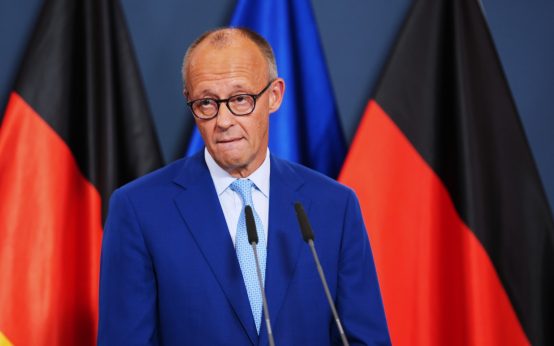 Merz Stays Resolute Amid Electoral Shifts in Germany