
The United States announced on Monday that it had carried out airstrikes on radar and drone sites in Iran. This came after Iran shot down a U.S. drone over the weekend. In response, Iran launched its own strike, and Kuwait reported incoming fire.
The ceasefire between the U.S. and Iran has faced multiple challenges due to these reciprocated military actions. While officials from both countries continue negotiations to end the conflict, the outcome of these talks remains uncertain. Any new attack holds the potential to disrupt these negotiations.
Amidst these tensions, Iran continues to exert control over the Strait of Hormuz. This disruption impacts global energy supplies and increases fuel prices, affecting economies worldwide. Additionally, fighting has intensified between Israel and Hezbollah, despite their ceasefire. Israel has extended its reach into Lebanon, and Hezbollah actively launches drones into Israeli territory.
U.S. Military Strikes in Iran
The U.S. Central Command confirmed strikes near the city of Geruk and on Qeshm Island on Saturday and Sunday. These actions aimed to respond to Iran’s aggressive acts, including the downing of a U.S. MQ-1 drone over international waters. U.S. fighter jets targeted Iranian air defenses, a ground control station, and attack drones that threatened shipping routes.
Kuwait’s Fire Response
Kuwait reported that its air defenses engaged early Monday to counteract incoming drone and missile fire. Concurrently, Iran’s Revolutionary Guard claimed a response to an American attack, likely referencing the Kuwait incident.
Kuwait hosts the U.S. Army Central’s Mideast forward command. While the U.S. Air Force no longer uses the MQ-1 Predator, it remains in service within the U.S. Army. Iranian media later showcased footage of a ballistic missile launch, displaying imagery depicting U.S. President Donald Trump next to a closed depiction of the Strait of Hormuz.
Ceasefire Talks Under Pressure
The latest attacks mark the ongoing escalation between the U.S. and Iran. The U.S. targeted a Gambia-flagged cargo ship over the weekend attempting to breach Iran’s port blockade. Although some ships have navigated the Strait of Hormuz, pressure continues on global energy and fertilizer supplies, raising concerns about potential food shortages.
The Gulf region is a major producer, supplying 30% of globally traded chemical fertilizers. President Trump met with advisors but has yet to decide on advancing a deal to extend the ceasefire and reopen the strait. While Iran has confirmed no finalized agreement, negotiations around its nuclear program continue, with the potential for significant outcomes.
President Trump has shifted his objectives throughout the conflict, with a primary aim to prevent Iran from developing nuclear weapons. While Iran asserts peaceful intentions, it holds sufficient enriched uranium to construct nuclear arms if desired.
U.S. Vice President JD Vance mentioned last week that current negotiations focus on setting general terms for Iran’s nuclear program, with specifics to follow. President Trump remains optimistic concerning talks, expressing confidence on his Truth Social platform.
 Don McCullin’s Final Book: A Pioneering War Photographer’s Legacy
  Rep. Alexandria Ocasio-Cortez Defends Macklemore Amid Tour Controversy
  Google Fined for Breaching EU Privacy Rules
 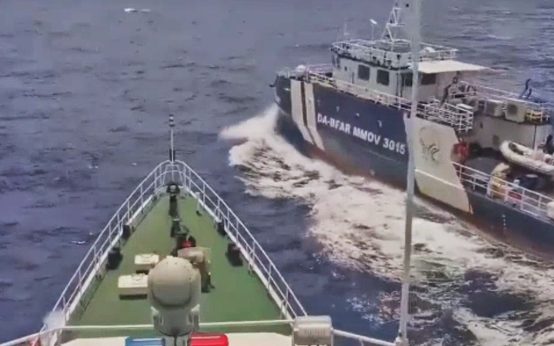 South China Sea Tensions Rise after Collision between Chinese and Philippine Ships
 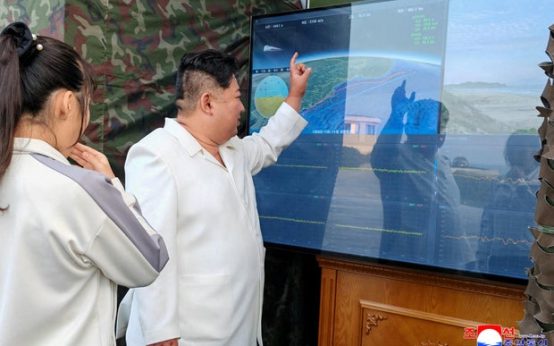 North Korea’s Hypersonic Weapon Test Amid Global Tensions
  Austin Tice: A Search for Answers