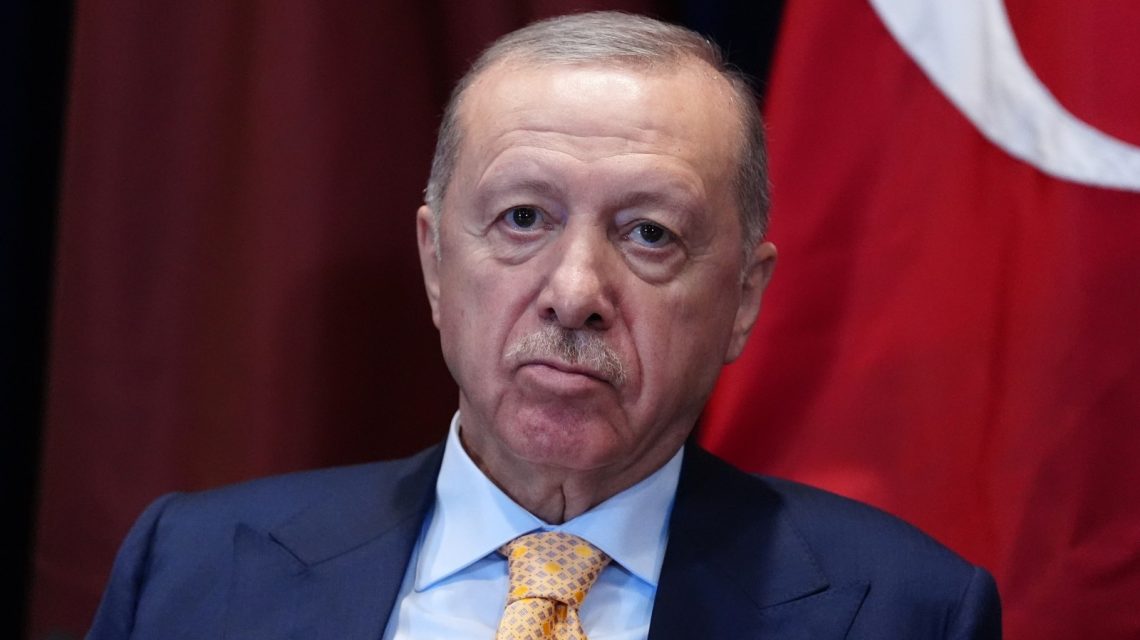
In a recent interview, Turkish President Recep Tayyip Erdogan criticized Israel for promoting a narrative that portrays Turkey as a regional threat. This comes amid heated exchanges between Israel and Turkey’s leaders, including Israeli Prime Minister Benjamin Netanyahu’s remarks labeling Erdogan as a “tyrant” at the United Nations. Erdogan acknowledged significant disagreements with the Israeli government but emphasized calm intentions.
Erdogan expressed concern over statements he views as tied to Israel’s domestic politics, saying such rhetoric does not support regional peace. He stressed that Turkey maintains no hostility toward the Israeli populace or any other nation, but opposes policies it views as contrary to international norms.
Recently, there’s been a misguided narrative portraying Turkey as a new threat source in Israel. We see this as linked to internal Israeli political dynamics, which don’t encourage regional peace.
The Battle for Syria
The growing tension between Israel and Turkey is reflected in their activities in Syria. Erdogan was an early supporter of the administration led by Syrian President Ahmad al-Sharaa, replacing Bashar al-Assad. This change was supported by Turkey and later endorsed by President Trump, who credited Erdogan’s influence. Meanwhile, Netanyahu, initially accepting Assad’s downfall, quickly shifted due to concerns over Sharaa’s background, leading to military actions in the region.
Israel’s involvement in Syria remains significant, particularly in the southwest. Here, a faction within Syria’s Druze minority has supported Israeli military operations. These actions, however, have faced criticism, notably from the White House. Recent Israeli airstrikes occurred shortly after a Turkish military delegation’s visit to Syria, aggravating tensions further.
Our stance on Syria is focused on sovereignty, integrity, and unity. Israel’s actions undermine this, complicating regional stability, which could otherwise benefit all, including Israel.
Testing Alliances
The rivalry’s effects spread to the Eastern Mediterranean. Turkey recently signed the Mecca Joint Defense Agreement with Pakistan and Saudi Arabia, while Israel secured a defense pact with Greece. These developments reflect ongoing tensions stemming from historical disputes and current geopolitical interests.
The Israel-Greece military agreement, part of a strategy Netanyahu described as a “hexagon of alliances,” includes partnerships with India and the UAE. Erdogan criticized this development but stressed Turkey’s focus on its security concerns without interpreting every alliance as directed against Ankara.
Turkey respects other countries’ choices. However, we monitor actions that may affect our national security, lawful rights, and interests.
The White House Frontline
In Washington, Erdogan and Netanyahu compete for U.S. attention. Both have worked closely with Trump, yet recent Middle East conflicts, especially the war in Gaza, show their divergent approaches. Erdogan continues to call for diplomatic resolutions, differing from Netanyahu’s military strategies.
Trump’s involvement in Middle Eastern affairs aligns partly with Netanyahu’s goals but also supports some of Erdogan’s initiatives. Despite these dynamics, Erdogan maintains a direct relationship with the U.S., separate from Israel.
Turkey-U.S. relations are defined independently of other nations. We have a long-standing alliance with the United States that we look to develop further.
 Court Rules Against Third-Country Deportation Policy
  Claims to Nazi-Looted Art Spark Legal Battle in California
  U.S. Secures Strategic Control Over Greenland
  U.S. and Denmark Move Towards Security Agreement Over Greenland
  Rising Concern Over Gender-Based Violence in South Africa
  UNIFIL’s Final Patrol in Southern Lebanon Amid Changing Borders