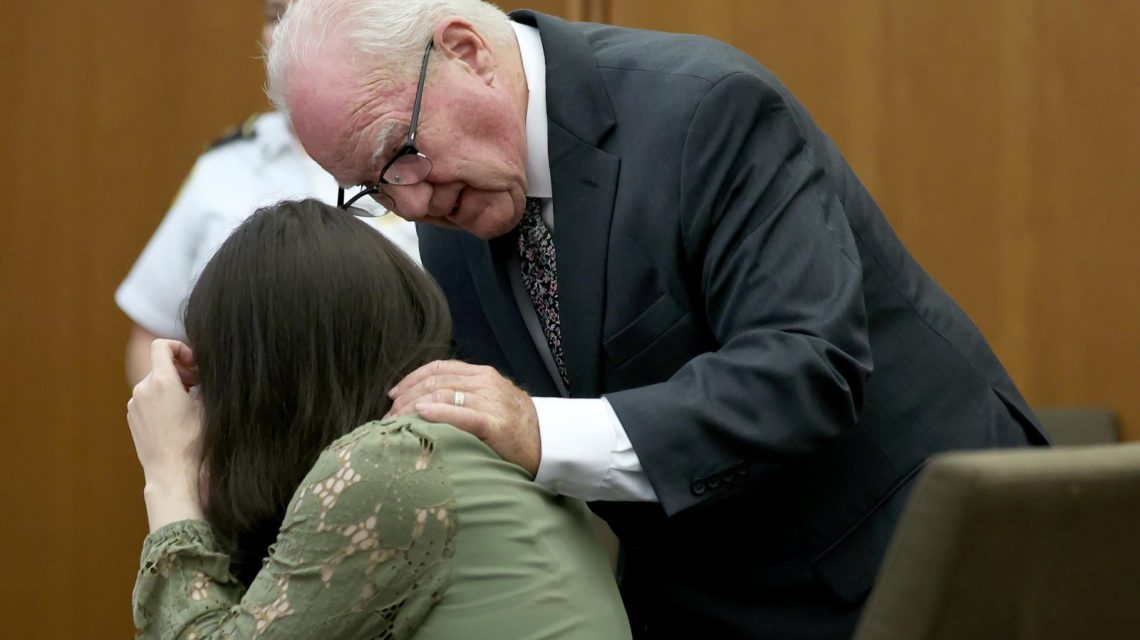
Lindsay Clancy broke down in tears during her court appearance on Wednesday as detailed accounts of her children’s injuries were shared with the jury. The session led to multiple recesses and an emotional caution from the presiding judge. This day marked a significant change in her murder trial, which previously concentrated on her mental health and the defense’s assertion that she suffered from postpartum psychosis when her children died.
Key Moments from Wednesday’s Testimony
Lindsay Clancy Breaks Down During Testimony
Dr. Renee Stonebridge, a medical examiner, described the injuries sustained by Clancy’s children during their autopsies. This testimony caused Clancy to cry, leading the judge to call a recess as she wept openly. Judge William Sullivan reminded the jury to focus solely on evidence and not be swayed by emotions. Despite this, the emotional reactions continued, particularly when Dr. Barbara Olsen gave further details on the injuries of Clancy’s daughter, Cora.
The court adjourned at approximately 4 p.m., following continued emotional strain experienced by Clancy during the forensic testimonies.
Forensic Testimony on Fatal Injuries
Stonebridge provided evidence pointing to strangulation as a cause of death for the children. The findings included specific damage to the eyes of Cora and Dawson consistent with this method. Clancy faces accusations of using exercise bands to strangle her children on January 24, 2023, at her home in Duxbury, Massachusetts. She has denied criminal responsibility, citing severe mental illness as a factor.
The detailed autopsy of Callan, the youngest child, revealed brain injuries due to lack of oxygen. Such forensic evidence is essential for the jury to consider Clancy’s criminal accountability for her actions.
Therapist’s Testimony on Treatment Gaps
Latiesha Dukes, a licensed mental health counselor, admitted not reviewing notes from nurse practitioner Rebecca Jollotta before treating Clancy. Unaware of Clancy’s emergency visit on December 15, Dukes proceeded with treatment without complete context. This inconsistency supports the defense’s claim that Clancy’s mental condition was inadequately assessed.
Trooper Disputes ‘Voices’ Theory
Massachusetts State Police Sergeant Dan Lawlor testified about disputes regarding Clancy’s statement of hearing voices. Despite a theory suggesting intervention by psychologist Paul Zeizel, Lawlor confirmed no investigative basis existed to support that claim. The defense asserts Clancy’s psychosis influenced her actions, while prosecutors question the sincerity and timing of her statements.
Reported Suicidal Thoughts
Testimony revealed Clancy’s suicidal ideations in December 2022, though she lacked a specific plan. Counselor Dukes recommended increased intervention, but by December 19, Clancy seemed to show progress. This duality allows the defense to argue worsening mental health, while prosecutors point to her apparent improvements and functioning abilities.
Trial Developments
Wednesday’s testimonies brought emotional intensity into the trial, highlighting both forensic evidence and Clancy’s psychiatric background. The defense aims to prove severe mental illness at the time of the children’s deaths. Prosecutors challenge this claim, asserting her criminal liability.
If found guilty of first-degree murder, Clancy may face life imprisonment without parole. Alternatively, a verdict of non-criminal responsibility could result in her commitment to a state psychiatric institution. The trial will proceed with further evidence on Clancy’s mental state and the circumstances surrounding the tragic events.
For additional details, contact Samantha Beech or Gray R. Thomas of Newsweek.