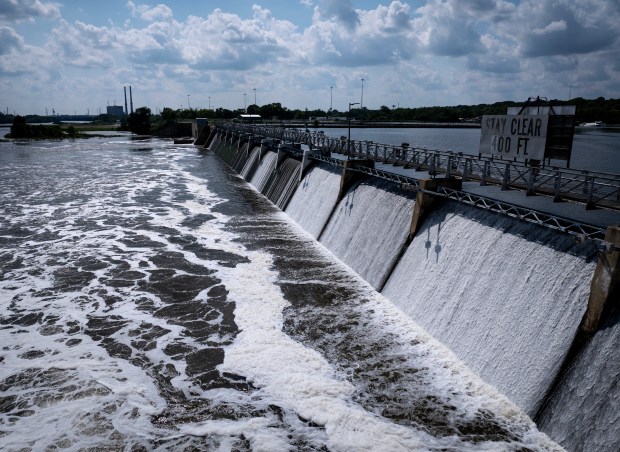
Construction has resumed on the Brandon Road Lock and Dam near Joliet, as part of a $1.15 billion initiative aimed at preventing invasive carp from entering the Great Lakes. Previously, the U.S. Army Corps of Engineers had issued a halt on construction on July 24 amid administrative review, sparking concern among environmental advocates. This pause came just as numerous silver carp were detected 80 miles from Lake Michigan in the Illinois River, illustrating the potential for spawning activity dangerously close to the lake.
Advocates from the Alliance for the Great Lakes warn that this discovery suggests the possible establishment of a carp population, heightening the risk of invasion. President Donald Trump had instructed federal agencies to expedite the project, yet the Corps did not provide further details regarding the construction delay.
The project’s halt led to costly delays, bringing invasive carp closer to causing irreparable damage to the Great Lakes, according to Joel Brammeier, CEO of the Alliance for the Great Lakes.
The bipartisan Congressional Great Lakes Task Force, state legislators, anglers, and environmental organizations have rallied in support of this critical project. Nevertheless, tension persisted during Trump’s second term between his administration and Illinois Governor JB Pritzker and Michigan Governor Gretchen Whitmer, influencing funding discussions.
Following dialogues between Trump and Whitmer, the stop-work order was revoked, enabling a resumption of construction activities. Brammeier emphasized the urgency of maintaining progress both at the site and in legislative circles, citing threats to the region’s ecosystem and economy.
Environmental organizations throughout Illinois, Michigan, Wisconsin, Minnesota, Indiana, and Ohio underscored the need for uninterrupted work on the project starting in late August. Brian Gill from the Shedd Aquarium noted that invasive species can irrevocably damage ecosystems and are costly to manage post-introduction.
Jennifer Walling, CEO of the Illinois Environmental Council, characterized the project as a pivotal investment in waterway protection and regional economic stability. Meanwhile, Spencer Dirrig from the Ohio Environmental Council pointed out that the fish are indifferent to political rivalries, relentlessly attempting to penetrate the Great Lakes.
Support for the initiative also includes financial contributions from Michigan and Illinois, totaling $64 million and $50 million, respectively. Congressional representatives secured a 90% federal cost sharing for both construction and operational expenses, with an existing $274 million allocation for the project’s first phase completed last May.
Phase one covers site preparation and bedrock removal, alongside implementing protective measures such as bubble barriers and acoustic deterrents. Subsequent phases will integrate electric barriers and additional acoustic deterrents; a flushing lock will further prevent larval fish from advancing toward the lake.
Originating in the 1960s to control seaweed, invasive carp—comprising silver, bighead, grass, and black variants—have proliferated across the United States. Having escaped Arkansas aquaculture facilities during flooding, these carp now pose significant challenges to native species by usurping them due to their lack of natural predators, as noted by contract fisherman Jim Dickau.
These carp elude capture by bait and consume plankton, threatening native aquatic life by depleting their food sources. Recent discovery of juvenile silver carp in the Illinois River prompted intensified monitoring and removal strategies, including electrofishing, which stuns fish for collection.
While Army Corps crews previously found no carp in Lake Calumet via electrofishing surveys, experts are assessing the microchemistry of fish discovered in August to identify their origins. Contract fishing for adult invasive carp will also proceed in designated pools within LaSalle County and the Dresden Island Pool, where adult carp have been observed but no established juvenile populations.
Over 16 years of multi-agency monitoring have detected stable carp populations downstream along the Illinois River, impacting economies and ecosystems around Peoria Pool and the Mississippi River convergence.
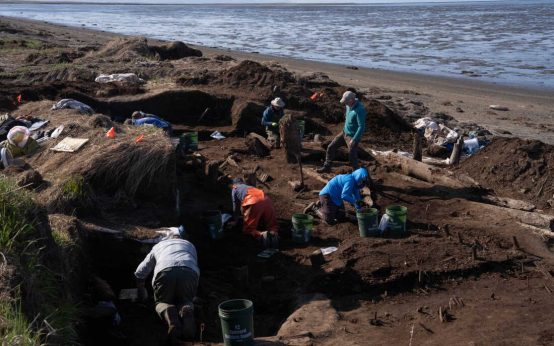 Urgent Archaeological Efforts in Quinhagak Stay Ahead of Erosion
 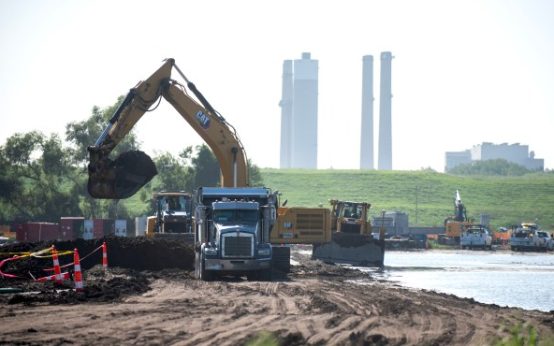 Concerns Rise Over NIPSCO Permit In Jasper County
  Reader Reactions on Grizzlies and Data Centers
 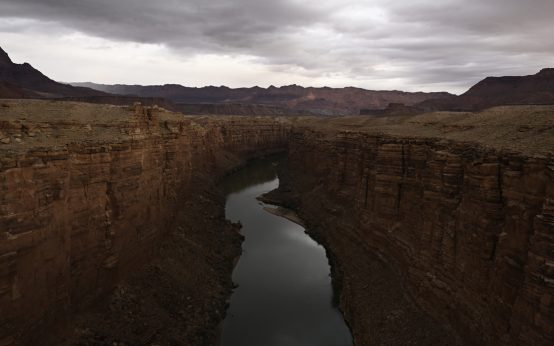 Managing the Crisis of Drying Rivers
  Impact of Kelvin Waves on Southern California
  Study Reveals Air Pollution Surge After U.S. Stops Monitoring