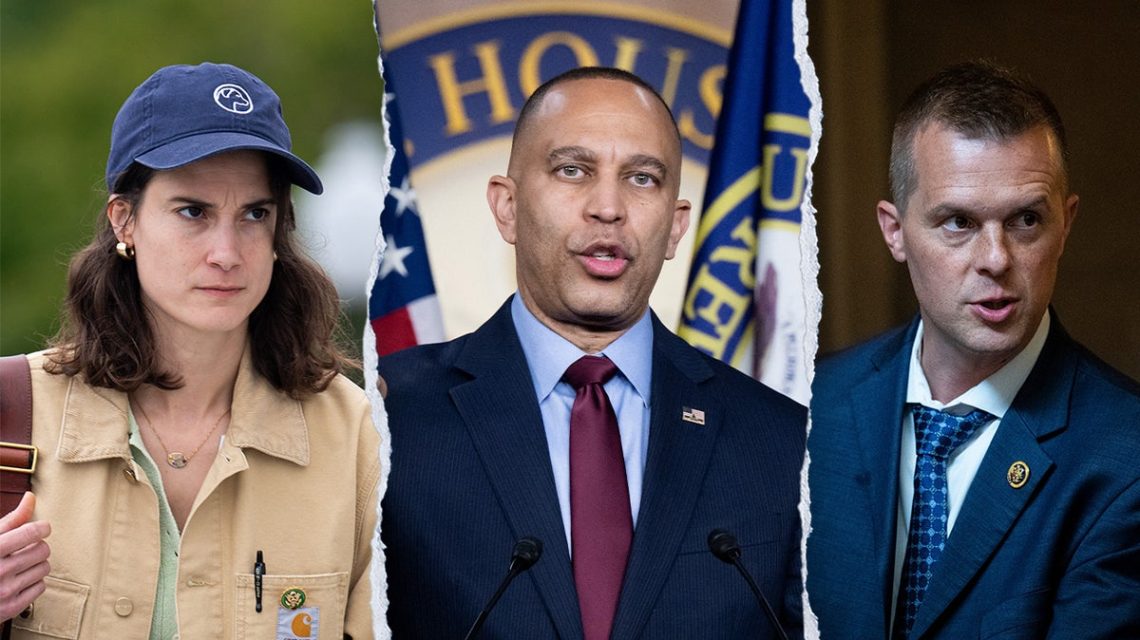
In Washington, two Democratic representatives made a significant move by choosing to represent the interests of the American people. On September 1, Reps. Jared Golden of Maine and Marie Gluesenkamp Perez of Washington parted ways with their party to support a procedural rule. This rule would allow the House to consider the Northeast Lobsterman Protection Act and a resolution condemning socialism.
The rule narrowly passed with a vote of 210-208, and the votes of Golden and Perez were crucial in its passage. However, their decision led to criticism from Democratic leaders like House Minority Leader Hakeem Jeffries, who claimed they blindsided the party.
This incident highlights a political message within the Democratic Party: fighting burdensome regulations and condemning socialism could be seen as a betrayal. Golden co-sponsored legislation aimed at protecting Maine’s $500 million lobster industry, crucial for thousands of workers and coastal communities.
Gluesenkamp Perez represents a district in southwest Washington where families rely on fishing and natural resources. Their stance was clear—they prioritized workers over mandates seen as impractical.
Golden emphasized the absurdity of opposing measures that would help constituents, noting that Democratic leaders demanded loyalty to party lines over the electorate’s needs.
The timing of this vote poses a political risk, as a significant portion of Americans identify as working class. A Pew Research Center analysis found that 60% of adults see themselves as working class, which includes nearly half of college graduates and upper-income Americans.
Democratic leaders faced backlash for prioritizing partisan loyalty, which could be dangerous given their fragile position on economic issues. A Reuters/Ipsos poll indicated voters slightly prefer Democrats over Republicans on handling the cost of living, yet many remain unsure.
By punishing members who defended workers, Democrats may allow Republicans to portray them negatively. This was evident in the House vote to condemn socialism, where 192 Democrats opposed it despite some amendments proposed by their members.
The lack of a clear stance on economic policies could create challenges for Democrats, especially when their actions are seen as limiting economic freedom.
Republicans could capitalize on this by highlighting how increased government control impacts taxes, regulation, and costs. Many Americans seek the ability to work, build, fail, and pursue their dreams with minimal government interference.
The recent actions of Democratic leaders demonstrate a prioritization of party loyalty, potentially alienating working Americans. As elections approach, this issue could play prominently.
 The Impact of Arts and Closure on Democracy
  U.S. Ambassador Comments on Iran War Duration Amid Political Concerns
  US-China Relations Under Scrutiny: Expert Warns of Escalating Tensions
  No Timeline for End of Iran Conflict
  German Chancellor Merz Vows to Pursue Reforms Despite Election Setbacks
  The Technology Rivalry: Trump’s Meeting with Xi and the AI Ecosystem Clash