The Lindsay Clancy murder trial in Massachusetts faces the real possibility of a mistrial. The jury resumed deliberations for the sixth day on Thursday despite having indicated twice to the judge that they are unable to reach a consensus.
Plymouth Superior Court Judge William Sullivan directed the jurors back into deliberations with a last effort known as a “dynamite charge.” This instruction aims to prompt a verdict and serves as a final attempt to resolve their deadlock. The jury, comprised of nine women and three men, has already spent more than 29 hours deliberating since receiving the case on August 27.
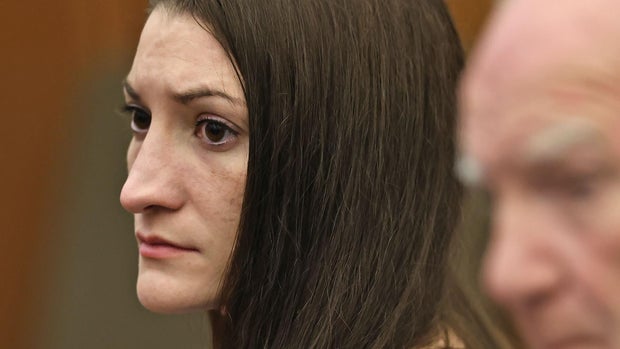
Lindsay Clancy, accompanied by attorney Kevin Reddington, appeared in court on September 2, 2026, in Plymouth, Massachusetts.
Clancy stands accused of first-degree murder for the strangulation deaths of her three children—Cora, age 5, Dawson, age 3, and Callan, age 8 months—at their home in Duxbury on January 24, 2023.
Expert Insights on Verdict Likelihood
CBS News legal contributor Caroline Polisi stated, “I think it’s very unlikely we’re going to get a verdict.” She suggested the jury might deliberate a bit longer to satisfy the judge before ultimately declaring themselves hopelessly deadlocked. Polisi explained that this situation might compel the judge to declare a mistrial as further pressure on the jury could result in a coerced verdict, which is appealable.
If a mistrial occurs, Polisi believes prosecutors must carefully consider their strategy for the Clancy case’s future. In preparation for a possible second trial, Clancy’s attorney, Kevin Reddington, has vowed readiness for another attempt “next week.” After any mistrial, both prosecution and defense plan to interview jurors to guide their next steps and potentially reshape how the case is presented.
Divided Opinion on the Case
Polisi noted the jury’s split reflects the divided public opinion surrounding the case. She explained, “It’s a microcosm—everyone is divided, so it’s unsurprising the jury is deadlocked.” This mirrors nationwide sentiment where opinions on the case vary widely.
Jurors can choose among five options for Clancy: not guilty by reason of insanity, not guilty, first-degree murder, second-degree murder, or manslaughter. Reddington argued Clancy was overmedicated and suffered from postpartum psychosis, rendering her not criminally responsible. In contrast, prosecutors claimed Clancy knowingly planned the murders and understood their illegality.
If convicted of first-degree murder, second-degree murder, or manslaughter, Clancy may face imprisonment. A verdict of not guilty by reason of insanity means she would remain at Tewksbury State Hospital, subject to periodic review.
Support Resources
For those experiencing emotional distress or suicidal thoughts, contact the 988 Suicide & Crisis Lifeline by calling or texting 988. You can also chat online with the Lifeline for assistance.
For guidance on mental health resources and support, the National Alliance on Mental Illness HelpLine is available Monday through Friday, from 10 a.m. to 10 p.m. ET at 1-800-950-NAMI (6264) or via email at [email protected].
 Juror’s Stand Leads to Mistrial in Lindsay Clancy Case
  Maryland Parents Arrested After Infant’s Death with Severe Injuries
  Jury Deliberations in Lindsay Clancy’s Murder Trial Stir Controversy
  Surrogate Resists Abortion, Appeals to Supreme Court in Legal Dispute
  Inmates File Lawsuit Over Fires and Smoke in D.C. Jail
  Former CIA Chief Subpoenaed in Justice Department Investigation