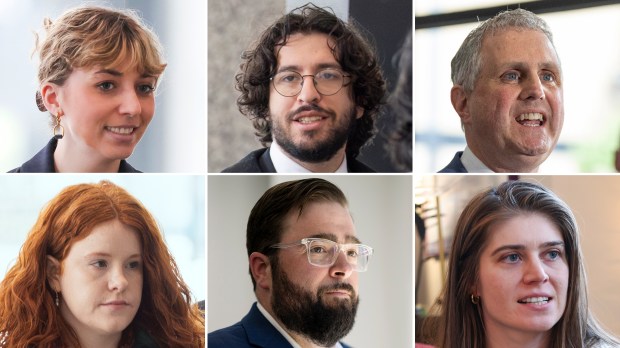
The Justice Department faces a deepening credibility crisis as a federal judge in Chicago rebuked its handling of the ‘Broadview Six’ case. This week, U.S. District Judge April Perry criticized the government’s confusion over an evidentiary hearing, calling it ‘immaterial’ and highlighted their non-compliance with her discovery orders.
The case involves U.S. Attorney Andrew Boutros and his assistants, who are set to testify under oath about their actions in this contentious legal battle. The upcoming hearing could bring unprecedented scenes to the Dirksen U.S. Courthouse. Possible scenarios include Boutros being instructed not to answer specific questions or invoking his Fifth Amendment rights.
The situation escalated when Associate Attorney General Stanley Woodward filed a motion to keep communications with local prosecutors privileged, arguing they were outside Perry’s review. Although the DOJ provided a privilege log detailing the communications, Perry labeled it ‘noncompliant’ for missing critical information like email authors and recipients.
Despite turning over an email linked to the case, Perry observed that it failed to include metadata necessary to verify U.S. Attorney Boutros’ claim of not having read it. She allowed the DOJ until Thursday to correct the production errors, hinting the initial errors could be inadvertent.
Further complicating matters, Woodward’s filing accused Perry of exceeding her authority by demanding testimonies from Boutros and others. Woodward argued that this creates a dilemma where they risk prosecution or antagonize the court, urging cancellation of the hearing in favor of an internal DOJ investigation.
On Wednesday, Perry dismissed Woodward’s call to cancel the hearing, stating the court has inherent authority to investigate factual issues. Notably, the DOJ does not represent three-quarters of the anticipated witnesses, further distancing the agency from control over the proceedings.
Richard Kling, a veteran defense attorney, remarked on the extraordinary nature of the DOJ’s censure, highlighting its rarity in the legal community. Meanwhile, Perry clarified the hearing format, granting witnesses the option to submit written or oral statements under oath without cross-examination.
The Broadview Six case, tied to protests against Trump’s deportation initiatives, involved serious charges against defendants linked to Democratic politics. Allegations of misconduct, particularly by lead prosecutor Sheri Mecklenburg, led to the case’s collapse.
Perry’s past statements acknowledged numerous prosecution flaws and challenged the accuracy of representations made by Boutros’ office. Attorney Christopher Parente, representing one of the dismissed defendants, criticized the DOJ’s lack of accountability, questioning its commitment to justice and transparency.
 Rex Ryan Faces Charges After Alleged Incident in Nashville
 Court Records Show Stalking and Threats Before SNL Writer’s Sister Disappears
 Supreme Court Considers Limiting Inmate Lawsuits on Medical Care
 Jury Selection for Charlie Kirk’s Murder Trial Set for 2028
 Former Virginia Soccer Coach Faces Charges for Exploiting Minor
 Potential Breakthrough in OJ Simpson Case Through Fingerprint Analysis