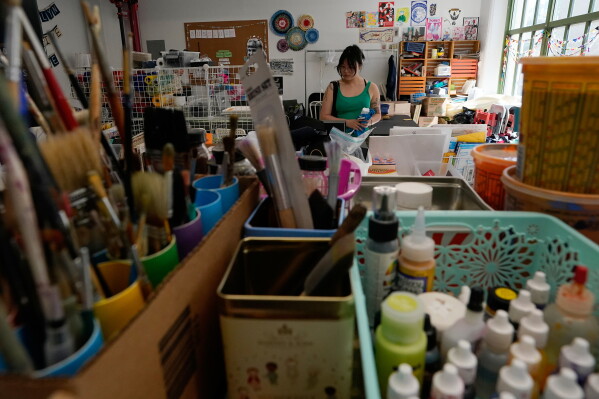
Charlene Catalano found a unique way to source materials for her crochet projects. Instead of opting for a big-box store, she visited Brooklyn Creative Reuse. There, she bought a mix of yarn, crochet kits, and accessories for $6. Catalano highlights the rising cost of art supplies and enjoys discovering reasonably priced resources.
Brooklyn Creative Reuse isn’t an isolated case. Across the U.S., hundreds of these centers aim to recycle art supplies that might otherwise end up in landfills. They serve as thrift stores for the art community, offering donated materials at low prices.
Reusing materials not only saves resources, it also stimulates creativity, says Julian Silverman from the Fashion Institute of Technology.
The Impact of Reusing Art Supplies
Art centers offer an affordable solution for creative individuals. For instance, crafters can buy a few fabric scraps instead of entire bolts. Brooklyn’s center sets prices at $3 per pound for most items.
The advantages extend beyond cost. Producing art supplies requires water and energy. Reusing them lessens these demands. For example, creating one gallon of paint consumes 13 gallons of water, according to Silverman.
Donated supplies also cut down on packaging waste, which often includes plastic and cardboard. Items like paint need special packaging due to light sensitivity.
Scraplanta Creative Reuse in Atlanta manages two centers and a pop-up shop. They handle around 7,000 pounds of materials each month, benefiting teachers, parents, and community groups.
Synthetic brush bristles and plastic handles take centuries to break down, noted Silverman. Paint releases microplastics and metals during its degradation.
Sustainable Art Practices
Sustainable art involves buying only necessary materials and donating unused items. Careful cleaning practices can also help. Wiping paintbrushes with a cloth prevents wastewater contamination.
Artists should explore recycling programs for paint and consider repurposing household items. Silverman turns onion skins and beets into dyes for his projects. Repurposing old cosmetics is another option.
Artist Rosina Morelli, inspired by a visit to Brooklyn Creative Reuse, searched her own collection for unused supplies. Morelli appreciates the chance to donate to fellow artists rather than discarding items.
The Associated Press receives support for its climate and environmental coverage from various foundations. The AP maintains editorial independence in all content.
 EPA Dismantles Greenhouse Gas Rules, Causing Concern
  Historic Church Transformed Into Los Angeles Boutique Hotel
  How Battery Innovations Transform Renewable Energy
  Data Centers Stir Controversy in Texas Amid Growth Boom
  Lymphatic Drainage and Ice Sculpting: Emerging Wellness Trends
  Chef Brian Landry and the Rhythms of Bayou Bar