
An appeals court has permitted the Trump administration to reinstall interpretive panels at President George Washington’s home in Philadelphia. Critics argue these panels gloss over the reality of slavery at the historic location.
The signs will be placed where the Declaration of Independence was adopted in 1776. Efforts to contact the National Park Service for comment were not immediately successful.
The updated educational panels are set to replace those installed in 2010, which detailed the lives of nine slaves who lived with George and Martha Washington during the 1790s, when Philadelphia served briefly as the nation’s capital.
The removal of the panels followed an executive order issued by Trump in 2025. The order directs federally owned historic sites to emphasize American achievements and avoid portraying negative aspects of history.
The U.S. 3rd Circuit Court of Appeals, located near the President’s House site, issued a technical ruling to proceed with the previous month’s decision. This decision, involving judges nominated by Presidents Trump, George W. Bush, and Barack Obama, reversed a lower court’s mandate preventing the federal government from reinstating the new panels.
The administration has requested swift reinstallation of the panels, stating they are ready for display. Although the new information includes topics on slavery, advocates worry that the content may soften the harsh realities of the past.
Government illustrations of the panels show they address slavery, abolition, and related historical topics, although some detailed content from previous panels, including slave trade routes and a slavery timeline, has been omitted.
The City of Philadelphia, opposing the removal of the previous panels, is attempting to delay the new installation. On Friday, the city requested that the appeals court pause its earlier ruling to provide time for a response to the Trump administration’s Thursday request.
Philadelphia officials argue that the new panels will cause harm, as the location represents a crucial part of the city’s and the nation’s history, developed through federal and local cooperation over years to tell a long-neglected story.
Earlier this year, approximately half of the previous panels were reinstalled until a court order halted those efforts.
 Teen Arrested in Penn State Student’s Murder; Second Suspect at Large
  A Mother’s Tragic Journey Under Abortion Ban
  U.S. Strategic Goals Remain Unmet Amid Prolonged Conflict
  Carnival Panorama Passenger Jumped Overboard During Final Leg of Cruise
  The Impact of Arts and Closure on Democracy
 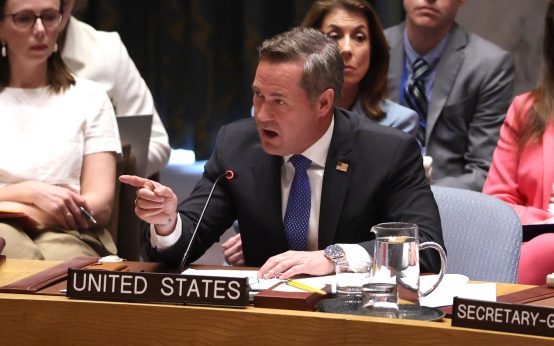 U.S. Ambassador Comments on Iran War Duration Amid Political Concerns