A federal appeals court has ordered the release of Raheem Fulton, a Jamaican man with end-stage kidney disease, from immigration detention. His life-threatening medical condition and unresolved legal claims have been judged to warrant bail, while his appeal is considered.
The U.S. Court of Appeals for the Second Circuit, in a 2-1 ruling, decided to grant bail to Fulton, who is in Immigration and Customs Enforcement (ICE) custody following a burglary conviction. He faces a final order of removal.
Growing scrutiny surrounds medical care in ICE detention. Concerns focus on access to adequate treatment, continuity of care, and handling medically vulnerable individuals facing deportation. The Department of Homeland Security (DHS) affirms detainees receive appropriate medical care and follow established protocols.
“We conclude that Fulton has demonstrated that (1) his petition raises substantial claims, and (2) extraordinary circumstances exist that make the grant of bail necessary to make the habeas remedy effective,” the court stated.
Earlier in the year, a Costa Rican man deported in a vegetative state after months in ICE custody died soon after returning home. This prompted an investigation by Costa Rican authorities into the circumstances of his detention, medical treatment, and removal. His family alleged overmedication and inadequate care, while DHS maintained he received proper treatment before dying after deportation.
Reasons for Fulton’s Release
The court found that Fulton met the standard for bail pending his habeas corpus appeal by showing substantial legal questions and extraordinary circumstances. Habeas corpus allows detained individuals to seek a review of their custody’s legality and, in some cases, relief while claims are considered.
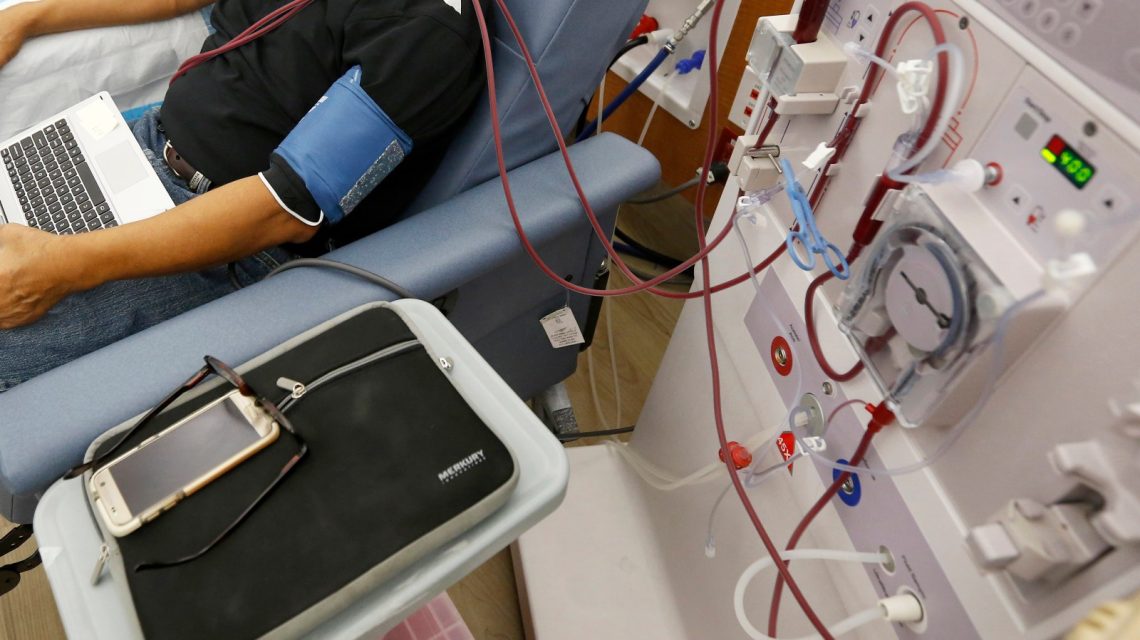
Fulton, with end-stage renal disease requiring regular dialysis, challenges what he terms inadequate medical-discharge planning before his deportation to Jamaica. The court noted his substantial claim that a district court wrongly dismissed his request for discharge planning tied to his life-threatening condition.
The Government does not contest that insufficient medical care risks Fulton’s near-certain death, prompting the court to assert the need for bail to ensure the effectiveness of habeas relief. Evidence cited included a life-threatening incident following a missed dialysis appointment in ICE custody and medical records of a failed kidney-transplant evaluation.
The court further noted that the Government had not argued Fulton posed a danger or flight risk, rejecting claims he could end his detention by accepting deportation.
“For Fulton, deportation without dialysis is effectively a death sentence,” the court remarked. “ICE will not, and Fulton cannot, arrange post-deportation medical care while in custody.”
ICE’s Response on Medical Arrangements
Fulton argues that federal officials must oversee appropriate planning for his continued medical treatment before deportation. Judge Steven Menashi dissented from the majority, contending that Fulton failed to meet conditions for release pending habeas proceedings.
Menashi noted Fulton’s detention occurred because of a court-ordered stay on his removal during the ongoing litigation. He wrote that the Government coordinated with Jamaican authorities to secure dialysis arrangements post-deportation and ensured Fulton received dialysis while detained in the U.S.
The dissent argued Fulton’s case center on obtaining further assurances for his post-deportation medical care, rather than his current treatment while detained.
Menashi stated U.S. officials communicated with Jamaica, confirmed dialysis availability, and received approval from its Ministry of Health and Wellness. He noted, “Fulton remains in custody because he requested the federal courts delay his removal.”
The court directed parties to negotiate potential release conditions and return if no agreement is reached.
Questions Over Medical Care in Deportation
This decision may have wider effects beyond Fulton’s case. It signals federal courts’ potential willingness to grant bail to immigration detainees with severe medical conditions while legal challenges are unresolved.
While the ruling does not address the substantive dispute, its outcome could shape governmental obligations to arrange continuous medical care when deporting severely ill individuals. If ruled in Fulton’s favor, the case might influence ICE’s approach to removals involving detainees needing ongoing, life-sustaining treatment.
 Juror’s Stand Leads to Mistrial in Lindsay Clancy Case
  Maryland Parents Arrested After Infant’s Death with Severe Injuries
  Jury Deliberations in Lindsay Clancy’s Murder Trial Stir Controversy
  Surrogate Resists Abortion, Appeals to Supreme Court in Legal Dispute
  Inmates File Lawsuit Over Fires and Smoke in D.C. Jail
  Former CIA Chief Subpoenaed in Justice Department Investigation