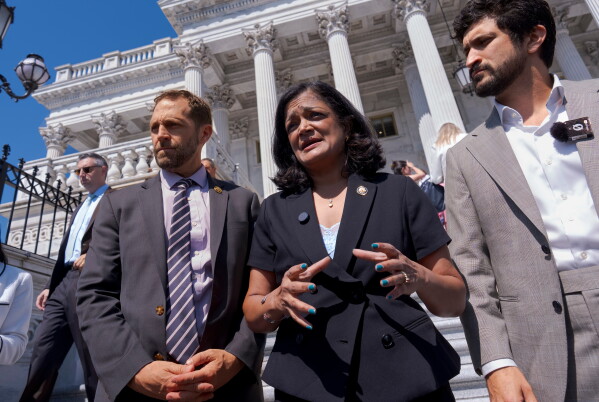
The House of Representatives narrowly approved a resolution on Thursday aimed at halting U.S. military activity in Iran. This move signals another cautionary note to President Donald Trump as he navigates an escalated conflict with uncertain prospects. The resolution, requiring congressional consent for war, passed with a vote of 214-208.
The Senate, however, did not follow suit. In a closely contested vote of 47-49, they rejected a similar resolution. These votes pushed predominantly by Democrats serve as a symbolic indication of diminishing support for Trump’s war strategy within Capitol Hill.
Democratic Rep. Pramila Jayapal of Washington, who led the resolution, criticized the war for lacking a clear mission, strategy, and objective. A small number of Republicans sided with Democrats, emphasizing the need to reassess the conflict. However, most Republicans continued to back the war effort and grant war powers to Trump.
The war began with joint U.S. and Israeli airstrikes in late February. Although a ceasefire was negotiated by April, Trump declared the ceasefire concluded earlier this month. He remains adamant that ongoing attacks do not signify a return to large-scale or long-term conflict.
Despite the House’s initial June vote to cease the war, Trump dismissed the gesture as unpatriotic and meaningless through social media. An official statement from the White House reiterated the president’s constitutional authority to protect the nation, stressing the need for decisive action to prevent Iran from acquiring nuclear weapons.
Diplomatic efforts remain stagnant, with both sides entrenched in the dispute over the largely restricted Strait of Hormuz, a vital energy pathway. The conflict threatens to further disrupt the global economy and is driving fuel prices higher ahead of the fall U.S. midterm elections.
Sen. Chris Van Hollen from Maryland, a Democrat who led the Senate resolution effort, emphasized the responsibility to hold accountable those involved in the unpopular war, highlighting American casualties and rising costs.
Throughout the House debate, Republican Foreign Affairs Committee Chairman Brian Mast emphasized the sacrifices of the 18 service members killed since the conflict began, challenging any notions that their efforts were in vain. Contrarily, New York Democrat Rep. Gregory Meeks argued that the American people do not support an unauthorized conflict.
While Democrats vowed continued efforts to compel Republicans to address the war, Senate Minority Leader Chuck Schumer insisted Congress should act if the president does not heed public concerns.
Many Republicans face political repercussions for opposing the war despite private skepticism of Trump’s conflict management. Trump made public critiques of those Republicans who aligned with Democrats, labeling them harshly in social media posts.
Louisiana Sen. Bill Cassidy faced direct conflict with Trump, ultimately shifting his stance after receiving further briefings on the situation. Recent polling reflects general dissatisfaction among Americans regarding Trump’s handling of the Iran conflict.
A poll by the Washington Post and Ipsos found broad disapproval, with many questioning the war’s worth and effectiveness in preventing Iranian nuclear capabilities. Even among Republicans, support is divided, indicating an underlying contention within Trump’s base.
Sen. Tim Kaine advocated withholding war funding as a legislative check on presidential authority. The House approved a Republican-only $95 billion budget proposal for the war, but its fate in the Senate remains uncertain.
 Trump’s Approach to China: Trade Dynamics and Challenges
  Media Outlets Sue After White House Ban
  American Public Opinion on Press Freedom
  Media Lawsuit Against Trump Administration for White House Ban
  The Cost of Challenging Beijing
  Analyzing Midterm Elections and Party Dynamics