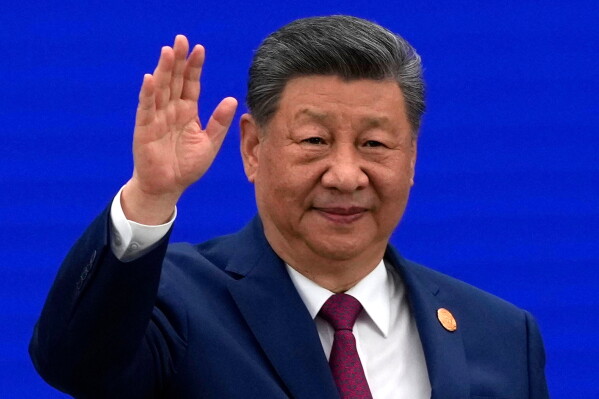
The U.S. tech industry faced a surprise with the unveiling of a new Chinese AI model, Kimi K3, that is catching up to American counterparts. Beijing-based startup Moonshot, led by a Pink Floyd enthusiast who earned his doctorate in Pittsburgh, developed this latest AI advancement.
Kimi K3 and Global Competition
The Kimi K3 model has been compared to industry leaders like Anthropic’s Claude and OpenAI’s ChatGPT. Anastasios Angelopoulos, CEO of Arena, stated that Kimi K3 tops their ranking in ‘front-end coding capability.’ He emphasized the model’s performance and suggested it may surpass closed U.S. AI models. This release coincided with Chinese President Xi Jinping’s call for global cooperation at the World Artificial Intelligence Conference in Shanghai.
Recent Developments in Chinese AI
Kimi K3 follows Zhipu’s GLM-5.2 model release, which has been praised for its affordability compared to U.S. counterparts. However, the excitement surrounding K3 recalls the reaction to DeepSeek’s model release in early 2025. Tech analyst Patrick Moorhead described the response as an “overreaction.” Despite this, companies like Huawei are showcasing new AI systems, such as the Atlas 950 SuperPoD, indicating China’s continued focus on developing domestic hardware amid U.S. import restrictions.
Controversy and Claims
Amidst these developments, U.S. AI companies, including Anthropic, have accused Chinese firms of using a technique called ‘distillation’ to replicate advanced technologies. Anthropic has alleged that Moonshot and others illicitly extract capabilities from their models. This technique allows for rapid development at reduced costs, leading to significant competitive advantages.
Interestingly, Anysphere, a Bay Area startup, admitted that their coding tool Cursor was influenced by Moonshot’s K2.5 model. This connection highlights the complex interplay in the AI industry, transcending national boundaries.
The Implications of Open-Source Model
Moonshot’s co-founder Yang Zhilin, a Carnegie Mellon University alumnus, has been noted for his significant contributions to machine learning. Former colleagues at CMU celebrated Yang’s success, viewing it as a win for the open-source community. Open-source AI models, which allow examination and modification by anyone, promise innovation but also raise concerns about safety and security.
Note: Associated Press writer Chan Ho-him contributed to this report.
 Debate Continues Over Virginia’s Data Center Energy Plans
  Trump Suggests Renaming AI to ‘Super Intelligence’
  The Rise of Data Centers and AI Development
  How China Uses AI to Challenge U.S. Dominance
  Controversy Surrounding Automated License Plate Readers (ALPRs)
  U.K. Test-Fires U.S. Torpedo from XV Excalibur