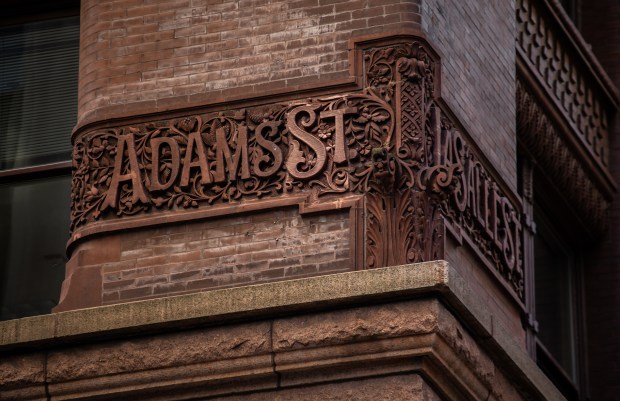
While glass and steel often grab attention, brick holds a special place in Chicago’s architectural history. Since the devastating fire of 1871, brick has been the favored material in the city’s neighborhoods. It features prominently in worker’s cottages, bungalows, three- and six-flats, and courtyard apartments.
Even Ludwig Mies van der Rohe, known for his modern glass and steel designs, used brick in the Promontory Apartments in Hyde Park in 1949. Brick is a fundamental architectural material. Each brick is formed from earth, shaped to fit the hand, baked for durability, and stacked to create walls that enclose and protect.
The small size of bricks connects buildings to human craftsmanship. Significant Chicago structures like The Rookery, the Monadnock, and the Marquette Building showcase brick prominently. Frank Lloyd Wright preferred Roman bricks, which are elongated to reflect his horizontal designs, with Hyde Park’s Robie House as a notable example.
Yet, brick does not guarantee quality. Chicago has many unremarkable brick-clad buildings. But when well-designed, brick can reflect architectural history and enhance a building’s appeal. Recent brick projects approved or under construction show potential to enhance their surroundings.
New Brick Projects in Chicago
A 66-unit building at 1201 W. Kinzie St. was designed by Dirk Denison Architects. It stands at five stories and fits into the fast-changing Fulton Market District. Set between Kinzie and railroad tracks, its setbacks manage its size. The renderings are lackluster, but Denison’s attention to detail and quality materials could elevate the design.
At 1728 N. Clybourn Ave., a proposed 59-unit apartment block features large windows reminiscent of the area’s industrial past. The Eckenhoff Saunders design breaks its mass into three sections with varying brick colors, giving distinct identities. Its balconies help integrate the structure into the streetscape.
The nearly completed building at 2237 W. Roscoe St. in Roscoe Village, by En Masse Architecture and Design, is notable for its appropriate use of brick. Despite missing initial design elements, the project holds up under scrutiny, with its six condominium apartments already sold.
A project at 2724 N. Lehmann Court in Lincoln Park by Studio Dwell exemplifies how to densify without overwhelming existing scale. This approved five-story building replaces a three-flat, increasing units from three to nineteen while maintaining neighborhood character.
The proposed five-story structure at 2758 N. Mozart St. in Logan Square, designed by Chicago Common Studio and Gansari & Associates, has a classical, solid composition. Its significant masonry pier enhances its presence, with townhouses and retail space integrated into the design.
The city’s Department of Planning and Development chose a transit-oriented development in West Englewood, designed by Beehyyve L3C and Alligood Song. These buildings at 1515 and 1607 W. 63rd St. promise a sleek, modern look with their curved brick and glass corners, enhancing the 63rd/Ashland Green Line area.
While these projects hold promise, Chicago’s architectural scene reflects a conservative approach. The city boasts a legacy of architects like John Wellborn Root, Daniel Burnham, and Frank Lloyd Wright. The new designs might not match iconic heights, but they aim for quality architecture, which remains valued today.
Edward Keegan writes, broadcasts, and teaches on architecture. His column is supported by a grant from former critic Blair Kamin and is published with editorial independence.
 Communities Continuing Recovery from Hurricane Helene Explored through Graphic Novel
  Art Institute of Chicago Returns Nazi-Looted Painting to Heirs
  Chicago History Museum Responds to Protest with Aquí en Chicago Exhibit
  Ari Emanuel’s Memoir Explored
  Benito Juarez Community Academy Students Celebrate Día de los Muertos Through Art
  Celebrating Diversity at Valparaiso’s World Cultural Festival