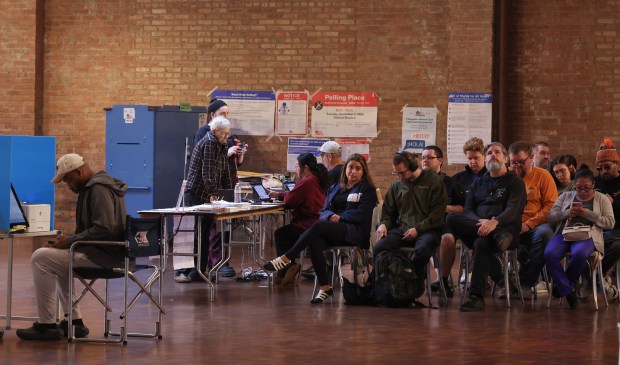
Chicago election officials have attributed a significant ballot shortage at some precincts to a coding error. This issue led to far fewer ballots being printed than required, breaching state law. On Wednesday, the Chicago Board of Election Commissioners issued an apology and reported efforts to determine the extent of the problem across precincts.
On Tuesday, voters in many parts of the city expressed frustration over delays and had to make multiple trips to vote. A voter in the Avondale precinct reported making three visits over more than five hours to cast a vote. An election judge stated that certain ballots ran out just hours into the election day.
In Logan Square, similar problems occurred around 9 a.m. and lasted for about four hours. Alderman Daniel La Spata of the 1st District questioned how this could happen so early on election day. At a polling station at 3057 N. Rockwell St., only one touch-screen voting machine was available, leading to long waits.
State law mandates printing at least 10% more ballots than the number of registered voters in each precinct. Officials should keep an ample supply at the main office for immediate dispatch to polling places as needed. Chicago election officials admitted to miscalculating the required number of ballots due to complexities in split precincts.
Split precincts require different ballot styles for different political jurisdictions. The coding error led to the incorrect allocation of ballot styles, resulting in shortages and oversupplies in certain areas. Of Chicago’s 1,291 precincts, 491 are split precincts where the error likely occurred.
This meant that some voters had an ample supply of ballots while others were left without, particularly those who didn’t arrive early. A limited workaround was available with touch-screen machines, but long lines developed, especially at the downtown ‘supersite’, where waits extended beyond three hours.
The election board tried to address shortages by printing and distributing additional ballots and machines. Despite these efforts, voters reported lengthy periods without adequate resources at polling sites. The board announced the implementation of IT safeguards to prevent future occurrences.
The statement acknowledged the inconvenience to voters and commended their patience and determination. The board is still investigating the total number of affected precincts.
Reporters Jane Miller and A.D. Quig from the Chicago Tribune contributed to this report.
 Custody Dispute Involving Rep. Max Miller Delayed
 Attorney General Addresses Post-Midterm Democratic Threats
 Senator Elizabeth Warren and the Future of Crypto Regulation
 Bipartisan Opportunities in Foreign Policy
 Political Shifts and Concerns Post-Midterms
 Closing the Foreign Financing Loophole in American Lawsuits