
As a retired public high school teacher and Jewish peace advocate, I co-organized a summer series called “Challenging Zionism in Schools.” This initiative consisted of four workshops aimed at questioning how Zionism is presented within educational curricula. These sessions addressed the concern that criticism of Israel is often mislabeled as antisemitism, thus limiting open discussions on the topic.
I have addressed school boards to clarify that antisemitism is hatred toward Jews, while anti-Zionism is political opposition to Israel as a nation-state. Mixing these concepts can endanger Jewish communities globally by unfairly linking them with Israel’s military actions, including activities Amnesty International and the UN have described as genocide in Gaza. Labeling anti-Zionism as antisemitism reinforces harmful stereotypes and denies students a chance for critical examination.
Our CodePink workshops featured insights from Dr. Maha Nassar, a Middle Eastern studies professor. She explained that the phrase “From the River to the Sea” is a call for liberation, not an antisemitic slogan. The series encouraged debates using South Africa v. Israel at the International Court of Justice as a case study, inviting students to discuss if Gaza’s situation meets genocide definitions as per the U.N. Genocide Convention.
Another session involved discussing the International Holocaust Remembrance Alliance’s definition of antisemitism. Students debated whether this definition should be adopted by school boards, providing arguments for both sides. This exercise engaged students in deep thinking, using analysis and evidence-based argumentation aligned with national literacy standards.
In my role with United Teachers Los Angeles, representing over 30,000 educators, I supported a motion to host a workshop on antisemitism with a group teaching it as part of broader systemic oppression. This approach avoids singling out antisemitism above other forms of discrimination, fostering inclusivity and understanding.
Educational discussions on controversial topics are crucial for critical thinking. Relying solely on basic memorization fails to engage students. Instead, incorporating issues they encounter on social media prepares them for active citizenship in a democracy. Thus, the phrase “never again” should resonate universally, advocating for justice in Palestine and beyond.
Marcy Winograd is a volunteer organizer with CodePink and serves on the governing body of United Teachers Los Angeles.
 The Importance of Financial Responsibility in Higher Education
  The Financial Expectations on Universities: A Parental Perspective
  A Mother’s Tragic Journey Under Abortion Ban
  U.S. Strategic Goals Remain Unmet Amid Prolonged Conflict
  The Impact of Arts and Closure on Democracy
 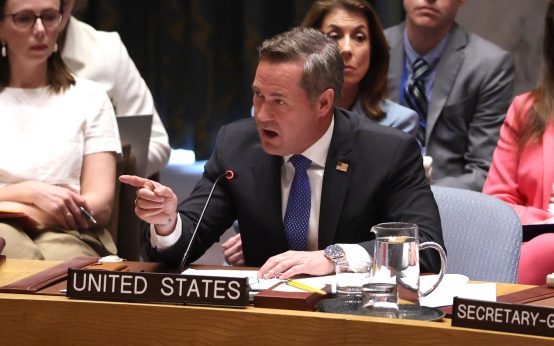 U.S. Ambassador Comments on Iran War Duration Amid Political Concerns