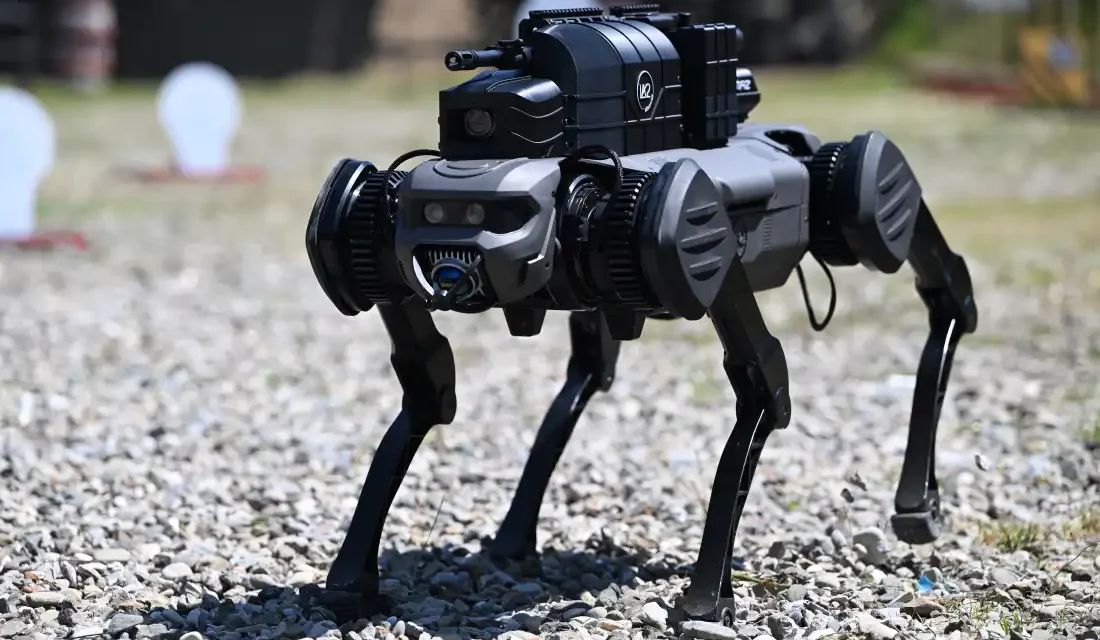
An armed robot unveiled by Turkish defense companies was showcased at a facility in Duzce, Turkey, on April 29. Efforts to establish clear regulations on AI-powered lethal robots and drones faced hurdles at U.N.-backed talks in Geneva. The discussions concluded with an agreement to continue talks for an additional two years.
Despite several countries concluding the U.N. conference by agreeing to “elaborate” on a potential accord for autonomous lethal weapon systems by 2028, they did not commit to creating binding rules. This has been a point of interest for U.N. Secretary-General António Guterres, multiple countries, and activists.
Izumi Nakamitsu, U.N. high representative for disarmament affairs, remarked on the “significant achievement” but noted varying perspectives on the outcome. Activists critiqued military powers such as Russia and the United States for undermining stronger language. Groups like Stop Killer Robots expressed dissatisfaction with what they described as a diluted mandate.
Before the conference, seven nations, including Brazil, Austria, and New Zealand, proposed initiating talks on regulation. However, this initiative did not advance. Frederico Meyer of Brazil highlighted the pace of technological advancement outstripping diplomatic progress.
After extensive discussions, advocacy organizations pointed to obstruction from countries like Russia, striving for leeway in developing AI weapons. Guterres, concluding his term this year, set a goal for negotiations on autonomous weapon agreements by 2026.
Pope Leo XIV and humanitarian groups urge swift action to control AI weapons before they become widespread. Activists cite instances where armed autonomous drones struck targets independently, although mass deployment remains rare.
The Geneva talks referred to the Convention on Certain Conventional Weapons, ratified by 128 nations, with consensus as a requirement. This framework means that any single nation can block an agreement, creating challenges for establishing robust regulations.
 Amazon Enlists NYC Customers Against City Council Bill
 Protests Erupt Against Data Centers in Spain
 Migration, Politics, Peace Talks, Health Alerts, Legal Settlements, and Fire Conviction News
 The Controversy Surrounding Jensen Huang and Nvidia
 Pentagon’s Declassified Files Reveal Plans for Underground Facility and UFO Research
 Lewis Pugh Swims Strait of Hormuz Amid Conflict