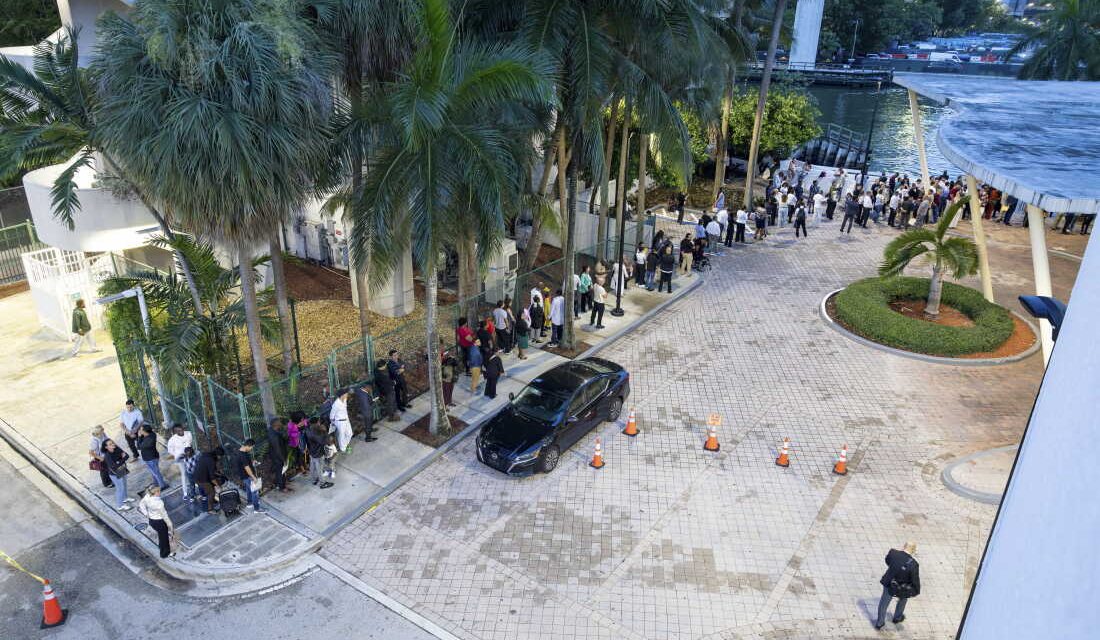
Long lines have become a common sight at the Miami Immigration Court due to “mega master” calendar hearings introduced by the Trump administration. These hearings aim to expedite deportation processes.
Yerandy Gonzalez observed the lengthy queue stretching over several blocks outside the court. Expressing frustration, he commented on the chaotic situation. Many in the line have scheduled court appearances, some for the first time.
Avene Jeanite, aged 52 from Haiti, was among those waiting. Recalling easier access in the past, he noted the drastic changes since the implementation of the new system. He accompanied a friend last month facing deportation; today was his appointed day.
It’s a very unfair, but a very effective tactic,said David Wilson, vice chair of the American Immigration Lawyers Association’s immigration court committee.
Under the previous system, judges managed about three dozen cases daily. Now, they handle over 100, reviewing many cases simultaneously. Administration officials argue the approach addresses the immense case backlog. Critics, however, claim it rushes deportations unfairly.
The process causes chaos, critics argue. Courts face challenges in sending timely notices, while immigrants struggle to secure legal representation. As a result, no-show rates have increased significantly.
According to bklg, a legal tech platform, in-absentia deportation orders have surged. For example, July saw over 54,000 immigrants nationwide ordered deported for absent court appearances. This marked a considerable 60% rise over prior months. Specifically, in Miami, figures jumped from 1,383 in May to 2,886 in July, reflecting a 108% rise.
On a particular day in courtroom 24, space was limited as Judge Xavier Racine addressed a large group. He informed them of their rights and set subsequent court dates, some within two weeks. The alterations in the Miami docket stem from record monthly immigrant arrests, rescheduled court dates initially set for 2027, and prioritizing cases likely to be dismissed by previous administrations.
Yeriné, a 30-year-old from Venezuela, shared her concerns with NPR. Her original hearing slated for May 2027, was rescheduled sooner. Observing individuals potentially missing hearings due to logistical challenges caused her anxiety.
Billie Botch from the American Friends Service Committee highlighted operational problems. The court’s rapid scheduling increases the chances of removal orders. Short notices and limited resources contribute to immigrants arriving late for hearings.
 The Impact of Arts and Closure on Democracy
  U.S. Ambassador Comments on Iran War Duration Amid Political Concerns
  US-China Relations Under Scrutiny: Expert Warns of Escalating Tensions
  No Timeline for End of Iran Conflict
  German Chancellor Merz Vows to Pursue Reforms Despite Election Setbacks
  The Technology Rivalry: Trump’s Meeting with Xi and the AI Ecosystem Clash