As the midterm elections approach, Democrats find themselves in a strong position, holding their largest advantage of the cycle according to NBC News’s polling average. This is echoed by Nate Silver’s tracker and RealClearPolitics’s aggregate, each giving Democrats a nine-point lead. Prediction site Kalshi shows a 62 percent chance of Democrats taking control of both chambers, and a New York Times analysis highlights higher Democratic motivation in Senate battleground states compared to Republicans.
The analysis further reveals higher Democratic turnout in 17 out of 22 states with contested primaries, while Republican turnout dropped in many cases. For example, in Michigan, nearly 600,000 more Democrats voted than Republicans, and in Texas, Democratic voters surpassed Republicans by 150,000—a significant swing from previous cycles.
However, Democrats’ polling leads are tied to issues with the current Republican administration. Inflation has been a significant concern, with consumer prices rising by 3.4 percent year-over-year in August, outpacing wage increases. Gasoline prices have remained high, with the national average staying over $4.40 per gallon, and diesel prices affecting transportation and farming costs.
As mortgage rates continue rising, housing affordability remains an issue for many Americans. This economic discontent is reflected in consumer sentiment, with the University of Michigan’s index showing its second-lowest reading since 1952. President Trump’s approval rating also reflects this dissatisfaction, standing at 39 percent overall and only 29 percent among independents, according to Emerson polling.
Democrats have focused their campaign on these issues. Yet, questions remain about their plans post-election. If they win, they need to articulate their platform for 2028, as current data shows a substantial portion of independents would vote to oppose the president but may not be drawn to the Democratic policies.
Despite being poised to win, Democrats face branding challenges; their unfavorable ratings exceed those of Republicans. Candidates in red and purple states show reluctance to align closely with party leaders who may not resonate with local voters. For example, Adam Hamilton, a Senate nominee in Kansas, has distanced himself from national figures like Vice President Kamala Harris to win crossover voters in a traditionally Republican state.
Democrats’ success partly relies on external factors like Trump’s policies, inflation, and cost of living. Unlike previous election cycles where clear agendas such as Republican’s 1994 “Contract with America” drove voter decisions, Democrats have not presented a cohesive alternative.
Previous midterm elections did not require a proactive agenda for success. For instance, Democrats gained seats in 2018 by focusing on protecting the Affordable Care Act, while Republicans gained in 2010 through opposition to then-President Obama. However, as the ground differs now, Democrats face divided ideologies within their party, impairing their legislative capabilities—even if they gain both chambers.
While Democrats can subpoena and impede Trump’s priorities, he might bypass Congress, leaving Democrats responsible for legislative gridlock. With voters prioritizing economic issues, Democrats could struggle to address these effectively, risking the depletion of goodwill by 2028. If their majority is marked by impeachment hearings without substantial legislative achievements, they may lose momentum as the election cycle progresses.
A victory based on opposition to Trump might not resolve internal party differences, mainly between progressives and moderates. Although likely to succeed in November, Democrats need to convince voters of their capability to lead, not simply highlight Republican vulnerabilities.
Douglas E. Schoen and Carly Cooperman of Schoen Cooperman Research in New York authored this analysis. They also co-authored the book “America: Unite or Die.”
 Erratic Policy Shifts Before Midterms Reflect Tensions in Trump Administration
  Spanish Prime Minister Calls for Snap Elections Amid Rising Protests
 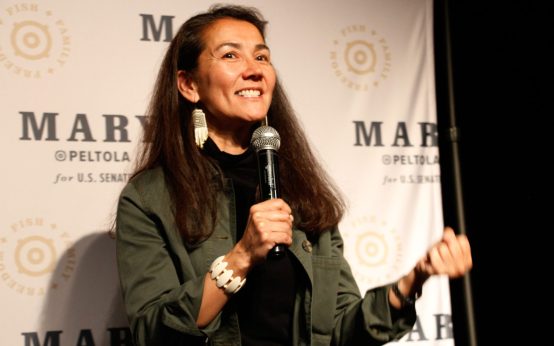 Alaska Senate Race: Peltola Leads in Polls Amid Controversy
  Trump Adds Beni Rae Harmony to Communications Team Amid Photo Controversy
  Midterm Elections: Democrats Rely on Polls and History, Republicans Lean on Funding
  AI’s Growing Role in Political Advertising