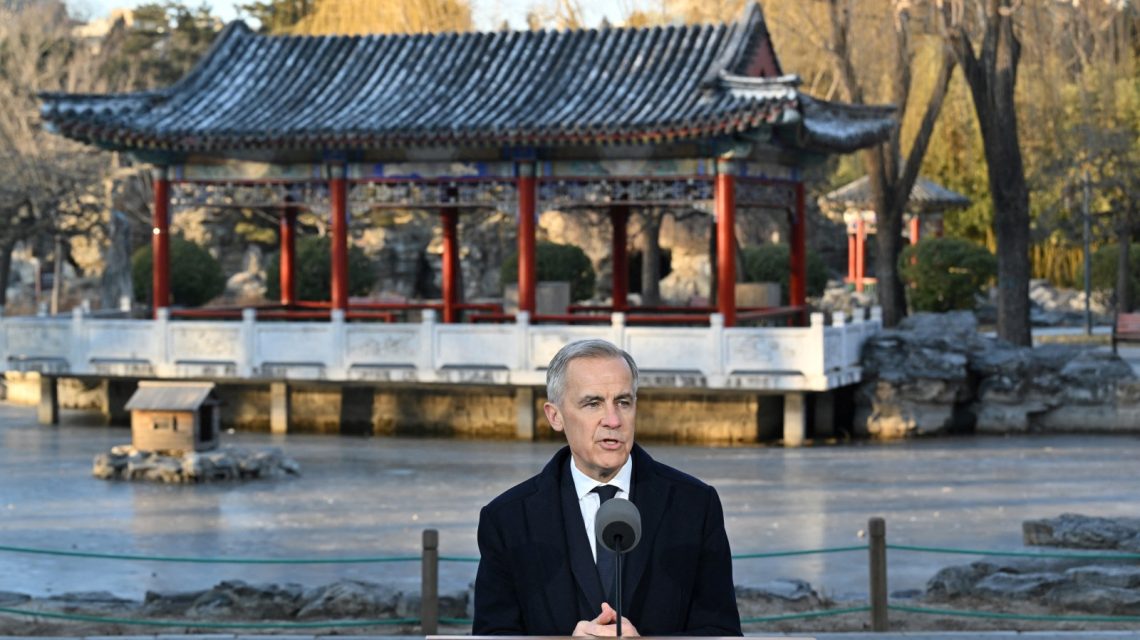
The Canadian government’s decision to reduce tariffs on Chinese electric vehicles has sparked new questions. A dossier presented to Newsweek alleged that a businessman linked to China’s United Front system influenced this policy change. This occurred shortly before Prime Minister Mark Carney’s agreement with Beijing.
In January, Canada agreed to import 49,000 Chinese-made electric vehicles at a 6.1 percent tariff. This replaced a 100 percent surtax from 2024 under former Prime Minister Justin Trudeau. The announcement, made during Carney’s visit to China, was part of a wider trade deal, including China reducing tariffs on Canadian agricultural exports such as canola oil.
This agreement diverged from the United States, which maintains restrictions on Chinese electric vehicles. It intensified national security concerns in North America regarding Chinese automotive technology. A Canadian source provided a dossier stating a policy paper called for a review of Canada’s surtax on these vehicles. The proposal was delivered to Canadian officials before Carney’s trip to Beijing. The individuals behind the proposal are not registered as lobbyists, according to Canada’s lobby registry.
Newsweek sought confirmation from the Prime Minister’s Office, receiving a response from the Privy Council Office, which directed queries to Global Affairs Canada. Newsweek reached out to Global Affairs Canada for comment.
The dossier names the businessman involved as Shui Shousong, president of the Sino-Canada Entrepreneurs Association, also known as SinoCann. Chinese reports reveal Shui was affiliated with the United Front organization, the Chinese People’s Political Consultative Conference. Newsweek contacted Shui and SinoCann but received no response.
The United Front Work Department, a branch of the Chinese Communist Party, aims to build influence among non-CCP groups and overseas communities. Western governments scrutinize United Front-linked organizations due to concerns over advancing Beijing’s objectives abroad.
The Canadian source, requesting anonymity due to sensitive U.S.-Canada relations, stated Shui had a significant United Front involvement. He has appeared with Canadian politicians at events, some attended by Chinese consular officials advocating for ‘reunification’ work with Taiwan—a core goal of the CCP and its united front efforts.
In August, Shui launched a Canada-China EV association and a service center to foster industrial cooperation. Reports indicate Shui is the President of the Canada-China Business Council, which hosted the event. Canadian politicians and diplomats from China’s Toronto consulate attended.
Newsweek requested comments from the Chinese consulate in Toronto and the embassy in Ottawa but has yet to receive a response. The source mentioned that Canadian media did not question who had access to the Prime Minister’s Office beforehand. The episode was not covert but suggested a possible influence channel through public records with no registry entry or reporting.
These claims arise as Chinese electric vehicles become central to North American trade and security policies. The U.S. continues to block Chinese EVs, citing risks to manufacturing viability and security due to technology vulnerabilities. China’s EV sector, led by firms like BYD, grows internationally, deepening tension in Western capitals.
In September, U.S. Transportation Secretary Sean P. Duffy criticized Ford’s association with Chinese technology and companies. Duffy expressed concern in a letter to Ford CEO Jim Farley, highlighting Ford’s ties with China’s CATL for battery technologies and a supply chain linked to China.
Ford rejected the criticism, calling Duffy’s letter misguided. The company stated its support for U.S. efforts in promoting American innovation and manufacturing.
 Princess Diana’s Brother Responds to Buckingham Palace’s Denial of Conversation with King Charles III
  United Russia’s Election Victory and Its Implications
  The Cost of Challenging Beijing
  Tensions Escalate in Iran Conflict as Global Leaders Weigh Options
 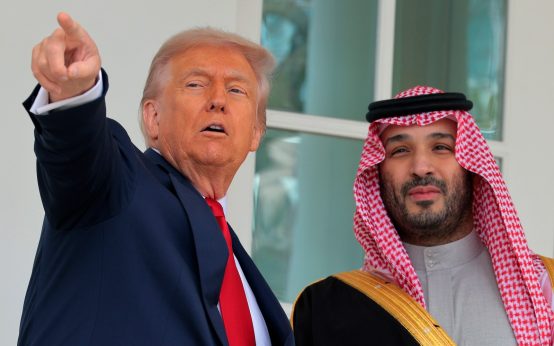 White House Approves F-35 Sales to Saudi Arabia Amidst Regional Tensions
  Inside the Secret Deals Powering the President’s Push to Deport Migrants to Countries Not Their Own