President Donald Trump’s executive order to rename Lake Ontario as “Lake America” has brought attention to several landmarks and geographic names that bear his last name. This action has also sparked discussions across the U.S.-Canada border, particularly over how these names might be changed.
Can Canada Rename Trump Geographical Landmarks?
In Canada, geographic names are typically overseen by provincial and territorial authorities along with the Geographical Names Board of Canada. The federal government maintains a national database, but the renaming process often begins with local consultations involving communities, Indigenous groups, and other stakeholders.
What Is Named Trump in Canada?
Multiple Canadian geographic features carry the Trump name, including lakes, islands, and waterways, primarily located in Ontario and Newfoundland and Labrador. These names generally predate Trump’s political career. They include the Trump Islands in Notre Dame Bay, Newfoundland, once home to a small mining and fishing community. Additionally, Ontario is home to Trump Lake, East Trump Lake, West Trump Lake, and Trump Creek.
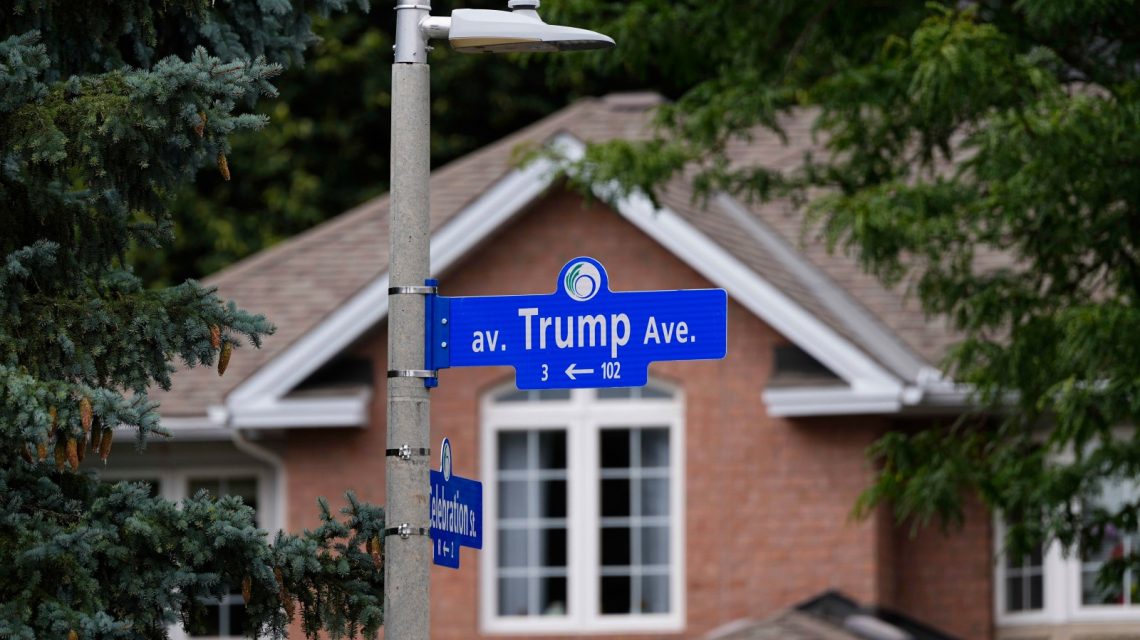
Unlike bodies of water, street names such as Ottawa’s Trump Avenue fall under local jurisdiction and can be changed through city legislation.
Timeline and Naming of “Trump” Landmarks
Most Canadian features with the Trump name were designated long before Trump’s presidency, with some predating his birth. The Trump Islands, for instance, were listed under that name in government records since 1954. Ottawa’s Trump Avenue was named about 25 years ago as part of a New York-themed neighborhood, reflecting Trump’s fame as a real estate developer at the time.
Controversy Over Trump Avenue
Ottawa Councilor Riley Brockington has expressed intentions to rename Trump Avenue, referring to its current name as embarrassing. He plans to collaborate with residents to select a new name, particularly in light of recent U.S.-Canada tensions. Potential replacements include “Taco Avenue,” a name reflecting an acronym that mocks the former president.
Other suggestions for new street names range from “Pelosi Avenue” to “Gulf of Mexico Avenue.”
Reasons Behind Trump’s Renaming of Lake Ontario
In his executive order, Trump tasked federal agencies with using “Lake America” instead of “Lake Ontario” to underline the lake’s role in American history and commerce. He highlighted U.S. contributions to Great Lakes infrastructure and security. However, this change affects only the U.S. federal system and has no binding impact on Canada or other entities.
Canadian Prime Minister Mark Carney emphasized that “Ontario” originates from the Wendat language, meaning a beautiful or great lake. He assured that Canada will continue using the lake’s historical name.
The executive order reflects a pattern, as Trump previously attempted to rename the Gulf of Mexico as the “Gulf of America.” Canadian and international resistance suggests that such moves are unlikely to gain traction beyond executive directives.
 The Cost of Challenging Beijing
  Tensions Escalate in Iran Conflict as Global Leaders Weigh Options
  White House Approves F-35 Sales to Saudi Arabia Amidst Regional Tensions
  Inside the Secret Deals Powering the President’s Push to Deport Migrants to Countries Not Their Own
  Navigating the Challenges of Third-Country Deportations
  Midair Altercation on Bangladesh to London Flight