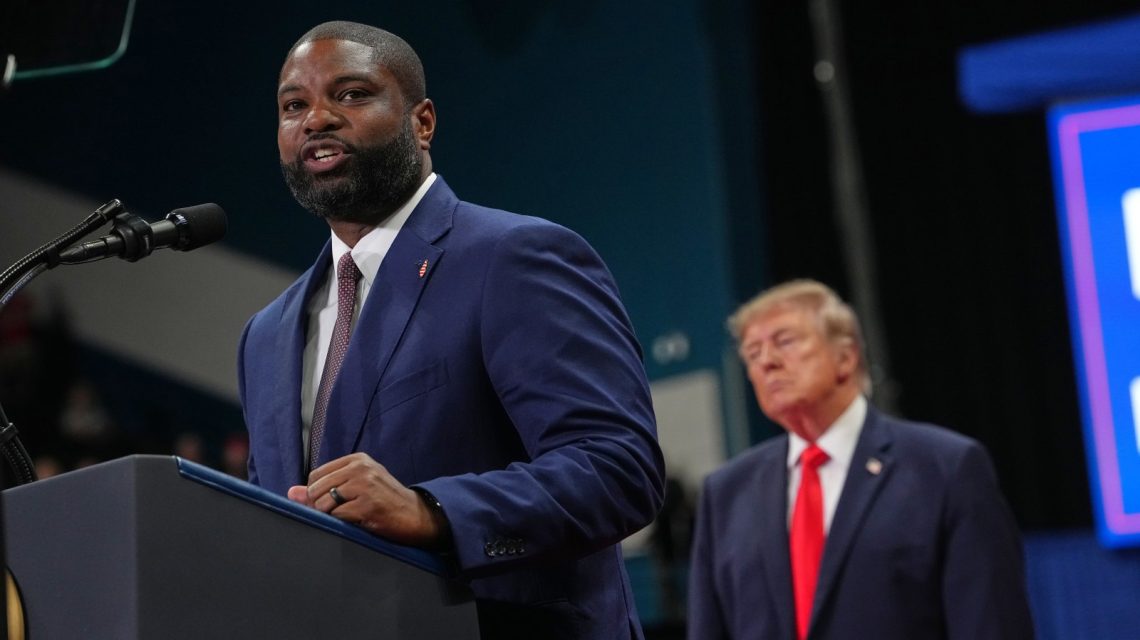
Byron Donalds, a Republican congressman and Florida’s incoming governor, has emphasized the importance of redefining political coalitions for future hopefuls in the 2028 election. Speaking at the National Governors Association’s New Governors Leadership Forum, Donalds noted that replicating past administrations’ coalitions is challenging. He stated, “To be blunt: What I’ve observed in politics, it’s very hard for somebody to try to recreate the previous person’s coalition.” During this discussion, Donalds made history as the first Black governor of Florida, with endorsements from President Donald Trump and Governor Ron DeSantis.
The Republican Party faced significant losses in the recent midterm elections, losing both House and Senate control, which has fueled speculation about the future of the MAGA movement. DeSantis’ increased media presence has raised questions about his presidential ambitions, though he has not committed to a 2028 run. Prominent figures such as Vice President JD Vance, Secretary of State Marco Rubio, and Senator Ted Cruz have also been queried about their 2028 plans.
Similarly, Democrats like Representative Alexandria Ocasio-Cortez and former Vice President Kamala Harris have been questioned about their political futures. Donalds emphasized the need for new candidates to define their alliances, stating, “Whoever the next person is going to be, they’re going to have to redefine and reshape the electorate about what their supportive coalition is.” He warned against trying to mirror the success of past leaders, advising potential candidates to create their unique political identities.
“I would advise anybody who’s thinking about taking the next step: You got to define yourself. You have to be yourself. You can’t be a facsimile or a carbon copy or shades of gray of somebody else,” Donalds remarked.
In light of the midterm election outcomes, there has been analysis on the reasons behind the Republicans’ losses. Vance, after consulting with a pollster, identified issues such as ending the war with Iran, addressing the cost of living, prioritizing America first, and reconsidering relations with Israel as key areas of focus. Despite the rumors, Trump has remained non-committal about his discussions with Vance concerning 2028, leaving many in anticipation.
Donalds has firmly dismissed any rumors of his own run in 2028, affirming that he is “absolutely” not considering it. “I take this job very seriously,” Donalds stated, emphasizing his commitment to his current role and responsibilities in Florida.
Craig Agranoff, a political professor, expressed that Donalds is voicing common political wisdom—coalitions are personal, and each leader needs their own. Agranoff pointed out that Donalds’ decision to focus solely on his governorship is a strategic one, leaving room for others to prepare for 2028 while solidifying his position in Florida.
Prediction markets, such as Kalshi and Polymarket, reflect current perceptions of potential Republican candidates for 2028. Vance leads with a 33% chance of winning the nomination, followed by Rubio and DeSantis. These markets continue to fluctuate as the political landscape evolves.
This article was crafted using Newsweek’s AI assistant, Martyn. For queries on this story, contact Newsweek editors.
 Controversy Surrounds Governor Newsom’s Death Sentence Commutation Plan
 Jewish Activist Criticizes Event Cancellation at CUNY School
 Debate on School Choice in Texas Elections
 Amy Klobuchar Takes On Governorship with Promises for Minnesota’s Growth
 Challenges of Signature Requirements for Political Candidates in Illinois
 Debate Rekindled Over Gray Wolves and Livestock Losses