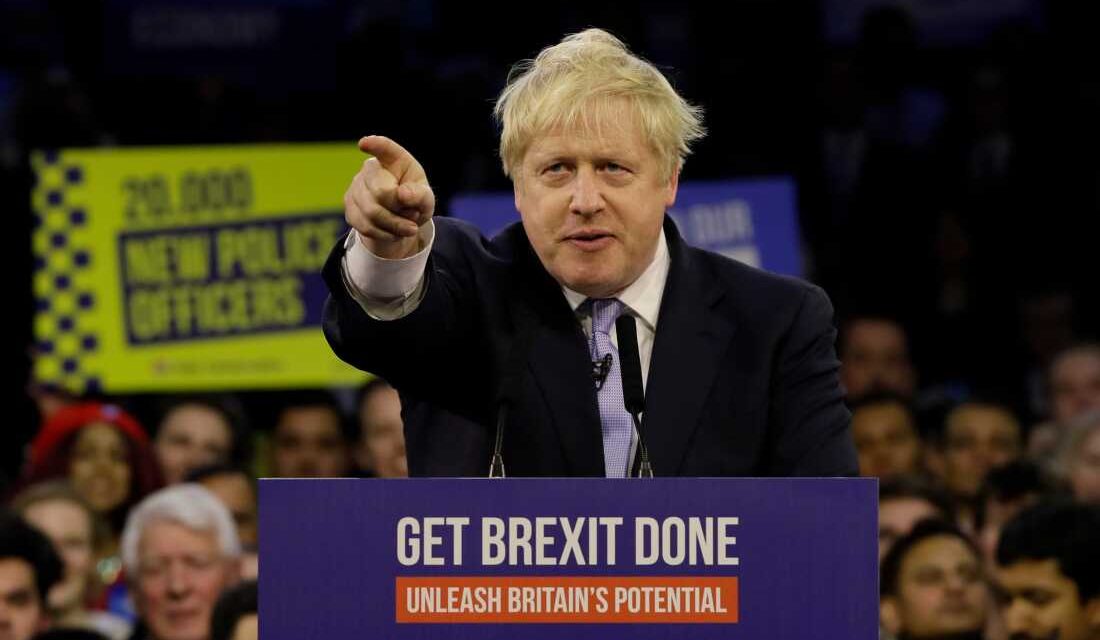
Boris Johnson, Britain’s Prime Minister, addressed the ruling Conservative Party’s final election campaign rally at Copper Box Arena in London on December 11, 2019. The aftermath of Brexit has deeply affected the European Union and reshaped British politics. The nation is set to welcome its seventh prime minister since the referendum held on June 23, 2016, where 52% of the population voted to leave the EU after over forty years of membership.
Conservative Prime Minister David Cameron, who initiated the referendum but aimed for the UK to remain in the EU, resigned immediately following the vote. Successive prime ministers struggled with the consequences of the decision. Recently, Labour Prime Minister Keir Starmer announced his resignation amid economic challenges and a divided electorate, issues partly stemming from Brexit.
Despite fading from the headlines, Brexit’s impact on British politics remains significant. Chris Grey, an academic expert on the EU departure, highlights the ongoing influence of Brexit on political dynamics.
The Brexit Campaign’s Promises
Brexit campaigners pledged to reclaim control over laws, the economy, and borders. While the “remain” campaign emphasized economic drawbacks, the “leave” proponents captivated the public with emotive appeals. Boris Johnson, a key figure in the Brexit campaign, articulated this vision weeks before the vote.
Margaret MacMillan, an emeritus professor, noted the nostalgia for an imagined past that fueled Brexit. The drive against immigration and EU regulations, coupled with historical misconceptions, complicated the discourse around Brexit.
The Challenges of Implementing Brexit
Post-Brexit realities challenged the optimistic promises of trade deals and better public services. Protracted negotiations resulted in a formal exit on January 31, 2020, followed by an 11-month transition. Theresa May resigned in 2019 due to difficulties in securing favorable terms for Parliament.
Johnson succeeded May, claiming to bring Brexit to completion with a minimalist trade deal that strained UK-EU relations. Following scandals, Johnson was replaced by Liz Truss, who briefly held office before Rishi Sunak aimed to improve EU relations. Starmer, while promising change, opted against rejoining the EU’s single market.
Political Fragmentation
Historian Anthony Seldon observed that Cameron anticipated the referendum would resolve internal party conflicts over European relations, yet divisions persist. The Conservative Party witnessed a shift towards staunch Brexit supporters, sidelining those favoring closer EU ties. Similarly, Labour faces internal opposition over EU relations.
Consequently, voter allegiance shifted towards alternative parties like the Green Party and Nigel Farage’s Reform UK. Farage benefited politically from Brexit and championed anti-immigration rhetoric.
Growing Cynicism and Violence
Economic challenges over the past decade are partly attributed to new trade barriers with neighboring countries, with other factors like COVID-19 and ongoing geopolitical conflicts playing roles. Public discontent has grown due to unmet political promises.
The contentious immigration debate has intensified, with rising migration figures contributing to mistrust in politicians. Street violence, fueled by misinformation about immigrants, has escalated, eroding the barrier between conventional political discourse and extremism.
Reflecting on Brexit
Polls reveal regret over the Brexit decision, as shown by a recent survey where 52% wanted to rejoin the EU. London witnessed smaller-scale rejoin protests. Despite desires to move forward, Brexit remains a challenging issue.
The prospect of rejoining the EU presents significant hurdles. Grey suggests politicians must confront Brexit’s legacy to prevent ongoing crises. The UK faces chronic complexities akin to an illness, yet politicians hesitate to address them.
 Court Rules Against Third-Country Deportation Policy
  Trump Administration Bars News Networks from White House
  Lawsuit Filed Over Preeclampsia Death in Texas Amid Abortion Ban Controversy
  Cook County’s Loan Program Assists Suburban Agencies Amid Property Tax Delays
  Freddy Cazares: Navigating the Limbo of Immigration Detainment and Uncertain Release
  Concerns Over Political Influence in Academia