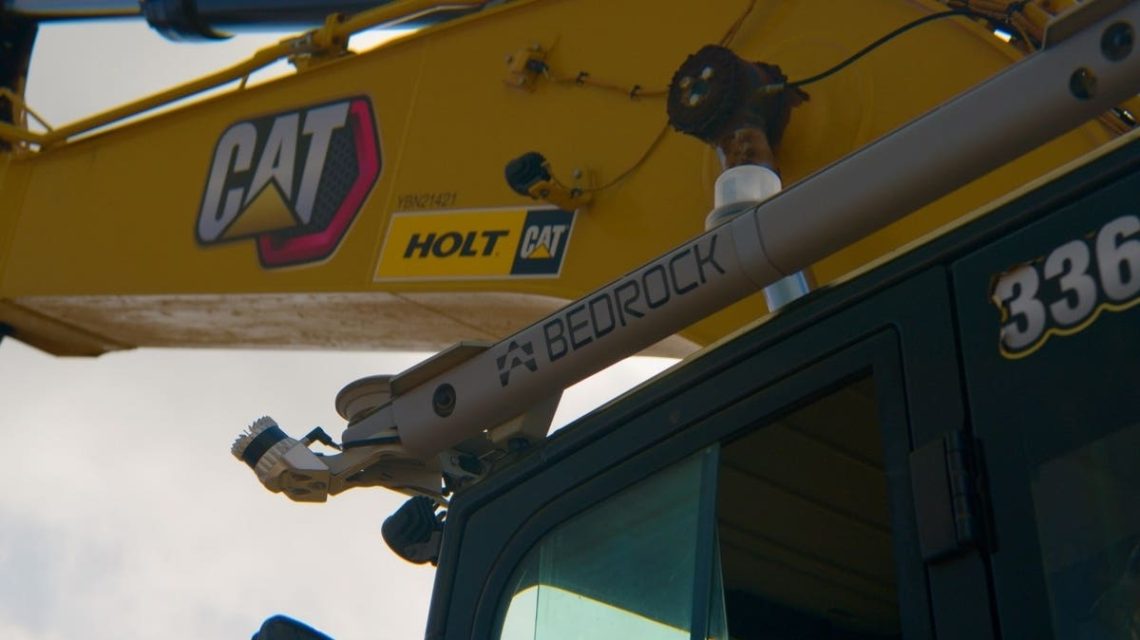
Fox News brings exciting news about tech advancements in construction. Bedrock Robotics, a San Francisco-based company, is deploying autonomous excavators in Texas and Nevada, transforming conventional earthwork practices. Gone are the days of an operator sitting in the excavator cab. These machines are moving heaps of earth autonomously, representing a leap forward in construction automation.
Autonomous Excavators Begin Real Work
Bedrock’s autonomous excavators are now handling significant tasks on major infrastructure projects. They are operational at a Nevada water treatment facility with Sundt Construction and in Texas on a large-scale earthwork project with Champion Site Prep. Additionally, a 1.2 million-cubic-yard civil project with Zachry Construction Corporation highlights their current capabilities.
These excavators specialize in clearing earth, cut-and-fill operations, and rough cuts, crucial for early project stages. Falling behind in earthwork can delay subsequent project phases.
Approaching Human-Level Productivity
Bedrock measures productivity by the cubic yards of earth moved during a shift. Various factors like soil conditions influence how much earth gets moved. As of 2026, Bedrock reports approaching human-level productivity, illustrating a promising technological advancement.
Bedrock Operator System
The Bedrock Operator system comprises a sensor and computing package fitting into existing heavy equipment, enabling autonomous operation. Crews can retrofit this system in just one day. The software manages tasks based on a site manager’s initial plan, applying machine-learning for spatial comprehension and task execution.
Bedrock is initially deploying new excavators outfitted and tested in its facilities, focusing on the retrofit model for future expansion. Current deployments still involve human oversight to ensure safety and operation efficiency.
Ensuring Safety First
Safety is crucial in deploying autonomous excavators. Although relatively rare, human intervention is possible if the machine encounters unusual circumstances or gets stuck, ensuring consistent operation and safety amidst nearby human activity and heavy equipment.
Bedrock’s system automatically halts operations if a person or object comes too close, providing a safety buffer. Operations resume only when a safe distance is maintained.
Choosing Excavators: A Strategic Move
Bedrock targets excavators due to their complex operation, which comprises about 25% of a contractor’s fleet. Mastery requires years of experience, facilitating staffing challenges due to the repetitive nature of earthmoving in projects.
Autonomous equipment can manage repetitive tasks, allowing skilled operators to focus on more complex jobs or supervise larger operations. Bedrock’s approach differentiates by integrating advanced technology into active commercial projects.
The Shrinking Workforce Challenge
Bedrock’s technology emerges amid a growing worker shortage in construction. Data indicates a high percentage of workers nearing retirement, creating staffing challenges. This shortage, coupled with project delays and over-budget tendencies, highlights automation as a timely solution.
Automation also offers safety enhancements by reducing worker exposure to hazardous tasks.
Supporting Equipment Operators
Bedrock emphasizes that autonomous machines won’t replace operators. Instead, the company envisions operators supervising autonomous fleets, likened to machine foremen. This plan ensures the continuity of operator roles in construction for the foreseeable future.
Coordination Among Machines
Bedrock plans to integrate multiple machines within job sites, facilitating coordinated operation rather than isolated machine usage. This collaborative approach could revolutionize project scheduling and execution.
The company’s current focus remains on scaling excavator deployments and expanding task capabilities while maintaining human oversight for operational support.
Potential Impacts on Construction
Autonomous equipment promises to alleviate construction delays affecting housing, roads, and infrastructure projects by maintaining productivity when facing skilled labor shortages. Over time, experienced operators may assume supervisory roles, directing autonomous machines while others continue conventional roles.
Permits and material shortages still pose challenges, requiring skilled workers for detailed planning tasks.
Monitoring Progress and Safety
The pivotal aspects remain productivity and safety. Bedrock claims minimal human intervention currently; monitoring this across broader deployment will be key. Ensuring safety as autonomous equipment operates near humans will be crucial for widespread acceptance and deployment.
Understanding the Current State
Bedrock’s achievement is moving beyond experimental autonomy to practical applications on active sites. With claims of nearing human productivity and safety responses integrated into operations, Bedrock stands at the forefront of construction automation.
The real test remains in expanding operations, maintaining safety, and productivity across more diverse projects.
Future Considerations
The future of construction could see autonomous machines becoming commonplace. If they can efficiently handle tasks without risking worker safety or job displacement, construction sites may readily incorporate this technology.
Ensuring machines complement rather than replace workers provides a balanced technological progression.
 Data Centers Stir Controversy in Texas Amid Growth Boom
  The Technology Rivalry: Trump’s Meeting with Xi and the AI Ecosystem Clash
  Ways to Protect Your Finances from Cyber Threats
  Interview with Nvidia CEO Jensen Huang: AI Outlook and Business Strategy
  Concerns Rise Over Addictive Design of Sports Betting Apps
  Seton Hall National Security Graduate Fellowship Provides Hands-On Experience