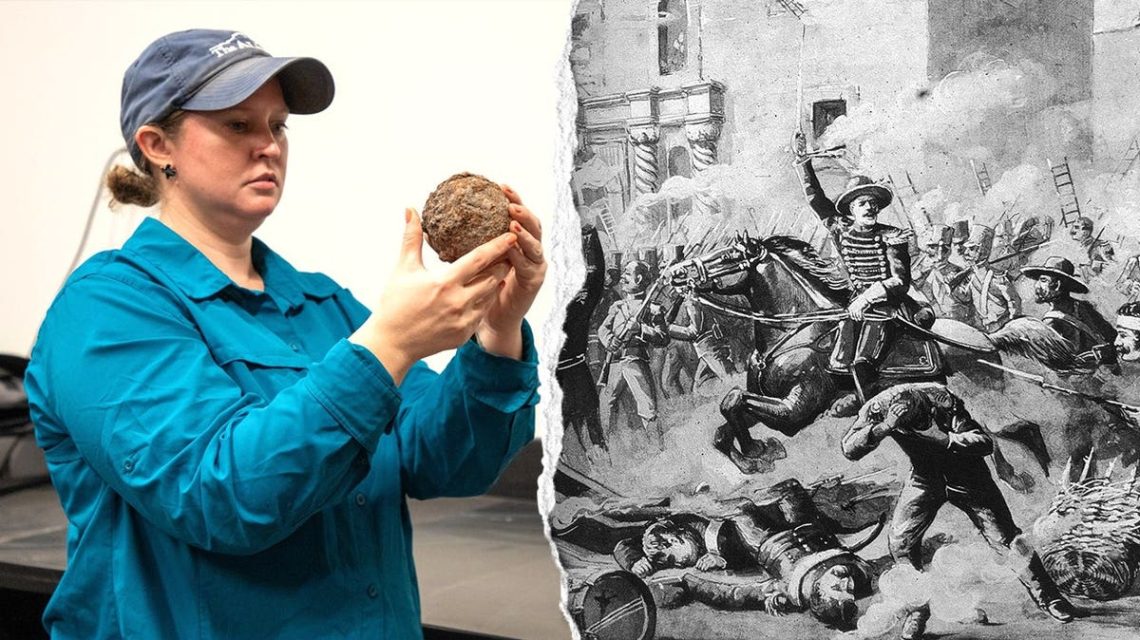
Discovery of Historic Cannonball
Archaeologists in Texas have unearthed a cannonball believed to have been used in the 1836 Battle of the Alamo. The find occurred on June 2, as announced by the Alamo Trust, the organization managing the Alamo Mission.
The cannonball was located outside the northeast corner of the Alamo Church in an excavation unit adjacent to where an intact cannonball was found in March.
Preservation of History
Photos reveal the newly found cannonball covered with heavy rust, displaying an orange-brown hue. It was discovered at a depth similar to its counterpart found earlier, suggesting it has remained untouched for approximately 190 years.
“Whenever they were dropped, possibly in 1836, they haven’t been touched since,” said Tiffany Lindley, Alamo’s director of archaeology, expressing the significance of the find.
Historical Significance
The Battle of the Alamo holds great significance in Texas history. It pitted Mexican forces against Texian rebels, including figures like Davy Crockett and William B. Travis.
The battle lasted from February 23 to March 6, 1836, ending in a siege where the Texian defenders were overtaken by a superior Mexican army.
Unexpected Developments
Researchers were astonished by the discovery of a second cannonball. Lindley noted that the area has seen various uses, from military occupation to commercial development, impacting underground resources.
Lindley remarked, “It was amazing to find one cannonball, and then to follow it up a couple of months later with a second was quite surprising.”
Ongoing Excavation Efforts
The first cannonball was composed of solid bronze, whereas the second one is made from solid iron. Although the iron cannonball isn’t as well-preserved, it remains in fairly good condition. Both artifacts are slated for conservation.
Lindley shared that the team finds numerous artifacts daily, both exciting and mundane such as nails and bricks, contributing to the site’s historical narrative.
“After excavations end, analysis of the data will provide valuable insight into the daily lives of the inhabitants of the site,” she concluded.
 Inside the Secret Deals Powering the President’s Push to Deport Migrants to Countries Not Their Own
  Navigating the Challenges of Third-Country Deportations
  Midair Altercation on Bangladesh to London Flight
 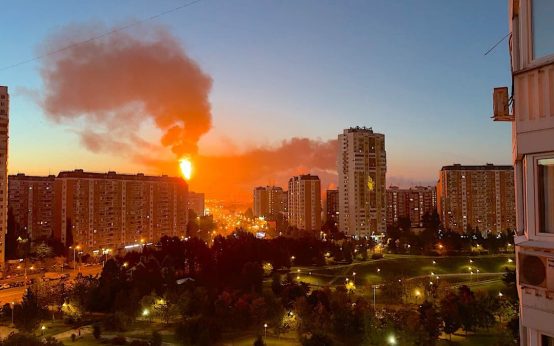 Ukraine Missile and Drone Barrage Hits Russia Amidst Elections
  U.S. Strategic Goals Remain Unmet Amid Prolonged Conflict
  New Photos Reveal Damage from Iranian Strikes in the Middle East