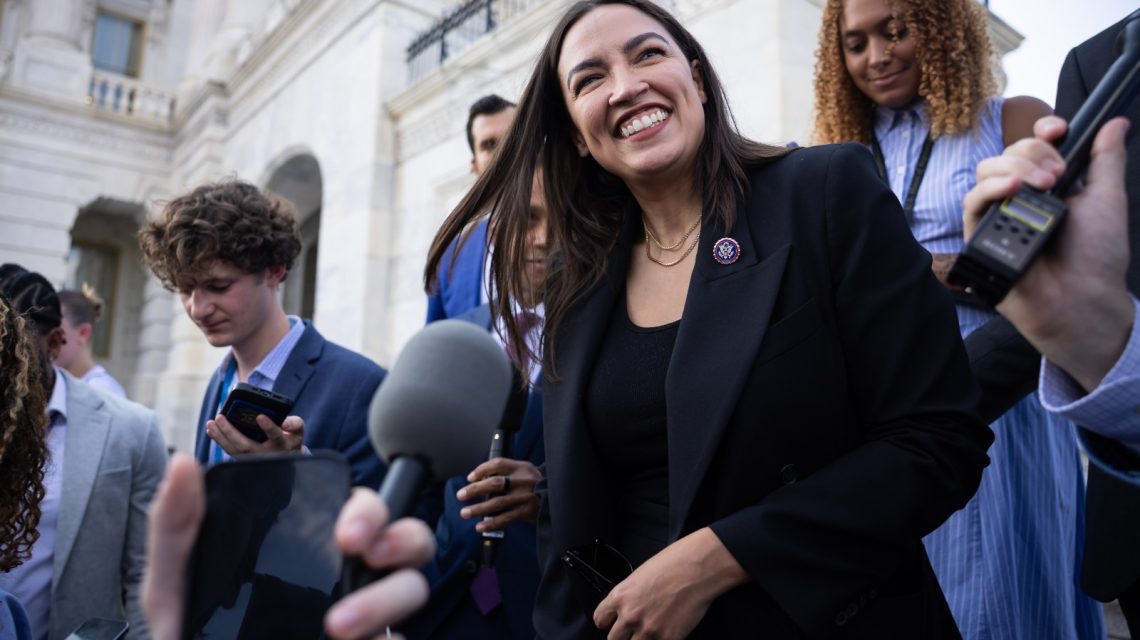
Representative Alexandria Ocasio-Cortez has surpassed California Governor Gavin Newsom in prediction market odds for the 2028 Democratic presidential nomination. According to data from Polymarket, highlighted by InteractivePolls, Ocasio-Cortez holds 18 percent, just ahead of Newsom at 17 percent. Georgia Senator Jon Ossoff ranks third with 16 percent, followed by former Vice President Kamala Harris at 8 percent. Former Transportation Secretary Pete Buttigieg and Pennsylvania Governor Josh Shapiro each have 5 percent.
This shift marks an important moment in the early race to shape the Democratic field ahead of the 2028 election. Though neither Ocasio-Cortez nor Newsom has launched a presidential campaign, both are seen as possible contenders representing different factions within the Democratic Party. Ocasio-Cortez is a prominent progressive figure in Congress, while Newsom is known as an influential establishment Democrat with potential White House aspirations.
“Prediction markets don’t measure voter support directly but show how traders bet on future political outcomes.”
Market movements are often influenced by news events, perceptions of candidate viability, and speculation about potential runners. Newsom had formerly been viewed as the front-runner in early 2028 Democratic race discussions. However, Ocasio-Cortez’s rise suggests traders now view her as a serious contender, despite the primary season being over two years away. Another prediction market, Kalshi, still ranks Newsom as the favorite with Ocasio-Cortez in second place.
Impact on the Democratic Party’s Ideological Divide
Ocasio-Cortez’s ascent in Polymarket’s standings is likely to intensify discussions about the Democratic Party’s ideological direction for 2028. She has become a leading progressive voice, advocating for policies like Medicare for All and comprehensive climate action. Newsom, in contrast, is seen as a key establishment Democrat with significant gubernatorial experience.
The rise of Ocasio-Cortez, Newsom, and Ossoff as top contenders reflects a potential battle among different wings and generations of the party. The field remains uncertain, with no consensus favorite emerging among Democratic observers nearly two years before the nomination contest starts.
Why Prediction Markets Are Gaining Attention
Political prediction markets are becoming a popular barometer of campaign sentiment as they update in real time, reflecting trader reactions to news and political developments. Unlike traditional voter surveys, markets like Polymarket show where participants are placing money on future outcomes. Analysts warn that prediction markets should not be treated as election forecasts, as market prices can change quickly based on media attention or speculation about new candidates entering the race.
The difference in standings between Polymarket and Kalshi illustrates how various prediction platforms offer different perspectives on the political scenario. While Ocasio-Cortez leads Polymarket, Newsom remains ahead on Kalshi, showing diverse snapshots of potential outcomes.
 Trump’s Economic Sanctions Target Iran Amid Peace Talks
  Federal Deployment Costs Taxpayers Over $600 Million in Nation’s Capital
  Wisconsin Governor Race Sees Progressive Candidate Defeated in Democratic Primary
  Secretive Operation Ensures President Trump’s Safety Amid Missile Threat
  Wisconsin Voters Impact Democratic Primary
  Unlikely Political Turnaround in Wisconsin: The Rise of David Crowley