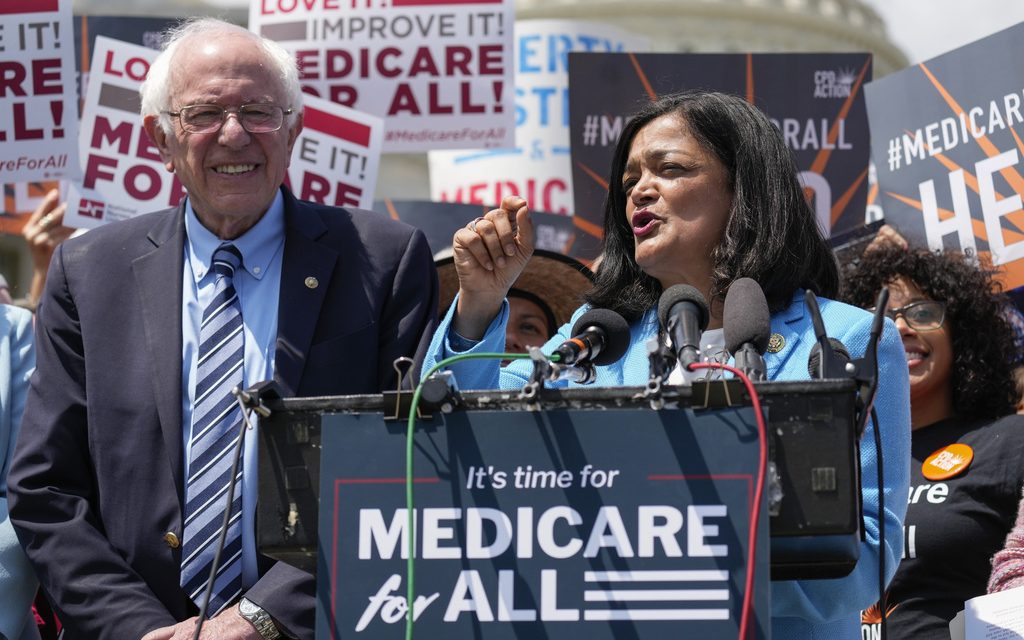
Representative Pramila Jayapal and Senator Bernie Sanders have proposed a policy known as Medicare for All. This proposal suggests reforming health insurance in the U.S. by transitioning to a government-run system, similar to the National Health Service (NHS) in the United Kingdom.
Medicare for All: The Proposal
Medicare for All aims to replace America’s current mix of private and government-provided health insurance with a new program. Under this approach, taxpayers would be responsible for higher taxes, yet they would not pay premiums. The government would cover all medical expenses. However, unlike Medicare, which offers various coverage options, Medicare for All does not include essential parts such as Medicare Advantage.
Current Popularity and Satisfaction
Medicare is widely popular among Americans, with 90% of seniors currently satisfied with their Medicare plans. Despite high satisfaction levels, Medicare for All proposes to eliminate existing coverage options like Medicare Advantage, which has been chosen by 55% of eligible seniors.
Comparison to the NHS
Unlike the current Medicare system, which is cross-subsidized by private insurance plans, Medicare for All would resemble the NHS in Great Britain. According to the British Social Attitudes survey, only 26% of British subjects express satisfaction with their NHS coverage, contrasting with the 90% satisfaction rate among U.S. seniors.
Briton dissatisfaction stems from long waiting times for specialist appointments and limited access to the latest treatments. The NHS caps wait times for non-urgent treatment at 18 weeks, demonstrating a disparity compared to the U.S. system.
Challenges in Government-Run Health Care
Government-run health systems face funding challenges, as spending must be balanced with other public needs like education and defense. Bureaucratic decisions could influence available medical services and products, often based on political priorities. This environment could impact waiting times and the availability of cutting-edge treatments.
Caution for Medicare Reform
Before implementing significant changes to the U.S. health care system, it is crucial to consider the impact on current satisfaction levels and access to care. While political figures may bypass extended wait times due to influence, the average citizen might face challenges in accessing timely care. These factors must be considered seriously when discussing changes to health care policy in the United States.
 Concerns Over Food Safety and Its Impact on Families
  A Mother’s Tragic Journey Under Abortion Ban
  U.S. Strategic Goals Remain Unmet Amid Prolonged Conflict
  The Impact of Arts and Closure on Democracy
  U.S. Ambassador Comments on Iran War Duration Amid Political Concerns
  US-China Relations Under Scrutiny: Expert Warns of Escalating Tensions